Chemical testing of textiles safeguards consumer health, supports regulatory compliance, and preserves brand credibility. With scrutiny from global regulators and conscious consumers growing sharper by the day, verifying fabric safety through standard chemical tests has become non-negotiable. This article breaks down the what, why, and how of textile chemical testing.
Table of Contents
Why Fabric Chemicals Must Be Tested
Chemical testing of textiles begins where responsibility and safety intersect. Before a shirt is worn or a blanket is wrapped around a baby, what harmful substances might linger in those threads? Testing identifies risks hidden to the naked eye.
Fabrics undergo numerous treatments: dyeing, finishing, flame-proofing, and antimicrobial coating. While each chemical adds a function, residues can remain on the final product. Formaldehyde, heavy metals, and phthalates have been linked to respiratory distress, hormone disruption, and even cancer.
Ignoring this step invites regulatory penalties, recalls, and long-term damage to consumer trust. Testing helps catch problems before they reach store shelves.
| Potential Chemical | Risk |
| Formaldehyde | Skin irritation, respiratory harm |
| Azo dyes | Release carcinogenic amines |
| Phthalates | Endocrine disruption |
| Heavy metals (Pb, Cd) | Toxicity, organ damage |
Key to Compliance
Chemical testing of textiles is the gatekeeper for global trade. It confirms that products meet local safety requirements, gaining entry to regulated markets such as the EU and U.S.
Regulations such as REACH, CPSIA, and OEKO-TEX® set strict thresholds on chemical content. Testing proves adherence to:
- Restricted Substances Lists (RSLs)
- Documentation and traceability protocols
- Third-party verification schedules
- Market-specific chemical bans
Failing a test isn’t a simple error. It could lead to blocked shipments, rejected batches, or permanent delisting by retailers. Compliance isn’t just about testing—it’s about documenting and controlling chemical inputs. That’s where structured textile chemical management plays a critical role.
Core Tests
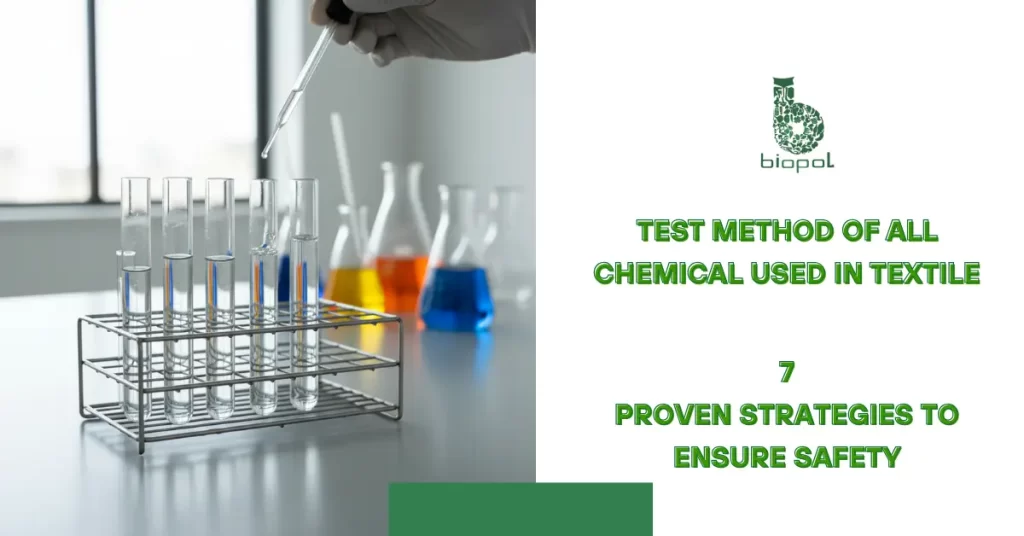
Chemical testing of textiles evaluates both safety and stability. The following tests form the backbone of most lab evaluations:
- pH Testing: Measures acidity/alkalinity. Ideal pH is 4.0–7.5.
- Formaldehyde Detection: Especially important for wrinkle-resistant clothing.
- Heavy Metals Screening: Identifies lead, cadmium, chromium, and mercury.
- Azo Dye Analysis: Detects cancer-linked amines.
- Colorfastness: Ensures dyes won’t bleed or fade prematurely.
| Test Type | Purpose |
| pH Level | Prevents skin irritation |
| Formaldehyde Content | Flags potential carcinogens |
| Metal Content | Identifies toxic residue |
| Azo Compounds | Detects banned dye derivatives |
| Colorfastness | Validates dye performance under stress |
Top Standards
Chemical testing of textiles means little without benchmark standards. The big three:
- OEKO-TEX®: Consumer-facing certification proving absence of harmful substances.
- REACH (EU): Enforces limits on 10,000+ chemicals.
- ISO 17025: Confirms lab accuracy and method validation.
These standards form the framework for global acceptability. Aligning with them is not just a quality move—it’s a market entry requirement.
| Standard | Focus |
| OEKO-TEX® | Textile safety for end users |
| REACH (EU) | Bans and limits for hazardous chemicals |
| ISO 17025 | Quality and consistency in lab processes |

Choosing the Right Testing Lab
Not all labs are equal. The accuracy of chemical testing of textiles hinges on choosing the right partner. Look for:
- Accreditation under ISO 17025
- Expertise in textile chemistry
- Proven experience with OEKO-TEX®, REACH, CPSIA
- Fast and transparent report turnaround
| Criteria | Why It Matters |
| ISO Accreditation | Confirms technical reliability |
| Textile-Specific Skills | Ensures correct testing methods |
| Multi-standard Testing | Covers varied global requirements |
| Report Clarity | Aids in decision-making |
Start Testing
Chemical testing of textiles requires clean, production-grade samples. Labs need fabric that mirrors what customers will touch.
Steps for accurate submission:
- Label samples with type, use, and treatments
- Avoid contamination (no perfumes or plastic bags)
- Submit only production-line fabric
- Include all technical documentation
| Step | Purpose |
| Use real product | Reflects true chemical exposure |
| Clear labeling | Prevents lab misclassification |
| Include paperwork | Links results to batch/source |
| State deadlines | Aligns testing with production schedules |
Final Thoughts
Chemical testing of textiles is no longer a competitive advantage—it’s the cost of entry. As standards evolve and consumer awareness sharpens, brands that prioritize safe chemistry will win trust and sustain growth. From the factory floor to the retail tag, every thread must speak safety. Staying informed is half the battle. Membership in a textile chemical association can give brands a seat at the table where standards evolve and policy is shaped.
FAQs: Chemical Testing of Textiles
What is chemical testing of textiles?
Chemical testing of textiles involves analyzing fabrics for residual chemicals like dyes, formaldehyde, heavy metals, and pH levels to ensure safety, compliance, and performance standards are met.
Why is chemical testing necessary?
Because untreated or poorly treated textiles can cause skin irritation, allergic reactions, or violate international regulations. Testing protects consumers, prevents recalls, and builds trust.
Which tests are most common?
Typical tests include pH balance, formaldehyde detection, azo dye analysis, heavy metal screening, and colorfastness evaluation.
Who requires chemical testing of textiles?
Governments (e.g., EU, U.S.), retailers, certifying bodies (like OEKO-TEX®), and increasingly, consumers—all demand proof of textile safety.
How often should textiles be tested?
Every production batch should be tested if the input chemicals or processes change. Routine verification helps maintain consistent quality and legal compliance.
What’s needed to submit a sample?
Production-grade material, a completed test request form, any relevant documentation (like MSDS), and clear labeling. Always follow lab-specific guidelines.
Can one lab test for all standards?
Only if it’s accredited and equipped to handle the requirements of multiple standards—REACH, OEKO-TEX®, CPSIA, etc. Check before submitting.