Silicones are synthetic organosilicon polymers characterized by a backbone of alternating silicon and oxygen atoms forming a siloxane (Si–O–Si) structure. The combination of thermal stability, chemical resistance, flexibility, and durability makes silicones highly useful. Consequently, they are frequently utilized in industrial manufacturing, medical devices, electronics protection, and cosmetic applications.
Key Takeaways
- Silicones are organosilicon polymers built from Si–O–Si siloxane chains.
- Their structure provides flexibility, heat resistance, and chemical stability.
- Major types include silicone fluids, elastomers, and resins.
- Silicones are widely used in electronics, construction, medicine, and cosmetics.
- Hair-care silicones function mainly as conditioning and smoothing agents.
What Are Silicones in Chemistry?
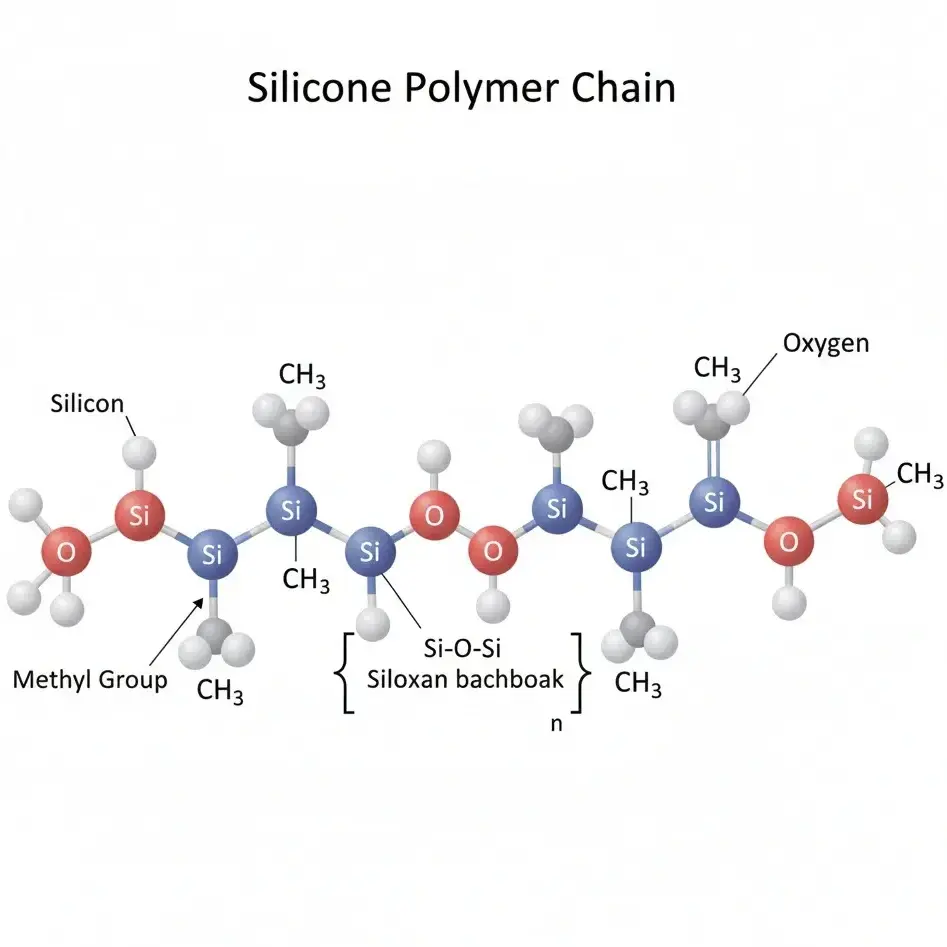
In chemistry, silicones are polymers made from repeating siloxane units where silicon atoms bond with oxygen atoms and organic groups such as methyl or phenyl.
Basic characteristics:
- Backbone structure: Si–O–Si
- Organic side groups: methyl (–CH₃), phenyl (–C₆H₅)
- Classification: organosilicon compounds
General chemical formula:
| Component | Representation |
| Siloxane backbone | –[Si–O]– |
| Organic groups | R₂SiO |
| Polymer structure | (R₂SiO)n |
This structure gives silicones unique flexibility compared to carbon-based polymers.
What Is the Structure of Silicones?
The structure of silicones consists of a repeating siloxane backbone with organic side groups attached to silicon atoms.
Structural features:
- Alternating silicon and oxygen atoms form the main chain.
- Organic groups determine physical properties.
- The Si–O bond length and angle create high flexibility.
Simplified structure:
R
|
Si – O – Si – O – Si
| | |
R R R
Where R represents organic groups such as methyl or phenyl.
This structural configuration is the reason silicones retain stability across wide temperature ranges and environmental stresses.
What Are the Main Types of Silicones?
Silicones are classified based on their molecular structure and physical form.
Primary types of silicones
| Type | Description | Common Applications |
| Silicone fluids | Low molecular weight liquids | Cosmetics, lubricants |
| Silicone elastomers | Flexible rubber-like polymers | Medical implants, sealants |
| Silicone resins | Highly cross-linked rigid materials | Coatings, electronics |
Industrial classification categories
- Linear silicones
- Branched silicones
- Cross-linked silicones
Each type is engineered to achieve specific mechanical and thermal properties.
What Are the Key Properties of Silicones?
Silicones are widely used because of several distinctive physical and chemical properties.
Major properties include:
- High thermal stability (−50°C to 250°C)
- Excellent electrical insulation
- Hydrophobic surface behavior
- Chemical inertness
- UV and oxidation resistance
Practical advantages
- Maintain elasticity in extreme environments
- Resist moisture and oxidation
- Compatible with biological tissues in medical applications
These properties explain why silicones are used in aerospace components, medical tubing, electronics encapsulation, and consumer goods.
What Are the Common Uses of Silicones?
Many industries rely on silicones because they offer both long-lasting performance and versatility.
Industrial and consumer uses
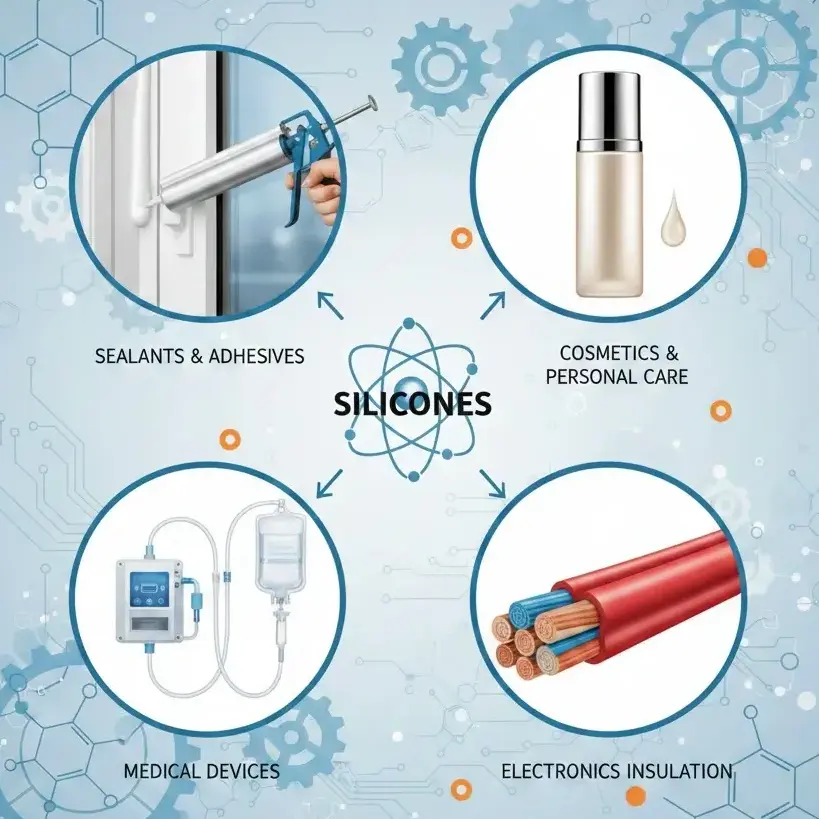
- Electronics: insulation materials and thermal interface compounds
- Construction: sealants, adhesives, waterproof coatings
- Medical field: prosthetics, catheters, implants
- Automotive: gaskets, lubricants, protective coatings
- Cosmetics: conditioning agents and smoothing ingredients
Many readers exploring the topic also encounter related discussions such as silicone polymers, siloxanes, and silicone elastomers used in industrial materials science.
How Are Silicones Used for Hair and Personal Care?
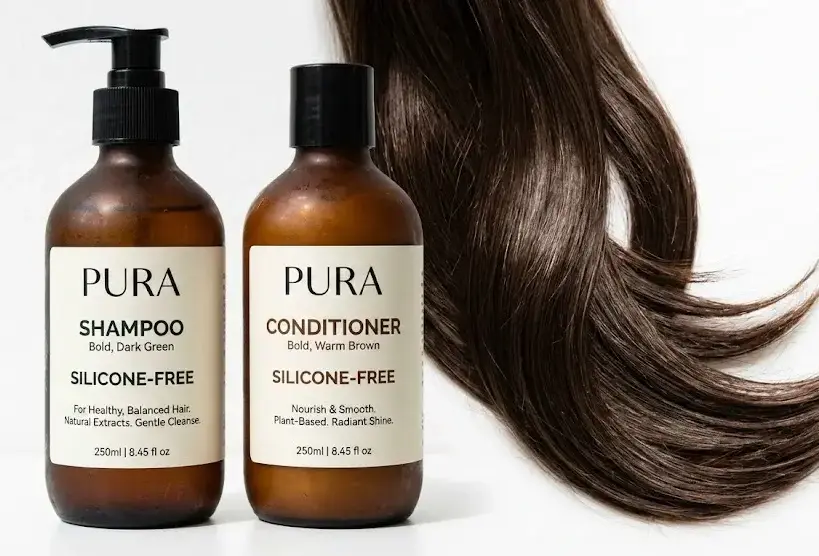
Silicones for hair are commonly used in shampoos, conditioners, and styling products.
Functions in hair care:
- Create a protective coating around hair strands
- Reduce friction during brushing
- Improve shine and smoothness
- Reduce frizz and moisture loss
Common cosmetic silicones
- Dimethicone
- Cyclomethicone
- Amodimethicone
These ingredients enhance texture and manageability without chemically altering hair structure.
Conclusion
Silicones represent a versatile class of organosilicon polymers defined by their siloxane backbone and adaptable molecular structure. This grouping of silicones into fluids, elastomers, and resins accounts for their wide range of industrial and commercial uses. For deeper context on the chemistry behind these materials, readers can also explore what are silicones to understand their molecular foundations and manufacturing processes.
FAQs
What do you mean by silicones?
Silicones are engineered polymers where silicon and oxygen form repeating siloxane chains, combined with carbon and hydrogen groups.
What are examples of silicones?
Common examples include dimethylsilicone fluids, silicone rubber elastomers, and silicone resins used in coatings and electronics.
What chemicals are in silicone?
Silicone materials typically contain silicon, oxygen, carbon, and hydrogen atoms arranged in organosilicon polymer chains.
Are silicones bad for your hair?
Most cosmetic silicones are considered safe and mainly coat hair strands to improve smoothness and reduce friction.
What is the formula of silicones?
The general repeating unit of silicones is often represented as (R₂SiO)n, where R is an organic group such as methyl.
Sources
https://en.wikipedia.org/wiki/Silicone
https://www.essentialchemicalindustry.org/polymers/silicones.html
https://byjus.com/jee/silicones/
https://www.americanchemistry.com/chemistry-in-america/chemistries/silicones
https://www.elkem.com/products/silicones/
https://allen.in/jee/chemistry/silicones
https://www.wacker.com/cms/en-us/products/product-groups/silicones/silicones.html
https://globalsilicones.org/explore-silicones/
https://www.scribd.com/presentation/390251525/Silicones
https://www.silicones.eu/science/production/chemistry-grinding/