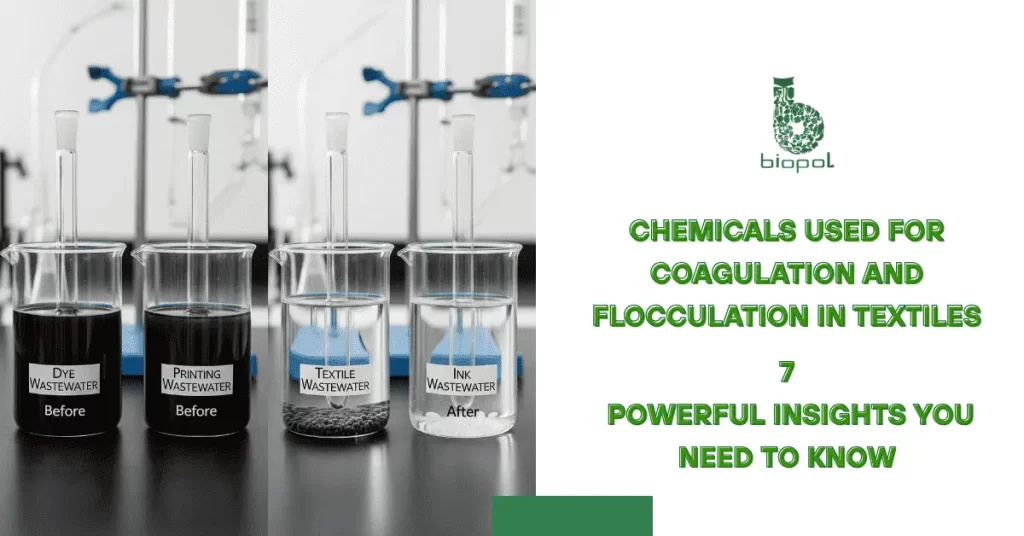
Chemicals used for coagulation and flocculation in textiles play a pivotal role in clarifying wastewater, removing suspended solids, dyes, and colloids efficiently. Understanding their selection, application, and operational impact is essential for textile facilities aiming to achieve cleaner effluent, lower chemical usage, and sustainable water treatment practices.
Water Clarity in Textile Waste
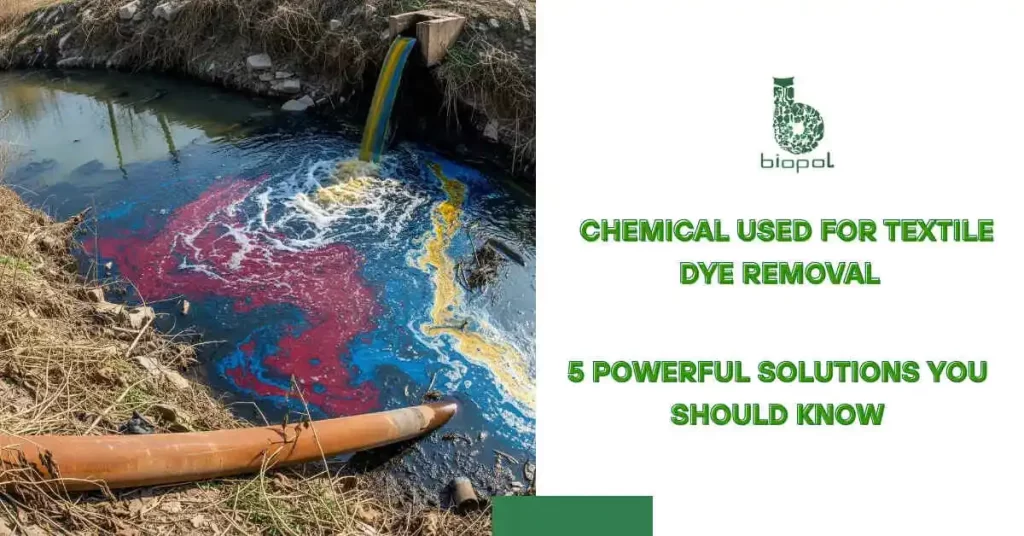
Chemicals used for coagulation and flocculation in textiles are vital for turning turbid textile effluent into manageable water. Wastewater often contains dyes, suspended solids, and colloidal particles that resist settling. Without proper chemical treatment, these pollutants remain suspended, harming the environment and increasing treatment costs.
Coagulants neutralize the charges of suspended particles, and flocculants gather them into larger clusters for more efficient removal. Together, they enhance water clarity and improve downstream treatment.
| Chemical Type | Primary Function |
| Aluminum Sulfate (Alum) | Charge neutralization |
| Ferric Chloride | Rapid coagulation |
| Polyacrylamides | Strengthens flocs, accelerates settling |
Correct selection and combination of chemicals used for coagulation and flocculation in textiles reduces sludge, lowers chemical usage, and supports environmental compliance.
Coagulation vs Flocculation
Chemicals used for coagulation and flocculation in textiles have distinct roles. Coagulation neutralizes charges on particles, while flocculation forms larger aggregates for removal.
| Process | Function | Typical Chemicals |
| Coagulation | Neutralizes particle charges | Alum, Ferric Chloride |
| Flocculation | Forms larger aggregates | Polyacrylamides, Starch Derivatives |
Skipping either step compromises treatment. Coagulation sets the stage; flocculation completes the process. Both are essential for effective textile wastewater management.
Chemicals Used for Coagulation
Chemicals used for coagulation and flocculation in textiles consist of inorganic coagulants like aluminum sulfate, ferric chloride, and polyaluminum chloride, along with flocculants such as polyacrylamides or natural starch-based polymers. The right combination is crucial to maximize efficiency and minimize sludge.
| Chemical Type | Role |
| Aluminum Sulfate | Charge neutralization |
| Ferric Chloride | High-color effluents |
| Polyacrylamides | Enhances floc size |
| Natural Polymers | Eco-friendly floc formation |
Proper dosage and sequence optimize results, ensuring sustainable and efficient textile wastewater treatment.
Inorganic vs Organic Agents
Chemicals used for coagulation and flocculation in textiles can be inorganic (aluminum sulfate, ferric chloride) or organic (polyacrylamides, starch derivatives). Inorganic agents act quickly on high-turbidity water, while organic agents strengthen flocs and reduce sludge.
| Type | Examples | Key Advantage |
| Inorganic | Alum, Ferric Chloride | Rapid charge neutralization |
| Organic | Polyacrylamides, Starch | Forms strong flocs, eco-friendly |
Combining both types often yields the best results, ensuring efficient sedimentation and clear water.

Jar-Test vs Real Effluent
Chemicals used for coagulation and flocculation in textiles perform differently in labs and real effluent. Jar-tests simulate treatment to find optimal chemical type and dosage. However, real effluent varies in pH, dyes, and temperature, requiring on-site adjustment.
| Aspect | Jar-Test | Real Effluent |
| Performance | Predictable | Variable |
| Dosage | Measured | Requires adjustment |
| Floc Behavior | Uniform | May break |
Bridging lab results with field observations ensures better water clarity and reduced chemical waste.
Understanding how chemicals used for coagulation and flocculation in textiles behave in real wastewater is critical—explored in detail in this article.
pH, Mixing & Dosage Effects
Chemicals used for coagulation and flocculation in textiles rely on proper pH, mixing, and dosage. Aluminum sulfate performs best at neutral pH; ferric chloride tolerates wider ranges. Flocculants need gentle mixing to form stable aggregates. Incorrect parameters reduce efficiency and increase sludge.
| Parameter | Effect |
| pH | Optimizes charge neutralization |
| Mixing | Promotes floc formation |
| Dosage | Ensures clarity, avoids excess sludge |
Balancing these factors maximizes treatment performance and operational efficiency.
ANN & Simulation Insights
Chemicals used for coagulation and flocculation in textiles can be optimized using artificial neural networks (ANN) and simulation tools. ANN predicts chemical performance under varying conditions, while simulations visualize floc growth and settling behavior.
| Tool | Purpose |
| ANN | Predict optimal chemical type/dosage |
| Simulation | Visualize floc formation and settling |
Using predictive tools improves water clarity, reduces trial-and-error, and lowers operational costs.
Natural & Eco-Friendly Alternatives
Chemicals used for coagulation and flocculation in textiles increasingly include eco-friendly agents like chitosan, starch derivatives, and plant-based polymers. They reduce sludge toxicity and are biodegradable, supporting environmental compliance.
| Type | Source | Advantage |
| Chitosan | Crustacean shells | CrustaceaBiodegradable, strong flocs |
| Starch Derivatives | Corn, potato | Eco-friendly, reduces synthetic use |
| Plant-Based Polymers | Guar, acacia | Non-toxic, suitable for low-color effluents |
Combining green alternatives with minimal inorganic coagulants maintains clarity while reducing environmental impact.
Choosing the Right Treatment Combo
Chemicals used for coagulation and flocculation in textiles must match effluent characteristics, operational constraints, and environmental goals. Inorganic coagulants set the stage; organic or green flocculants enhance aggregation.
| Effluent Type | Coagulant | Flocculant |
| High-color | Ferric Chloride | Polyacrylamide |
| Low-turbidity | Aluminum Sulfate | Natural Polymer |
| Eco-sensitive | Minimal Alum/Ferric | Chitosan/Starch |
Regular monitoring and adjustment ensure consistent clarity, reduced chemical use, and operational efficiency.
Efficient, Sustainable Textile Water Treatment
Chemicals used for coagulation and flocculation in textiles are at the heart of effective and sustainable wastewater management. When selected and applied correctly, they deliver clear, manageable water while reducing operational costs and environmental impact.
Across textile facilities, combining inorganic coagulants with organic or eco-friendly flocculants has proven highly effective. Operators who consider effluent characteristics, pH, mixing, and dosage consistently achieve superior results. Integrating predictive tools, field observations, and green alternatives further enhances treatment outcomes.
In essence, the right use of chemicals used for coagulation and flocculation in textiles transforms wastewater from a challenge into a controlled, efficient process. By balancing performance, cost, and sustainability, textile plants can meet regulatory standards and maintain environmental responsibility without compromise.
Clear water, lower chemical usage, and reduced sludge volumes are tangible benefits that speak for themselves. Ultimately, strategic chemical selection is both a practical necessity and a pathway to sustainable textile production.
FAQs
Which chemicals are used for coagulation and flocculation?
Common chemicals used for coagulation and flocculation in textiles include inorganic coagulants like aluminum sulfate and ferric chloride, and organic or natural flocculants such as polyacrylamides, starch derivatives, and chitosan. The combination depends on effluent characteristics and treatment goals.
What chemical is used for coagulation?
Coagulation typically uses inorganic salts such as aluminum sulfate (alum), ferric chloride, or polyaluminum chloride. These chemicals neutralize particle charges, allowing fine solids and colloids to aggregate and prepare for flocculation.
What type of chemical is a flocculant?
Flocculants are often high-molecular-weight polymers, either synthetic (like polyacrylamides) or natural (like starch derivatives or chitosan). Their primary role is to bind destabilized particles into larger flocs that settle efficiently.
What are the chemicals in coagulant dosing?
Coagulant dosing usually involves inorganic salts such as alum, ferric chloride, or polyaluminum chloride. Sometimes, a small amount of flocculant is added in tandem to enhance particle aggregation and sedimentation.