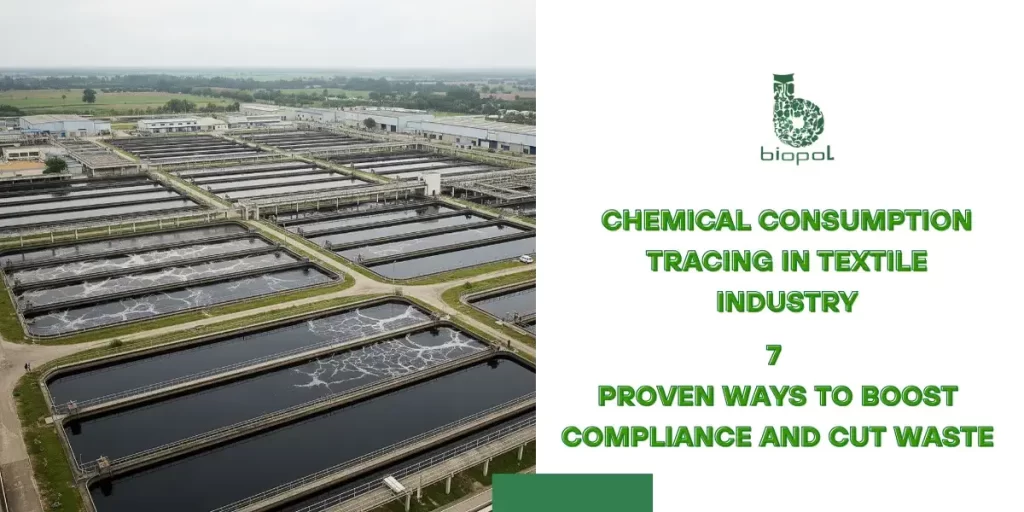
Chemical consumption tracing in textile industry strengthens environmental compliance, improves efficiency, and builds consumer trust. As global regulations tighten and sustainable practices become non-negotiable, precise chemical tracking is no longer optional—it’s essential. This article explores the methods, technologies, and benefits that make tracing a strategic imperative across the textile value chain.
Table of Contents
Why Chemical Tracking Matters
Chemical consumption tracing in textile industry is no longer a niche concern—it’s a global necessity. With mounting regulatory pressures and rising sustainability expectations, ignoring chemical tracking is akin to sailing blind through a chemical storm. Visibility into what goes in and what comes out isn’t just helpful; it’s non-negotiable.
Why does it matter? For starters, chemical consumption tracing in textile industry prevents harmful substances from slipping through the cracks. It empowers manufacturers to identify inefficiencies, minimize waste, and comply with environmental standards before they become liabilities. In a market where every milligram counts, precision means profit.
Consider this:
- Untracked chemicals lead to overuse, waste, and higher operational costs.
- Poor documentation risks non-compliance with REACH, ZDHC, and local laws.
- Lack of traceability damages brand reputation and consumer trust.
Traceability also sharpens competitive edge. Brands that commit to responsible sourcing and transparent processing gain faster access to eco-labels, certifications, and ethically conscious buyers. Sustainability sells—but only when backed by proof.
In short, chemical tracking is not a choice. It’s a responsibility, a compliance requirement, and a lever for business value. Those who trace stay ahead. Those who don’t, fall behind.
Tracing Chemicals in Textile Production
Chemical consumption tracing in textile industry refers to the systematic monitoring, recording, and analysis of all chemicals used at every stage of textile production. From scouring agents in fiber cleaning to fixatives in dyeing, each chemical input must be accounted for—by type, volume, timing, and disposal path.
Why is this level of detail critical? Because chemical consumption tracing in textile industry transforms guesswork into data. And in manufacturing, data is the line between efficiency and excess.
Here’s how the process works:
| Step | Function |
| Chemical Inventory | Logging exact materials received and in stock |
| Input Mapping | Recording chemical use per production batch |
| Process Integration | Syncing chemical flow with machinery and timelines |
| Output Evaluation | Analyzing wastewater, residues, and emissions |
| Reporting & Compliance | Aligning data with environmental or buyer standards |
This tracing process creates a living ledger of chemical activity. It helps suppliers stay compliant with global protocols like GOTS, OEKO-TEX®, and ZDHC. More importantly, it provides manufacturers a clear window into their own operations—where overuse hides, where substitution is viable, and where improvement is urgent.
Chemical tracing is not a luxury reserved for large brands. It’s a scalable system. Spreadsheets may suffice for small operations, while enterprise platforms offer real-time integration for large mills. Regardless of size, the aim remains the same: track it, prove it, improve it.
From Fibre to Finish: Key Chemical Stages
Chemical consumption tracing in textile industry must span the entire production chain—from raw fiber to finished fabric. Each stage involves a cocktail of compounds, and tracing these is crucial for control, compliance, and conscious manufacturing.
Where do these chemicals show up? Almost everywhere. Let’s break it down.
Key Stages in Textile Processing with Chemical Use:
| Stage | Purpose | Typical Chemicals Used |
| Sizing/Desizing | Strengthen yarns, then remove sizing | Starches, enzymes, acids |
| Scouring | Eliminate oils and impurities | Sodium hydroxide, surfactants |
| Bleaching | Whiten fabrics for uniform dyeing | Hydrogen peroxide, stabilizers |
| Mercerizing | Improve luster and dye uptake | Sodium hydroxide (cold treatment) |
| Dyeing | Apply color evenly and permanently | Reactive, disperse, acid dyes |
| Printing | Localized color or pattern application | Pigments, binders, thickeners |
| Finishing | Add properties like softness or repellency | Silicone softeners, resins, flame retardants |
Chemical consumption tracing in textile industry helps quantify use at each of these stages. It identifies which chemicals are essential and which are excessive. More importantly, it tracks what’s entering the fabric—and what’s exiting into wastewater.
Without tracing, stages blur and chemicals hide. With it, every drop is documented. That’s how brands stay transparent. And that’s how operations stay lean, lawful, and less toxic.

Hidden Hazards: What to Watch For
Chemical consumption tracing in textile industry exposes more than just volumes and suppliers—it reveals the silent culprits. Hazardous substances often slip into production undetected, hiding behind vague labels, outdated formulations, or supplier negligence.
So, what are the usual suspects?
Common High-Risk Chemicals
| Substance | Risks | Typical Use |
| Formaldehyde | Skin irritation, respiratory harm | Wrinkle resistance, finishes |
| Azo Dyes | Potential carcinogens, banned in EU | Dyeing synthetic and natural fibers |
| Phthalates | Endocrine disruption | Plastisol prints, coatings |
| Nonylphenol Ethoxylates (NPEs) | Toxic to aquatic life | Detergents, scouring agents |
| Heavy Metals | Toxicity, long-term environmental harm | Pigments, mordants |
To understand how these high-risk substances are identified and quantified, refer to the detailed guide on textile chemical testing methods.
These aren’t just regulatory headaches—they’re reputational risks. Chemical consumption tracing in textile industry helps detect and phase out these compounds before they trigger penalties or product recalls.
What makes them hard to catch? Often, hazardous substances come bundled in chemical blends, hidden beneath trade names, or misdeclared by upstream vendors. Without systematic tracking, they go unnoticed—until an audit fails or a consumer reacts.
Detect early. Replace smartly. Trace consistently. That’s the only way to keep the fabric—and the facts—clean.
Smart Tools for Real-Time Data
Chemical consumption tracing in textile industry becomes exponentially more powerful when paired with real-time data tools. Manual logs and spreadsheets no longer cut it. Today, traceability requires speed, accuracy, and automation.
But which tools are worth their salt?
Key Technologies for Chemical Tracing:
| Tool | Function |
| ERP Integration | Links chemical use with production workflows |
| IoT Sensors | Tracks flow, temperature, and chemical levels |
| Barcode/RFID Systems | Identifies and logs each chemical batch instantly |
| Cloud-Based Dashboards | Monitors usage data across facilities |
| AI & Predictive Analytics | Forecasts overuse, shortages, or compliance risks |
Chemical consumption tracing in textile industry depends on data that moves as fast as production lines do. Smart tools make that possible. They don’t just log inputs—they provide insights. Which line used too much softener? Where’s that excess dye going? Is this formulation still compliant?
And here’s the kicker—real-time visibility reduces waste and prevents bottlenecks. No more last-minute audits gone wrong or missing certificates at shipment.
Data doesn’t sleep. Neither should your tracking system.
Rules & Standards You Must Follow
Chemical consumption tracing in textile industry is tightly bound by international rules, buyer protocols, and environmental mandates. Non-compliance isn’t just a slap on the wrist—it can mean denied shipments, blacklisted vendors, and serious legal trouble.
So, which standards demand attention?
Major Regulations & Industry Frameworks:
| Standard/Protocol | Scope |
| REACH (EU) | Registration and restriction of hazardous chemicals |
| ZDHC MRSL | Manufacturing Restricted Substances List |
| OEKO-TEX® Standard 100 | Product safety through chemical testing |
| GOTS | Organic compliance, including chemical inputs |
| BLUESIGN® | Environmental and safety criteria for inputs |
Chemical consumption tracing in textile industry supports compliance by providing verifiable data trails. It proves that banned substances weren’t used, and that safe alternatives were applied within limits.
But beware: regulations shift. What passed last season may violate the next audit. Static documentation isn’t enough. Tracing systems must stay synced with evolving thresholds and new substances of concern.
Failure to comply isn’t a small oversight. It risks worker safety, public health, and corporate credibility. The smart move? Trace now, verify always, and never assume compliance is permanent.
Traceability Tech in Action
Chemical consumption tracing in textile industry is only as effective as the technology powering it. Traceability without tools is like a map without roads—useless in practice. Fortunately, today’s digital solutions don’t just track—they verify, automate, and alert in real time.
What technologies are leading the charge?
Top Traceability Tools in Use:
| Technology | Functionality |
| RFID Tags | Tracks chemical batches through production lines |
| QR Code Systems | Enables quick access to safety data and certifications |
| Blockchain Platforms | Creates tamper-proof logs for transparency and audits |
| LIMS (Lab Info Systems) | Manages chemical testing and compliance reports |
| API-Based Trackers | Syncs data from suppliers, labs, and ERP platforms |
Chemical consumption tracing in textile industry benefits from these tools by minimizing human error and enhancing visibility. For example, RFID systems can trigger alerts if the wrong chemical enters the wrong process. QR-based systems give instant proof of compliance—no binders, no chaos.
Blockchain, in particular, is gaining traction among brands demanding traceability down to the gram. Every transaction—from purchase to usage—is sealed and timestamped. It builds trust, not just data.
What’s the result? Faster audits, fewer disputes, and cleaner supply chains. Technology turns traceability from a burden into a competitive edge.
Sustainability Gains & ROI
Chemical consumption tracing in textile industry is not just a checkbox for compliance—it’s a smart investment. Tracking every chemical, every time, leads to tangible gains in sustainability and measurable returns on investment. The numbers speak louder than intentions.
Why does it pay off?
Dual Impact: Environmental + Financial
| Sustainability Gains | Business Benefits |
| Lower chemical waste | Reduced input costs per production cycle |
| Safer effluent discharge | Fewer penalties, smoother certifications |
| Better worker safety | Lower insurance liabilities and turnover |
| Data-backed green claims | Easier access to premium, eco-conscious markets |
| Optimized formulations | Higher process efficiency, less rework |
Chemical consumption tracing in textile industry helps pinpoint overuse, substitute safer alternatives, and reduce the footprint of production—all while cutting unnecessary spending.
Consider this: A mill reduces softener overdosing by 15% through real-time tracking. That’s not just sustainability—it’s savings. Multiply that across dyes, bleaches, and auxiliaries, and the cost benefit compounds.
And for brands? Traced, clean processes unlock access to buyers who demand proof—not promises. Greenwashing won’t cut it anymore. Auditable data is the new currency.
In the end, sustainability and profit no longer sit at opposite ends. With proper chemical tracing, they walk hand in hand—faster, cleaner, and stronger.
How to Start Chemical Tracing
Chemical consumption tracing in textile industry doesn’t begin with software or audits—it begins with intent. The decision to trace is the decision to operate with accountability, precision, and foresight. And getting started isn’t complicated—it’s structured.
Here’s a clear pathway to implementation:
Step-by-Step: Building a Tracing System
- Audit Your Chemical Inventory
Begin with what’s already in use. Document every chemical—its purpose, volume, source, and safety data. - Map the Production Flow
Identify where each chemical is introduced, modified, or discharged. Create a visual process map across units. - Select Tracing Tools
Choose scalable technologies based on your operation size: - Set Tracking Protocols
Define what gets logged, how often, and by whom. Standardize reporting formats for consistency. - Train Your Workforce
Educate operators, supervisors, and procurement teams. Without training, tech won’t stick. - Pilot and Adjust
Start with one production line. Trace, review, refine. Then expand across the facility. - Link to Compliance Frameworks
Sync traced data with MRSL, REACH, or GOTS compliance requirements. Trace once, report many.
Chemical consumption tracing in textile industry becomes sustainable only when it’s woven into daily operations—not just inspections. The goal isn’t complexity. It’s clarity. When everyone knows what’s used, where it goes, and why it matters, transparency becomes a habit—not a headache.
Final Take: Trends & Next Steps
Chemical consumption tracing in textile industry is shifting from background compliance to strategic priority. It now influences procurement, innovation, and market trust.
Emerging Trends
- Supplier-Level Visibility — Full transparency across chemical suppliers
- AI for Chemical Optimization — Reducing chemical input without compromising quality
- Integrated Dashboards — Monitoring water, energy, and chemical flows in real time
- Digital Certification Sync — Automating reporting to REACH, ZDHC, and GOTS
- Product-Level Transparency — QR codes enabling chemical disclosure to end users
Next steps? Begin with one product. Build a lightweight but consistent tracing system. Involve your suppliers early. Track consistently, report accurately, and adapt quickly.
In the textile industry, traceability now defines accountability. What once was optional is fast becoming the baseline.
FAQs
What is traceability in the textile industry?
Traceability in the textile industry refers to the ability to track and document every stage of production, from raw materials and chemical inputs to finished garments. It ensures that data on sourcing, processing, and compliance is accessible, verifiable, and aligned with environmental and safety standards.
What are the chemicals used in the textile industry?
The textile industry uses a wide range of chemicals, including surfactants, dyes, bleaches, softeners, flame retardants, formaldehyde resins, and finishing agents. These are applied during processes such as scouring, bleaching, dyeing, printing, and finishing to improve fabric performance, appearance, and durability.
What is PDM in the textile industry?
PDM (Product Data Management) in the textile industry refers to a system that manages and centralizes product-related data—such as specifications, materials, chemical inputs, and process details—throughout the product development cycle. It supports accuracy, consistency, and collaboration across design, sourcing, and production teams.
What is chemical testing in textiles?
Chemical testing in textiles involves analyzing fabrics and production inputs for hazardous substances, regulatory compliance, and performance characteristics. Tests typically check for banned chemicals (e.g., azo dyes, formaldehyde), pH levels, heavy metals, and residuals to ensure the textile product meets safety and sustainability standards.