
New textile chemicals are transforming the fabric industry with innovations that merge sustainability, performance, and advanced technology. From eco-conscious blends to intelligent nano-finishes, these breakthroughs redefine how textiles look, feel, and last—while meeting modern compliance standards and market demands.
Table of Contents
Next-Gen Shifts in Textile Chemistry
Next-gen shifts in textile chemistry begin with an undeniable fact—new textile chemicals are changing the way fabrics are created and used. Each innovation affects how textiles look, feel, and perform in real life. And the ripple effects are already visible across the industry.
Why now? Because the textile market is no longer driven solely by vibrant colors or smooth textures. New textile chemicals combine performance with responsibility—fabrics that resist stains without harming the planet, or materials that breathe better while lasting longer.
Key forces driving this change:
- Sustainability mandates: Cleaner, safer processes.
- Performance demands: Comfort, durability, and aesthetics together.
- Tech integration: Nanoscience and smart additives for higher capabilities.
The choice is simple—hold on to outdated chemistry, or embrace solutions that deliver cleaner, smarter, and longer-lasting fabrics.
Inside New Textile Chemicals and Their Impact
Inside new textile chemicals, we see more than upgraded dyes. These compounds redefine textile chemistry from production to end use. Their effects are measurable, practical, and highly relevant.
By new textile chemicals, I mean advanced finishing agents, precision dyes, eco-conscious binders, and high-performance additives working at microscopic scale. They’re not small adjustments—they’re core improvements.
| Impact Area | Result |
| Fabric Longevity | Better resistance to wear and fading. |
| Comfort | Softer feel, improved breathability. |
| Environmental Footprint | Reduced toxicity and water usage. |
| Aesthetic Quality | Richer colors and smoother finishes. |
Innovation here is not just chemistry for chemistry’s sake—it’s chemistry with clear, measurable value.
Greener Blends for Sustainable Production
Greener blends for sustainable production use new textile chemicals that work without leaving heavy environmental damage. The focus has shifted from “How bright?” to “How clean?”—a welcome change for the planet.
These new textile chemicals aim to reduce waste, cut emissions, and save water, while keeping fabric quality intact. Think low-temperature dyeing or finishes that naturally break down after a garment’s life.
Examples include:
- Plant-based softeners from renewable sources.
- Low-salt reactive dyes that reduce chemical discharge.
- Enzymatic treatments replacing harsh chemical processes.
The outcome is textiles that meet both performance and environmental goals. These innovations build on the foundational role of textile processing agents, many of which are detailed in our in-depth guide on textile chemicals and auxiliaries.
Performance Additives That Elevate Fabrics
Performance additives that elevate fabrics rely on new textile chemicals that strengthen comfort, durability, and appearance in one stroke. Today, looking good isn’t enough—a fabric must perform.
These new textile chemicals work deep in the fiber, adding benefits that last. Shirts that resist wrinkles all day, upholstery that shrugs off spills—these are results you can feel.
Standout categories:
- Moisture-control agents for dryness and breathability.
- Abrasion-resistant coatings for longer fabric life.
- Color-lock enhancers to prevent fading.
- Elastic recovery boosters to maintain shape.
Protective Coatings for High-Demand Uses
Protective coatings for high-demand uses put new textile chemicals into action where reliability matters most. In hospitals, outdoor wear, and industrial settings, protection must be invisible yet dependable.
These new textile chemicals create thin, powerful barriers without making fabrics stiff or heavy.
| Coating Type | Primary Benefit |
| Antimicrobial finishes | Resist bacteria growth. |
| Water-repellent layers | Block liquid while keeping comfort. |
| Industrial-grade treatments | Protect from heat, abrasion, and chemicals. |
Here, performance under pressure is non-negotiable.
Smart Tech: Nano and Reactive Formulations
Smart tech in textiles thrives on new textile chemicals that either operate at nanoscale or react to environmental changes. It’s not theory—it’s already in production.
These new textile chemicals create nano-finishes that bond invisibly to fibers. Reactive versions adjust to temperature, moisture, or light.
Notable advances:
- Self-cleaning surfaces activated by sunlight.
- Thermo-responsive dyes that shift color with heat.
- Moisture-triggered breathability for active wear.
- UV-blocking layers for skin protection.
Chemistry here delivers exactly what’s needed, when it’s needed.
Compliance Shortlist for Safe Adoption
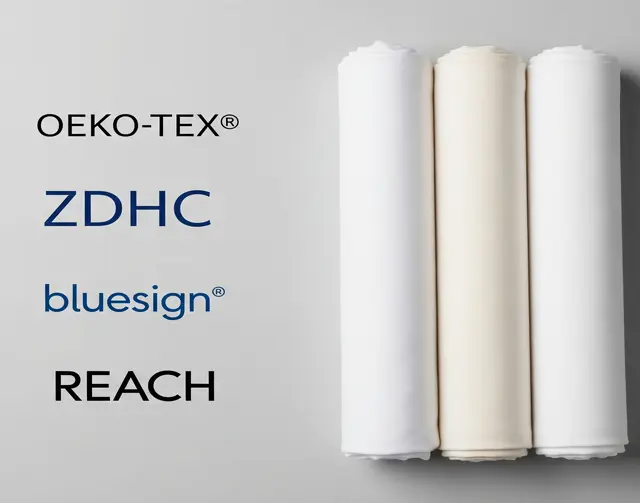
Compliance ensures new textile chemicals meet safety and environmental expectations before use. It’s about proving performance doesn’t come at a hidden cost.
For new textile chemicals, certifications act as common ground for manufacturers, regulators, and buyers.
| Certification | Confirms |
| OEKO-TEX® Standard 100 | Product free from harmful substances. |
| ZDHC MRSL | Limits hazardous chemicals in manufacturing. |
| Bluesign® | Safe inputs and efficient processes. |
| REACH | EU-compliant chemical safety. |
Compliance seals aren’t decoration—they’re commitments to safety and responsibility.
Quick Supplier Checklist for Fast Adoption
Working with new textile chemicals starts with the right supplier. A good match can mean smooth integration and reliable results.
My checklist before adoption:
- Verify certifications for safety and sustainability.
- Check technical support for guidance and testing data.
- Trial samples under real production conditions.
- Evaluate lead times to maintain steady supply.
- Review pricing with quality in mind.
This is about building a partnership where performance and responsibility align—because in textile production, trust is built in every shipment.
FAQs
What chemicals are on new fabric?
New fabrics often feature eco-friendly finishing agents, advanced dyes, flame retardants, wrinkle-resistant resins, and antimicrobial treatments. Many of these are designed with low toxicity and biodegradability in mind to meet modern sustainability standards.
What is new in the textile industry?
The textile industry is embracing bio-based dyes, waterless dyeing, smart textiles, and closed-loop recycling systems. These innovations reduce environmental impact while improving fabric performance, aesthetics, and functionality.
Which chemical is used in textiles?
Textiles commonly use dyes, pigments, finishing agents, optical brighteners, and fabric softeners. The choice depends on the fabric type, intended use, and compliance with environmental and safety regulations.