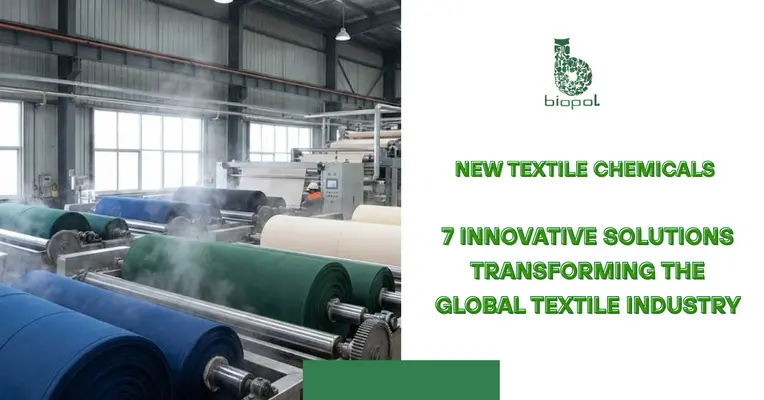
The demand for new textile chemicals is rapidly increasing as manufacturers pursue sustainability and advanced fabric performance. How are chemical innovators shaping the next era of textiles while meeting global environmental standards?
Key Takeaways
- Modern textile chemicals boost quality and eco-responsibility throughout international textile value systems.
- India continues to lead the creation of eco-smart and technically superior textile formulations.
- Collaboration between manufacturers and chemical suppliers is essential for future advancements.
What are the latest innovations in new textile chemicals?
The latest generation of new textile chemicals focuses on reducing environmental impact while improving fabric performance. These include bio-based, low-VOC, and water-saving formulations.
Key innovations include:
- Bio-based softeners: Derived from plant oils to replace silicone-based products.
- Enzymatic pretreatments: Enable low-temperature scouring and bleaching.
- Smart finishes: Impart anti-odor, UV-blocking, and moisture-wicking properties.
- Fluorine-free repellents: Offer sustainable water and stain resistance.
How do new textile chemicals enhance sustainability in fabric processing?
Sustainability is central to new textile chemicals in India and globally. These products are designed to minimize water, energy, and chemical waste.
Sustainability advantages include:
- Reduced effluent load: Through biodegradable and low-toxicity agents.
- Energy savings: Via low-temperature dyeing and finishing aids.
- Water recycling: Improved rinse-off efficiency lowers total water use.
- Zero-discharge dyeing: Innovative auxiliaries enable dry or foam-based processes.
Example: Indian manufacturers like Fineotex and Sarex are developing zero-water discharge (ZLD) compliant auxiliaries aligned with European REACH standards.
What role do new textile chemicals play in high-performance fabrics?
Performance textiles rely on specialized textile auxiliary chemicals manufacturers in India to achieve desired effects.
Applications include:
- Moisture management: Hydrophilic finishes for activewear.
- UV protection: Nano-based additives improve sun resistance.
- Wrinkle resistance: Non-formaldehyde resins maintain garment smoothness.
- Anti-bacterial finishes: Quaternary ammonium or silver-ion based compounds for hygiene textiles.
These chemicals help Indian exporters meet global demand for technical and sportswear fabrics.
Which companies are leading in developing new textile chemicals in India?
India has emerged as a key hub for innovative textile chemistry. Some top textile chemical companies in India are investing heavily in R&D to meet global sustainability benchmarks.
| Company Name | Specialization | Notable Innovation |
| Fineotex Chemical Ltd. | Textile auxiliaries & finishes | Bio-based textile processing aids |
| Sarex Chemicals | Dyeing and finishing chemicals | Sustainable reactive dyes |
| NCTexchem Pvt. Ltd. | Pretreatment & finishing agents | Eco-friendly bleaching stabilizers |
| Clariant | Specialty chemicals | Smart color-retention agents |
| Tanatex Chemicals | Performance finishes | Non-fluorinated water repellents |
These listed textile chemical companies in India have gained recognition for integrating sustainability with technical innovation.
How are new textile chemicals improving dyeing and finishing processes?
Modern dyeing and finishing require chemicals that enhance efficiency and reduce environmental load.
Process improvements include:
- Leveling agents: Ensure uniform dye uptake and prevent shade variation.
- Sequestering agents: Eliminate metal ion interference in dye baths.
- Low-foam surfactants: Improve fabric wetting and washability.
- Catalysts: Enable faster curing and energy-efficient processing.
By adopting these new textile chemicals, manufacturers achieve better color fastness, smoother fabric touch, and consistent production results.
What are the current challenges and future trends in new textile chemicals?
While the growth of new textile chemicals is promising, challenges persist in balancing performance, cost, and sustainability.
Key trends shaping the future:
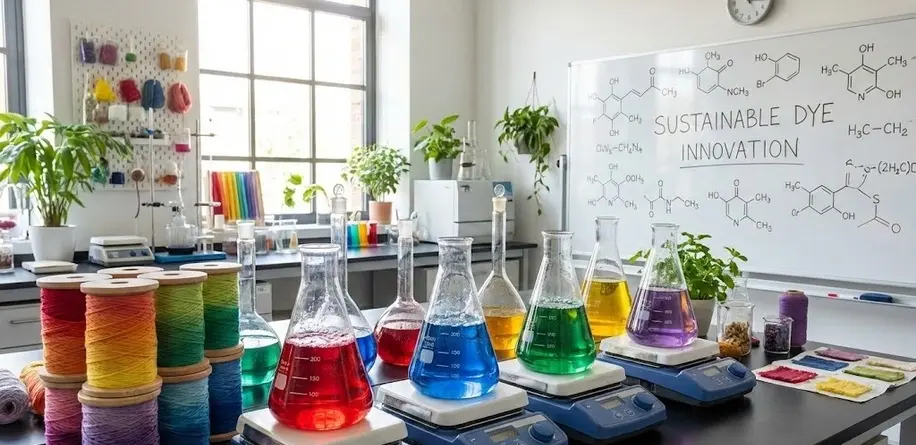
- Expansion of green chemistry principles.
- Growth of AI-driven formulation design for predictive performance.
- Adoption of biodegradable polymer finishes for apparel and home textiles.
- Increased demand for traceable supply chains to ensure compliance.
Indian companies are expected to lead this transition through advanced R&D and global collaborations.
Conclusion
The evolution of new textile chemicals reflects the textile industry’s move toward efficiency, durability, and environmental responsibility. As technologies advance, partnerships between textile chemicals and auxiliaries producers will shape the next generation of intelligent, sustainable fabrics.
FAQ
What are new textile chemicals?
They are advanced formulations designed to improve textile processing, durability, and eco-performance.
How do bio-based textile chemicals work?
They use renewable plant or enzyme-based ingredients to replace petroleum-based materials.
Which Indian companies produce sustainable textile chemicals?
Companies like Fineotex, Sarex, and NCTexchem are leading producers of eco-certified textile auxiliaries.
What is the benefit of fluorine-free repellents?
They provide water resistance without releasing harmful PFAS compounds.
What is the future of textile chemicals?
Sustainable innovation, digitalized R&D, and biodegradable materials will dominate the market.