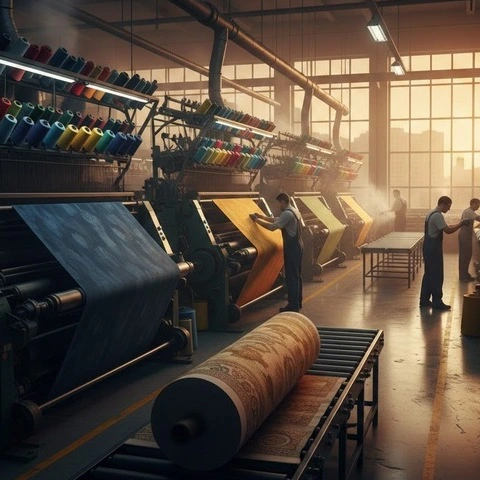
The operation sequence of textile chemical processing refers to the ordered series of chemical treatments applied to fabrics to enhance appearance, texture, and performance. Each segment of the process—from preparation to finishing—focuses on purifying the material, improving its qualities, and maintaining its long-term performance. How do these stages align with modern textile processing technologies?
Key Takeaways
- Each operation has a defined purpose aimed at boosting fabric durability and usability.
- Quality and environmental compliance are essential in all chemical processes.
- Continuous innovation in chemical auxiliaries enhances sustainability.
- Understanding process flow is crucial for industrial efficiency and product excellence.
- Each operation performs a specific function to elevate fabric standards and efficiency.
What Is the Basic Operation Sequence of Textile Chemical Processing?
The operation sequence of textile chemical processing generally includes seven core stages:
- Singeing – Removing surface fibers to achieve a smooth finish.
- The process strips off size materials such as starch, PVA, or CMC to ensure better dye penetration.
- This treatment employs sodium hydroxide or surfactants to strip away natural contaminants.
- This step enhances fabric brightness by breaking down colored impurities.
- This treatment adds a silky gloss to the fabric while boosting its dimensional consistency and dyeing efficiency.
- Dyeing/Printing – Adding color or patterns using appropriate dye classes.
- Finishing – Enhancing fabric properties such as softness, shrink resistance, or flame retardancy.
How Does Singeing Contribute to Textile Surface Preparation?
Singeing burns off protruding fibers on the fabric surface using gas flames or heated copper plates.
Purpose:
- Creates a clean, uniform surface for further processing
• Decreases surface fuzz and enhances the precision of printed patterns
Approaches Used:
• Plate technique
• Roller technique
• Gas flame method
Why Are Desizing and Scouring Critical in the Operation Sequence?
Desizing and scouring are essential preparatory stages before bleaching or dyeing.
Desizing:
- Removes starch-based sizing agents using enzymes or acids
Scouring: - Uses alkalis (e.g., NaOH) to remove oils, waxes, and pectins
These stages optimize fabric absorbency for better dye penetration and balanced finishing.
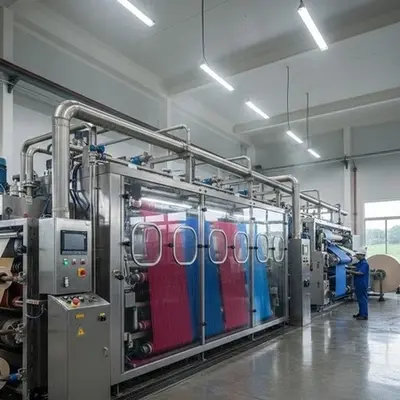
What Happens During Bleaching and Mercerization?
Bleaching:
- Removes natural coloration using hydrogen peroxide or sodium hypochlorite
- Achieves uniform whiteness without fabric damage
Mercerization: - Treats cotton with 20–25% caustic soda
- Enhances tensile strength, dye uptake, and luster
Example: Mercerized cotton yarns are preferred for high-quality shirting and home textiles due to their sheen and smoothness.
How Is Color Added in Textile Chemical Processing?
In this operation sequence, dyeing and printing introduce color and pattern:
- Dyeing methods: Exhaust, continuous, and semi-continuous
- Printing techniques: Screen, roller, and digital printing
The choice of dye fixation process depends on fabric type, with reactive dyes applied to cotton and disperse dyes to polyester.
People also explore related topics such as “dyeing textile process,” textile auxiliaries, and finishing chemicals used in coloration.
What Are the Final Finishing Operations in Textile Chemical Processing?
Finishing provides the desired functional and aesthetic properties.
Common finishes include:
- Mechanical finishes: Calendering, sanforizing, raising
- Chemical finishes: Softening, wrinkle resistance, flame retardancy
Objective: Improve hand feel, durability, and market value.
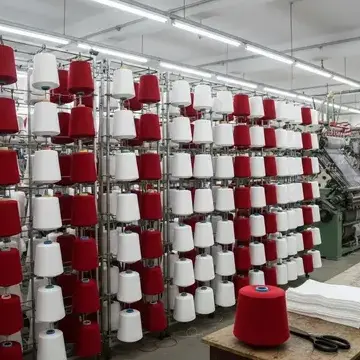
How Is Quality Controlled Across the Entire Sequence?
Quality control involves:
- Continuous pH and temperature monitoring
- Chemical concentration standardization
- Compliance with ISO 9001 and Oeko-Tex® standards
- Wastewater testing per environmental norms
This ensures consistency, safety, and sustainability throughout the textile processing line.
Conclusion
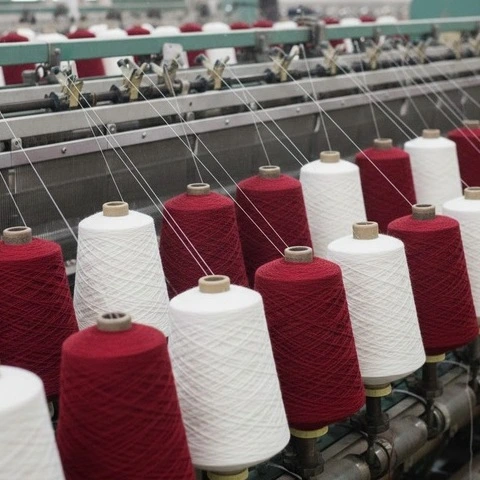
The operation sequence of textile chemical processing integrates preparation, coloration, and finishing steps to achieve high-quality fabrics that meet both aesthetic and performance standards. As industries modernize, automation and eco-friendly agents are redefining these operations—supported by emerging innovations textile chemicals news product launches companies that continuously improve efficiency and sustainability.
FAQ
What are the steps in textile processing?
Singeing, desizing, scouring, bleaching, mercerization, dyeing/printing, and finishing.
What are the chemical processes of textile?
They include desizing, scouring, bleaching, dyeing, and finishing treatments using specialized reagents.
What is the process sequence of textile wet processing?
The wet processing sequence covers desizing → scouring → bleaching → dyeing → finishing.
What are the 5S in textile industry?
Sort, Set in order, Shine, Standardize, and Sustain—principles ensuring organized and efficient operations.
Sources
https://ebooks.inflibnet.ac.in/hsp09/chapter/preparatory-steps-prior-to-finishing-textiles/
https://www.sciencedirect.com/topics/engineering/textile-processing
https://www.linkedin.com/posts/muhammad-tahir-b43abb130_textileprocessing-manufacturing-textileengineering-activity-7336259487986515968-wUDK
https://textilelearner.net/flow-chart-of-textile-wet-processing/