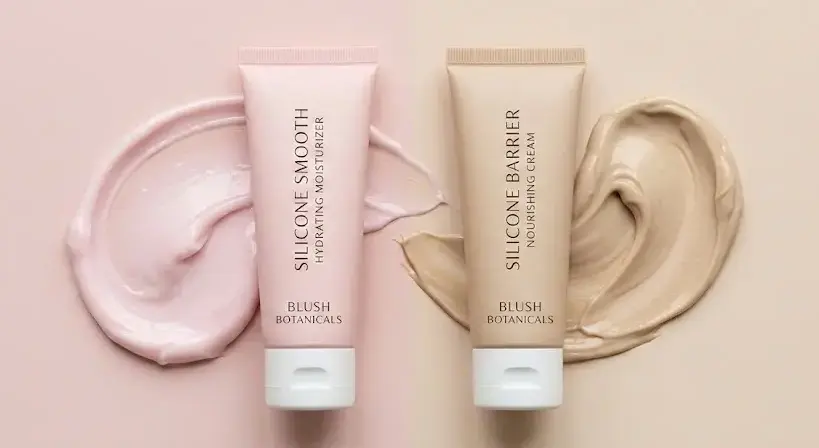
Silicones in moisturizers refer to a class of synthetic compounds used to create a smooth, silky texture and form a barrier that helps prevent water loss from the skin. These ingredients are common in dermatological formulations due to their non-comedogenic nature and sensory appeal. But what exactly do they do—and are they safe for daily use?
Key Takeaways
- Silicones in moisturizers act as occlusive and emollient agents.
- Dimethicone and cyclopentasiloxane are the most common types.
- They enhance smoothness, barrier protection, and product stability.
- Safe for sensitive and acne-prone skin when properly cleansed.
- Approved by global cosmetic regulators for topical use.
What Are Silicones in Moisturizers and How Do They Work?
Silicones in moisturizers function as occlusive and emollient agents, forming a breathable film over the skin. This barrier prevents transepidermal water loss (TEWL) while providing a soft, silky finish. Common types include:
| Silicone Type | INCI Name Example | Function |
| Dimethicone | Dimethylpolysiloxane | Barrier & smoothness |
| Cyclopentasiloxane | Volatile silicone | Lightweight feel |
| Dimethiconol | Silicone polymer | Conditioning agent |
| Cyclohexasiloxane | Cyclic silicone | Slip enhancement |
These ingredients are approved for cosmetic use by regulatory bodies such as the U.S. Food and Drug Administration and the European Chemicals Agency, confirming their general safety under standard concentrations.
Why Are Silicones Used in Moisturizers?
Manufacturers incorporate silicones for both functional and sensory reasons:
- Improved spreadability without a greasy residue
- Enhanced skin barrier to lock in hydration
- Long-lasting smoothness under makeup
- Non-irritating formulation suitable for sensitive skin
They also help stabilize emulsions, extending product shelf life. Many dermatologist-tested moisturizers, such as those by CeraVe, rely on dimethicone to maintain hydration balance.
Are Silicones in Moisturizers Safe for All Skin Types?
Silicones are non-reactive, hypoallergenic, and non-comedogenic, making them suitable for most skin types. However:
- Oily skin may prefer lightweight silicones like cyclopentasiloxane.
- Dry skin benefits from heavier silicones like dimethicone.
- Acne-prone users should ensure products are non-comedogenic-certified.
Scientific reviews (National Center for Biotechnology Information, 2023) show no causal link between silicones and acne formation.
Do Silicones Clog Pores or Prevent Absorption?
Contrary to popular belief, silicones form a semi-permeable film, allowing oxygen exchange while minimizing water loss. They do not “suffocate” the skin or block active ingredient absorption.
In related discussions, users often compare silicones in moisturizers with silicone-free skincare, occlusives like petrolatum, and natural emollients to understand texture and absorption differences.
What Are the Benefits of Silicones in Moisturizers?
- Soft, velvety skin finish
- Reduced roughness and flakiness
- Improved spread of actives
- Immediate smooth appearance
- Makeup primer compatibility
In essence, silicones enhance both performance and sensorial experience, making formulations more pleasant and effective.
Are There Any Drawbacks to Using Silicones in Skincare?
Potential drawbacks include:
- Buildup with prolonged use if not cleansed properly
- Temporary smoothing rather than long-term treatment
- Perceived heaviness for extremely oily skin
Dermatologists emphasize regular exfoliation and double cleansing to remove residue without stripping the skin barrier.
What Do Dermatologists and Regulatory Agencies Say?
Dermatologists generally consider silicones safe, noting that they:
- Are biocompatible and non-sensitizing
- Undergo safety assessments by the FDA and European Commission
- Pose minimal irritation risk compared to some natural oils
These properties explain why silicones are found in clinical-grade formulations, including those for wound healing and post-procedure recovery.
Conclusion
Silicones in moisturizers offer a scientifically validated way to smooth, protect, and hydrate the skin without causing clogging or irritation. Their performance versatility makes them a staple in modern skincare formulation. For readers comparing cosmetic silicones across categories, see our related discussion: “How do silicone hair serums differ from traditional oils” for cross-application insight.
FAQ
Which moisturizers are silicone-based?
Products containing dimethicone, cyclopentasiloxane, or dimethiconol—like CeraVe and Neutrogena Hydro Boost—are silicone-based.
Why avoid dimethicone?
Some users avoid dimethicone due to concerns about buildup or texture preference, not due to proven health risks.
Is silicone bad for rosacea?
No. Dimethicone is often recommended for rosacea-prone skin as it soothes and protects against irritation.
Why is silicone not good for the skin?
Overuse may lead to temporary buildup if cleansing is inadequate, but silicones themselves are safe and non-toxic.
Sources
https://www.healthline.com/health/beauty-skin-care/silicones
https://pmc.ncbi.nlm.nih.gov/articles/PMC10298615/
https://www.paulaschoice.com/skin-care-advice/ingredient-spotlight/silicone-in-skin-care
https://www.reddit.com/r/AsianBeauty/comments/1lb97ek/do_you_care_if_your_moisturizer_is_siliconefree/
https://elkaysilicones.com/silicone-in-cosmetic-personal-care/
https://www.cerave.com/skincare/dimethicone
https://www.byrdie.com/water-vs-silicone-based-skincare
https://beminimalist.co/blogs/skin-care/everything-you-need-to-know-about-silicones-in-skincare-products
https://www.clinikally.com/blogs/news/6-reasons-why-people-avoid-silicones-in-skin-care
https://plumgoodness.com/blogs/ingredients/p-strong-the-role-of-silicones-in-skincare-and-hair-care