
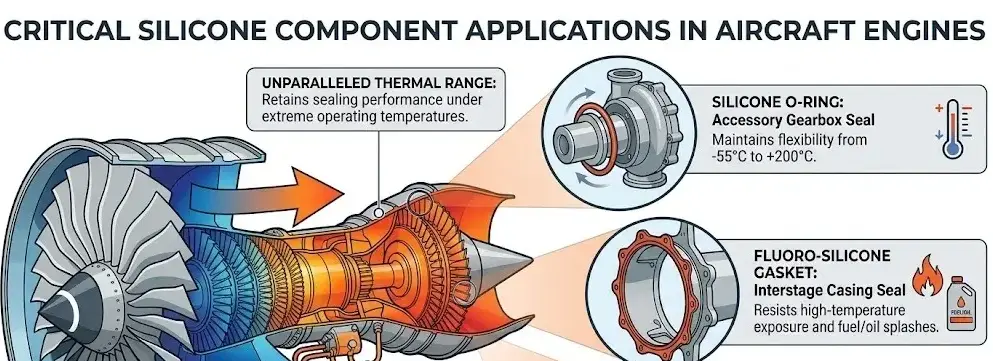
Silicone for aerospace industry is a high-performance material used in aircraft, spacecraft, and defense systems for sealing, insulation, and vibration damping. It combines high heat resistance, chemical inertness, and UV protection to sustain reliable function in demanding settings. Aerospace engineers rely on silicone for its compliance with strict aviation and defense standards, making it a critical material in both structural and electronic applications.
Key Takeaways
- Silicone provides high thermal, chemical, and UV resistance in aerospace.
- Critical applications include seals, gaskets, electrical insulation, and vibration damping.
- Specialty silicones meet regulatory and mechanical standards for aviation and defense.
- Adhesives and elastomers expand functionality for bonding and structural protection.
- Related materials include aerospace-grade composites and construction
What is silicone for aerospace industry and why is it important?
Silicone for aerospace industry refers to specialized silicone compounds engineered for high-performance applications in aviation and defense.
- Properties: Capable of handling 300°C, chemically resistant, and stable against UV light and ozone.
- Applications: Seals, gaskets, O-rings, vibration isolators, and electrical insulation.
- Standards: Often meets ASTM D2000, MIL-R-25988, and FAR 25.853 flame requirements.
How is silicone used in aircraft sealing systems?
Silicone for aerospace industry provides reliable sealing in aircraft cabins, fuel systems, and engines.
- O-rings and gaskets: Maintain pressure and prevent leaks.
- Liquid silicone rubber (LSR): Used in complex-shaped seals for fuel and hydraulic lines.
- High-temperature resistance: Prevents degradation in engine compartments.
Example Table:
| Component | Silicone Type | Temperature Range | Key Benefit |
| Fuel line gasket | HCR (High Consistency Rubber) | -60°C to 250°C | Chemical resistance |
| Window seal | LSR | -50°C to 200°C | Flexibility and UV stability |
| Engine hose | Molded silicone | -60°C to 300°C | Vibration damping |
What role does silicone play in thermal and electrical insulation?
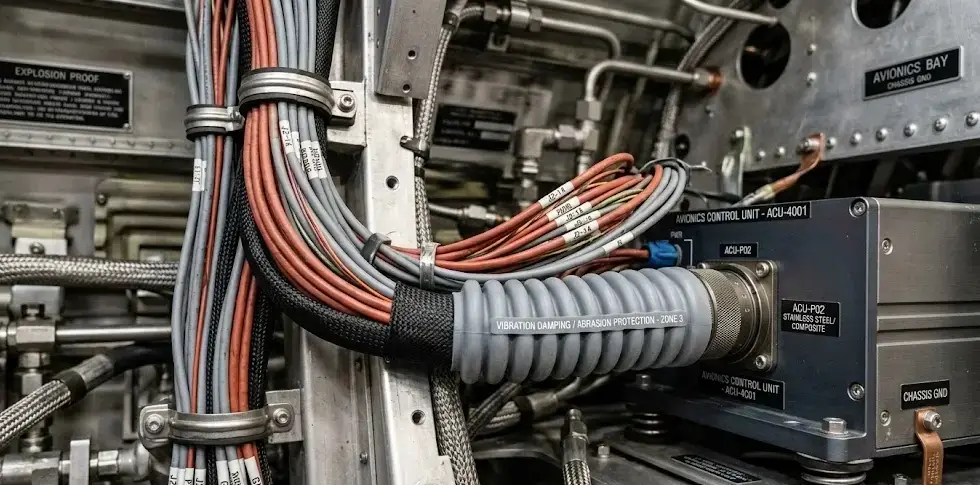
Silicone ensures the safety and performance of sensitive avionics and wiring in aerospace systems.
- Dielectric strength: Prevents current leakage and short circuits.
- Thermal stability: Maintains performance in fluctuating temperatures.
- Encapsulation: Protects avionics from moisture, chemicals, and vibration.
Which adhesives and bonding materials are used with silicone in aerospace?
Silicone interacts with aerospace-grade sealants and adhesives to ensure durable and reliable assemblies.
- Silicone-based adhesives: Bond lightweight composites and metals.
- Epoxy-silicone hybrids: Provide flexibility and chemical resistance.
- 3M and Dow aerospace sealants: Commonly used for panel assembly and vibration isolation.
Related context: Aerospace bonding materials are often discussed alongside high-temperature adhesives, thermal interface materials, and specialty elastomers.
How is silicone applied in aerospace vibration and shock damping?
Silicone for aerospace industry reduces structural fatigue and passenger cabin noise.
- Elastomeric mounts: Absorb engine and airframe vibrations.
- Molded silicone pads: Protect sensitive instrumentation.
- Shock isolators: Comply with MIL-STD-810 for durability testing.
Are there specialty silicone materials for aerospace extreme environments?
Yes, specialized silicones are engineered for hypersonic, cryogenic, and high-altitude applications.
- Fluorosilicone: Resistant to fuel, oil, and solvents.
- High-consistency rubber (HCR): Maintains seal integrity under mechanical stress.
- Foamed silicone: Provides insulation without adding significant weight.
How does silicone contribute to aerospace regulatory compliance?
Silicone for aerospace industry ensures materials meet rigorous safety and environmental standards.
- Fire resistance: FAR 25.853 flame and smoke compliance.
- Chemical inertness: Meets MIL-SPEC and ASTM standards.
- Longevity: Reduces maintenance cycles, critical in commercial and defense aviation.
Conclusion
Silicone for aerospace industry is indispensable for sealing, insulation, damping, and adhesion in aircraft and defense systems. Its robust thermal, chemical, and mechanical capabilities support full compliance with demanding aerospace standards.For connected applications, engineers often also consider silicone for construction materials for infrastructure and maintenance facilities supporting aerospace operations.
FAQ
Is silicon used in aerospace?
Yes, silicon-based materials like silicone are widely used for seals, insulation, and vibration damping in aircraft and spacecraft.
Which material is used in the aerospace industry?
Materials include aluminum alloys, titanium, composites, and high-performance silicones for thermal and chemical resilience.
What adhesives are used in aerospace?
Silicone-based adhesives, epoxy-silicone hybrids, and specialized structural sealants are commonly used.
What is silicone used for in engineering?
Silicone is used for sealing, insulating, damping vibrations, and protecting components from heat, chemicals, and UV exposure.
Can silicone withstand extreme aerospace conditions?
Yes, specialized silicones maintain integrity under high temperatures, cryogenic conditions, and chemical exposure.
Sources
https://elastostar.com/top-applications-of-silicone-rubber-in-the-aerospace-industry/
https://www.momentive.com/en-us/industry/aerospace-aviation-defense/elastomers-for-aerospace-aviation-defense
https://www.ellsworth.in/Dow-Silicone-Solutions-for-Aerospace-and-Defense.html
https://silicone.co.uk/industries/aerospace/
https://www.applerubber.com/blog/the-top-ways-silicone-is-used-in-the-aerospace-industry/
https://en.siliconenab.com/portfolio/silicone-aerospace-industry/
https://www.3mindia.in/3M/en_IN/p/c/adhesives/sealants/i/transportation/aerospace/
https://eureka.patsnap.com/report-research-on-silicone-rubber-in-aerospace-engineering-applications
https://cht-silicones.com/applications/transportation/silicone-aviation-and-aerospace
https://www.aero-mag.com/silicone-in-the-aerospace-industry