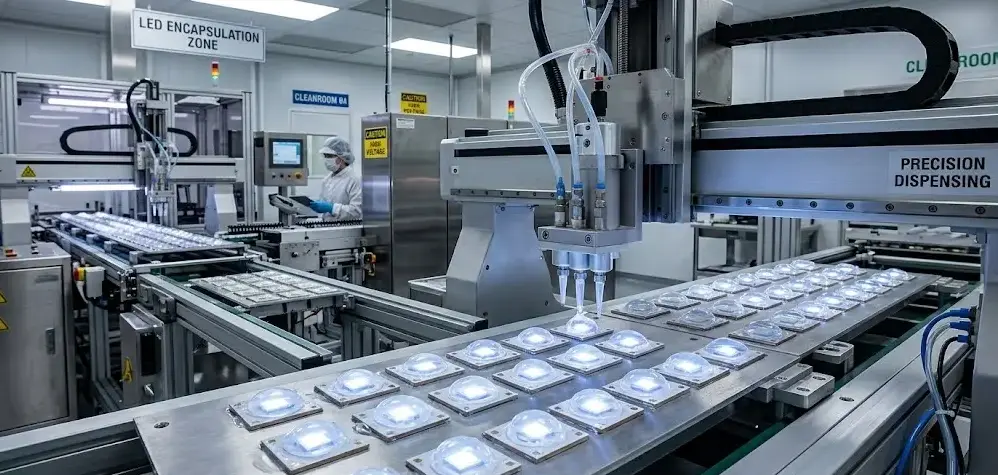
Silicone for LED encapsulation is a specially formulated material that protects light-emitting diodes by providing mechanical, thermal, and environmental stability. Why is this material preferred in industrial and automotive LEDs? Its combination of optical clarity, electrical insulation, and long-term durability makes it ideal for high-performance LED systems.
Key Takeaways
- Silicone offers optical clarity, thermal resistance, and chemical stability.
- Application methods include liquid dispensing, molding, and curing.
- Alignment with IEC, UL, and ISO standards ensures stable and dependable LED functionality.
- Widely used in automotive, consumer electronics, and outdoor LED systems.
- Provides thermal management and electrical insulation simultaneously.
What properties make silicone suitable for LED encapsulation?
Silicone for LED encapsulation offers a unique balance of physical and chemical properties essential for LED performance:
- Optical Clarity: Transmits light efficiently, maintaining LED brightness and color consistency.
- Thermal Resistance: Stable across −40°C to 200°C, preventing thermal degradation.
- Chemical Inertness: Resistant to moisture, UV, and common industrial chemicals.
- Electrical Insulation: High dielectric strength prevents short circuits and leakage.
| Property | Typical Range / Standard | Industrial Relevance |
| Refractive Index | 1.40–1.50 | Maintains color accuracy |
| Thermal Stability | −40°C to 200°C | Automotive and outdoor LEDs |
| Hardness (Shore A) | 10–50 | Encapsulation flexibility |
How is silicone applied in LED encapsulation processes?
Silicone for LED encapsulation is applied in various industrial methods depending on LED type and production scale:
- Liquid Dispensing: Precision-controlled silicone gels or resins are dispensed over LED dies.
- Molding: Silicone compounds are injection-molded to form lens-shaped encapsulations.
- Curing: Thermal or room-temperature vulcanization stabilizes the silicone without affecting LED function.
Example: Automotive LED tail lights commonly use injection-molded silicone lenses to maintain optical performance under vibration and temperature cycling.
Which standards guide silicone use in LED encapsulation?
Compliance ensures long-term performance and safety:
- IEC 61347-2-13: Safety standards for LED modules.
- UL 94 V-0: Flame retardancy for encapsulation materials.
- ISO 10993: Biocompatibility for consumer-facing LED devices (e.g., wearable LEDs).
Related applications often consider silicone alongside thermal interface materials, optically clear adhesives, and epoxy encapsulants.
Can silicone improve LED thermal management?
Yes, silicone for LED encapsulation enhances heat dissipation while protecting electrical components:
- High Thermal Conductivity Silicone Gels: Transfer heat from LED dies to the substrate.
- Low Thermal Expansion: Prevents stress on LED chips during temperature cycling.
- Integration with Heat Sinks: Maintains uniform thermal distribution for high-power LEDs.
What are common industrial and automotive applications of silicone-encapsulated LEDs?
Silicone for LED encapsulation is widely used in sectors requiring durability, optical stability, and electrical safety:
- Automotive headlights, tail lights, and interior lighting
- Outdoor LED signage and street lighting
- Consumer electronics displays and wearables
- Architectural lighting and horticultural LEDs
A reader might note that silicone is often compared with epoxy or polyurethane encapsulants for different thermal and optical requirements.
How does silicone interact with LED electrical components?
Silicone provides insulation and protection without impeding electrical function:
- Non-Conductive: Prevents short circuits.
- Moisture Barrier: Protects sensitive LED circuitry.
- Flexible Encapsulation: Accommodates thermal expansion without cracking.
Conclusion
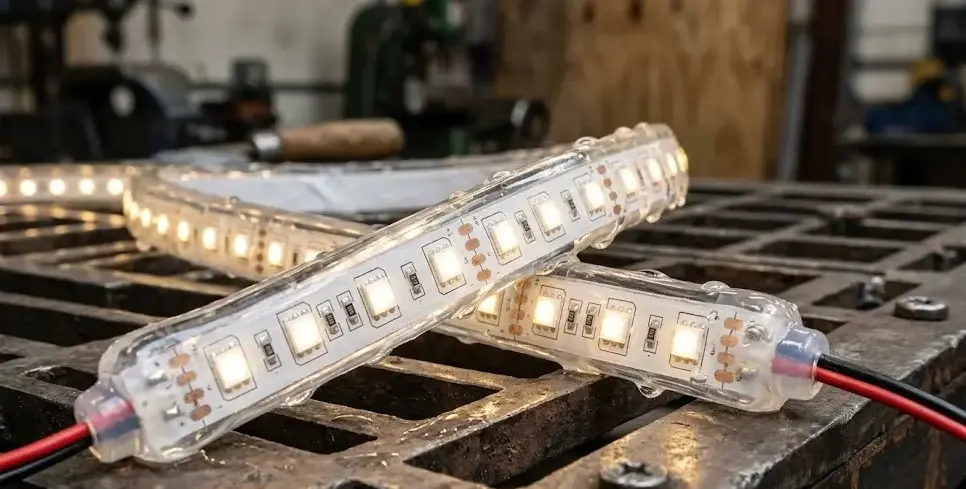
Silicone for LED encapsulation ensures reliable optical performance, electrical insulation, and thermal stability in industrial and automotive LED applications. Its standardized, high-performance properties make it indispensable for modern LED manufacturing. For broader industrial applications, consider reviewing silicone for aerospace industry for insights into high-temperature and high-reliability silicone uses.
FAQ
Is silicon used in LEDs?
Yes, silicon is used in LED chips and substrates for electrical conduction and semiconductor functions.
What is LED encapsulation?
LED encapsulation is the process of protecting LED components with a transparent material to preserve optical, thermal, and mechanical performance.
Can electricity pass through silicone?
No, silicone is an excellent electrical insulator and prevents current leakage.
Can you put silicone over LED diodes?
Yes, silicone is applied over LED diodes to provide thermal, optical, and mechanical protection.
What types of silicone are used in LED manufacturing?
For encapsulation, manufacturers often use transparent silicone gels combined with high-heat silicone resins.
Sources
https://www.xjysilicone.com/silicone-encapsulation-materials.html
https://www.shinetsusilicone-global.com/products/usage/led/index.shtml
https://ieeexplore.ieee.org/document/8587321/
https://cht-silicones.com/products/encapsulants/optically-clear-silicone-encapsulants
https://www.indiamart.com/proddetail/silicone-gel-for-led-strip-encapsulation-cenusil-gel-841-a-b-25866069673.html?srsltid=AfmBOoqHwOroMkv9M1teO_vHhl_rx6aokCGlEuPIh6E8vYTIAvFOjZXC
https://termopasty.com/en/encapsulation-of-led-techniques-and-benefits/
https://www.laird.com/products/led-silicone-materials/optical-encapsulants-led