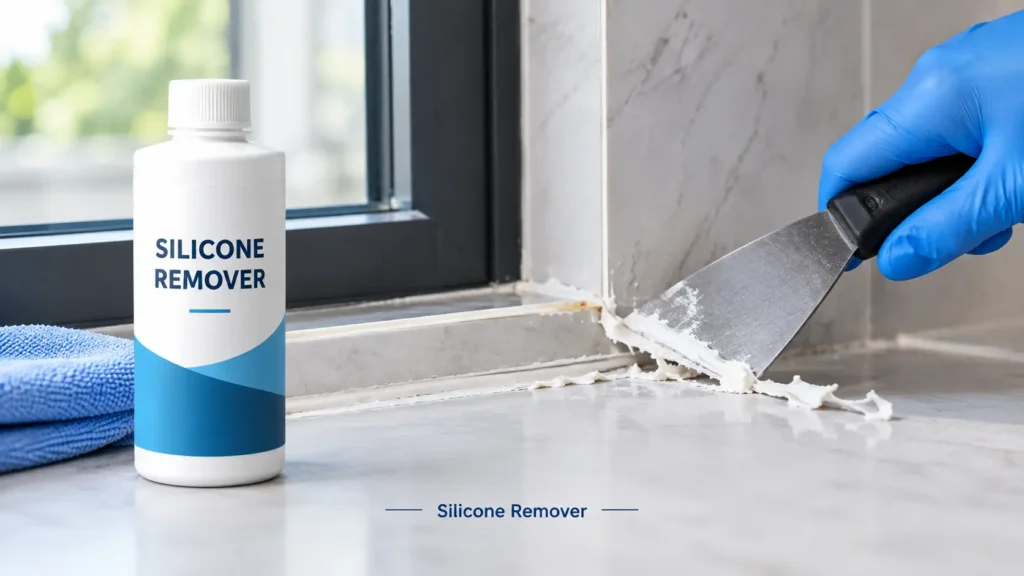
The silicone remover acts quickly to dissolve cured caulk or sealant on any surface in the house. The remover softens the seals in the bathroom, kitchen or even industrial places. The chemical formula of the current silicone remover works easily through the matrix network of the cured silicone.
The manual removal of the sealant might damage the tile or glass. However, using chemical formulas of silicone sealant remover makes the work easier and ensures that the structures remain undamaged.
What is a Silicone Remover?
Silicone remover dissolves the strong polymer bonds found inside cured sealant products. It breaks down tough elastic structures into soft, manageable gel residue.
Applying a specialized silicone sealant remover speeds up home maintenance projects significantly. Chemical solvents weaken adhesion along tile, glass, metal, and plastic surfaces.
Understanding Silicone Remover – Different Types
Some of the common methods of removing silicone from a surface are as follows:
| Feature | Chemical Silicone Remover | Manual Scraping | Heat Gun Method |
| Effort Level | Low physical effort | Very high physical effort | Moderate effort |
| Surface Safety | High (safe for tiles) | Low (risk of scratches) | Low (heat damage risk) |
| Residue Clearance | Complete bond breakdown | Leaves thin film behind | Smears softened rubber |
| Speed | Fast chemical action | Slow manual labor | Moderate application speed |
Understanding structural differences helps homeowners choose proper tools for sealant projects.
Active Solvent Chemistry of Silicone Remover Solvents
Silicone removers do not strictly melt silicone; rather, specialized organic solvents penetrate the hydrophobic siloxane (Si-O-Si) cross-linked polymer matrix.
Active Chemical Ingredients
- Aromatic Hydrocarbons & Esters: Solvents such as xylene, toluene, or specialized glycol ether esters swell the cross-linked polymer network, expanding its molecular structure.
- Organosulfonic Acids: Active agents like dodecylbenzenesulfonic acid (DDBSA) act as catalysts to chemically cleave the stable siloxane backbone into lower molecular weight oligomers.
- Aliphatic Solvents: Carrier solvents facilitate deep chemical penetration into tight joints without altering underlying substrates.
Once swollen and cleaving begins, the structural integrity collapses. The cured elastomer converts into an easily scannable, viscous gel.
Preparation Before Application of Silicone Remover
Be well prepared before applying silicone sealant remover.
- Gather all the protective gear needed before starting your sealant removal process.
- Put on your gloves, safety goggles, and ensure there is enough airflow in the room.
- Remove any loose soil, dust, and debris with a wet cloth.
- Cut off any thick sealant layers using a utility knife.
- By doing so, chemicals will act much more quickly due to thin sealant layers remaining.
- The preparation step will ensure complete penetration of chemicals into any leftover sealant layers.
How to Apply Silicone Remover
Following these precise steps guarantees a spotless surface ready for fresh caulking.
- Remove Excess Caulk: Slice through the bulk sealant with a razor blade.
- Apply Solvent: Cover the remaining sealant with a thick coating of silicone caulk remover.
- Allow Time for Action: Wait 20-30 minutes for the solvent to take effect.
- Scrape Off Sealant: Scrape off the softened sealant with the aid of a plastic scraper.
- Clean Up: Clean the site using methylated spirits.
Dwell Time Standards Tied to Layer Thickness and Tensile Strength
Chemical penetration depends directly on sealant thickness, cross-link density, and mechanical strength (RTV room-temperature vulcanized vs. high-tensile industrial structural sealants).
| Sealant Layer Thickness | Tensile Strength / Type | Recommended Dwell Time | Chemical Action Phase |
| Thin Film (< 1 mm) | Standard Acetoxy Caulk | 10–15 Minutes | Matrix Swelling & Surface Release |
| Moderate Bead (1–3 mm) | High-Modulus Neutral Cure | 20–30 Minutes | Core Cleavage & Gelation |
| Thick Bead (3–6 mm) | Industrial RTV Structural Silicone | 45–90 Minutes | Multi-Stage Softening (Requires Re-application) |
| Heavy Industrial (> 6 mm) | High-Tensile Gasket / Marine Grade | 2 to 4 Hours | Bulk Breakdown (Pre-trimming Essential) |
Material Considerations Using Silicone Remover
Some of the important factors related to silicone remover are as follows:
- Different surfaces require unique care when applying active chemical solvent formulas.
- Ceramic tiles and glass withstand solvent application without any discoloration risks.
- Plastic, acrylic tubs, and painted walls require testing on hidden areas first.
- Harsh chemical contact may dull glossy acrylic surfaces if left too long.
- Natural stone surfaces like marble require specialized solvent-free removal techniques instead.
- Always read manufacturer safety labels to confirm material compatibility before application.
- Understanding surface limits protects expensive bathroom fixtures during routine home repairs.
Understanding Silicone Sealant Remover
The chemical actions of a silicone sealant remover are described below:
- Specialized solvent blends target the inorganic siloxane bonds in caulk. They cause cured silicone rubber to swell up and lose grip.
- Once swollen, the bond between sealant and underlying substrate breaks completely down.
- Using silicone sealant remover turns tough sealants into soft jelly consistency.
- You can easily wipe away the degraded residue using cloth rags.
- This chemical action eliminates the need for harsh mechanical force altogether.
Common Silicone Remover Mistakes
Try to avoid the following mistakes when using silicone remover:
- Do not rush the chemical soaking time required for full breakdown.
- Scraping too early leads to incomplete removal and extra manual effort.
- Never use sharp steel blades on delicate fiberglass or acrylic bathtub units.
- Avoid applying fresh caulk over lingering chemical residue or damp surfaces.
- Residual solvent prevents new sealant from curing or sticking correctly.
- Thorough cleaning with alcohol ensures long-lasting adhesion for new caulk beads.
- Taking smart safety measures prevents costly repairs during bathroom remodeling projects.
Industrial Uses for Heavy-Duty Silicone Remover
Some major industrial applications of silicone remover are as follows:
- Commercial construction projects rely on heavy-duty solvents for large-scale surface prep.
- Manufacturing plants use specialized silicone sealant remover to strip silicone lubricants from machinery.
- Automotive shops utilize solvent removers before applying fresh vehicle body paint.
- Glass fabricators clean excess mirror adhesive off panes using high-strength solvents.
- Industrial formulations deliver rapid cleaning power across high-volume production lines daily.
- Professional tradespeople save labor costs while maintaining high-quality work standards.
- These industrial applications prove the raw effectiveness of targeted chemical solvent solutions.
Environmental and Safety Practices
Follow these measures while using silicone remover:
- Store chemical bottles securely in cool, well-ventilated storage areas away from heat.
- Dispose of chemical rags and scraped residue according to local waste regulations.
- Avoid pouring liquid solvent residues directly down household sink drains or sewers.
- Work near open windows or run exhaust fans during indoor application sessions.
- Wearing nitrile gloves protects delicate skin from chemical irritation during cleanup.
- Following sustainable disposal habits preserves municipal water safety and home health.
Final Thoughts
Using a targeted solvent streamlines difficult bathroom and kitchen renovation tasks completely. It eliminates hard manual labor while protecting delicate tile and glass fixtures. Ceramic tiles, porcelain, and glass surfaces easily tolerate silicone remover formulas without any risk of surface dulling or chemical discoloration.
Following proper soak times and safety steps ensures pristine, residue-free surfaces every single time. Prepare your home surfaces efficiently for long-lasting sealant application with a high-grade silicone grease remover.
Frequently Asked Questions
1. What active chemical raw materials are most effective for dissolving industrial silicone polymers?
Aromatic hydrocarbon solvents blended with organosulfonic acids (such as DDBSA) are most effective. They simultaneously swell the polymer matrix and catalytically cleave the durable siloxane backbone into low-viscosity gels.
2. Does WD-40 remove silicone?
WD-40 can soften thin silicone layers over time, but it is far less effective than dedicated chemical solvent removers.
3. What does silicone remover do?
A silicone remover chemically breaks down cured sealant bonds, turning hard, rubbery caulk into a soft gel for easy scraping.
4. Can silicone remover formulation be safely used on painted metals or sensitive polymer substrates?
While fully safe for glass, ceramics, and stainless steel, Biopol Chemicals’ solvent-based removers can soften or dull acrylics, polycarbonates, and painted metal finishes. Substrate compatibility testing on hidden sections is required prior to industrial application.
Also Read: Silicone Ice Trays