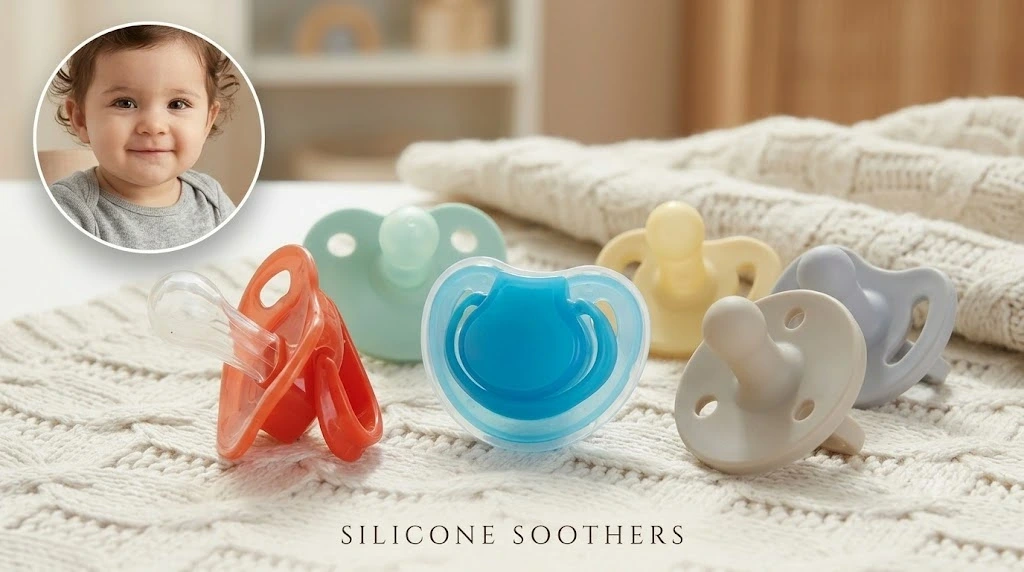
Silicone soothers provide a safe, soothing solution for infants seeking natural comfort. These durable pacifiers support healthy oral development during early growth stages. Switching to medical-grade silicone eliminates potential toxin exposure completely. They fit gently into an infant’s mouth with total ease.
Understanding how silicone baby pacifiers satisfy a baby’s natural sucking reflex makes daily parenting easier. Beyond soothing fussiness, these essential baby tools promote continuous sleep and travel comfort daily.
Why Babies Need Silicone Soothers
Silicone soothers bring safety and comfort to your baby’s daily routine. They withstand repeated high-temperature sterilizations without degrading.
Using silicone baby pacifiers ensures a hygienic, odorless experience every single time. Transitioning from traditional latex options to durable silicone enhances long-term child safety dramatically.
Comparing Silicone Soothers with Latex Alternatives
With clear performance differences established, let us examine material compositions and silicone grades in detail.
| Feature | Silicone Soothers | Natural Rubber / Latex |
| Allergy Risk | Zero (Latex-free) | Moderate (Latex protein risk) |
| Durability | High (Resists tearing/aging) | Low (Degrades under sunlight) |
| Odor & Taste | Completely neutral | Distinct rubbery taste/smell |
| Heat Sterilization | Excellent stability | Degrades rapidly in heat |
| Hygiene & Cleaning | Non-porous (Resists bacteria) | Porous (Can trap moisture) |
Medical-Grade Chemistry of Silicone Soothers
Silicone soothers rely on high-purity organosiloxane polymer chemistry, engineered specifically for prolonged oral contact in infants.
Polymer Backbone and Curing
- Platinum-Cured Liquid Silicone Rubber (LSR): Cured using a platinum catalyst system, creating a highly cross-linked siloxane (Si-O-Si) network. This process leaves zero acid residues, peroxide byproducts, or volatile organic compounds (VOCs).
- BPA and Phthalate Free: Unlike dynamic plastics, medical-grade silicone contains no plasticizers, heavy metal catalysts, or bisphenol compounds.
- Hydrophobic Non-Porous Surface: Prevents bacterial adhesion, saliva degradation, and moisture retention inside the teat matrix.
Food-Grade Standards of Silicone Soothers
- FDA Compliance: Complies fully with US FDA 21 CFR 177.2600 standards for rubber articles intended for repeated food contact.
- EN 1400 European Standard: Meets strict European mechanical, chemical, and physical safety requirements for child care articles and pacifiers.
- Biocompatibility Testing: Fully tested to ISO 10993 standards for cytotoxicity, oral mucosal irritation, and sensitization.
Benefits of Using Silicone Soothers for Babies
Let’s discuss the core advantages of choosing silicone baby pacifiers:
- Sucking naturally releases calming hormones, assisting fussy infants in falling asleep faster.
- Health comes first when caring for infants. High-grade silicone remains free of toxins, allergens, and microplastics.
- Cleaning up after daily use is super quick with standard steam sterilizers or boiling water.
- Orthodontic designs adapt to the natural contours of the infant’s palate, preventing dental misalignment.
- These tear-resistant teats hold their shape even when infants begin teething.
How to Introduce and Use Silicone Soothers
Follow these steps to introduce silicone soothers to your baby:
- Sterilize Before First Use: Boil the soother in water for 5 minutes before giving it to your infant.
- Inspect for Wear: Tug on the teat firmly before every use to check for cracks or tears.
- Offer Gently: Place the soother tip gently against the baby’s lip to trigger the natural latching reflex.
- Keep It Clean: Rinse with warm water if dropped, and store in a clean, covered container.
- Replace Timely: Replace the soother every 1 to 2 months or immediately at the first sign of wear.
How to Choose the Best Silicone Baby Pacifiers for Your Infant
Choosing the appropriate silicone baby pacifiers involves the assessment of teat shape, shield design, and the safety of materials based on your baby’s developmental stage.
- Teat Shape: Select either orthodontic teat that flattens on the tongue to facilitate proper jaw development or round teat similar to breastfeeding.
- Shield Safety: Ensure that the pacifier shield is large enough to prevent any chances of ingestion and comes with two ventilation holes.
- Material Safety: Go for single-pieces made of pure platinum silicone material to avoid crevices where bacteria accumulate and the risk of joint separation.
Maintenance, Care, and Cleaning Tips
Follow these tips:
- Wash your soothers daily using mild liquid soap and warm running water.
- Sterilize them using electric steam units, microwave sterilizing bags, or clean boiling water.
- Ensure excess trapped water is squeezed out of the teat before giving it to your child.
- Store dry soothers away from direct sunlight and ambient dust.
- Proper care extends product safety, allowing silicone baby pacifiers to protect your infant reliably.
Safety Guidelines for Infant Usage
Follow these measures:
- Always select the correct age-bracket size to match your baby’s oral development.
- Never tie a pacifier cord around your baby’s neck, as this creates a serious strangulation hazard.
- Avoid dipping the teat in sugar, honey, or sweet liquids, which damages developing baby teeth.
- Discontinue use once the infant reaches toddlerhood to encourage healthy language and dental growth.
- Adhering to safety precautions guarantees worry-free soothing for your entire household.
Conclusion
The silicone soothers revolutionize parenting through its superior hygiene, longevity, and safety. The change of regular latex soothers to medical-grade silicone soothers keeps children safe from possible allergens as well as heat sterilization. From helping babies fall asleep easily to ensuring proper oral development, they have become indispensable to parenting today.
Choosing high-quality silicone soothers ensures optimal comfort while maintaining the highest child safety standards.
Frequently Asked Questions
1. Why is liquid silicone rubber (LSR) preferred over natural latex for manufacturing baby soothers?
LSR provides superior chemical stability, zero latex allergen risks, and a non-porous surface that resists bacterial colonization. It endures repeated thermal sterilization cycles without softening or leaching harmful chemicals.
2. Are silicone soothers compliant with international infant safety regulations?
Yes, premium silicone soothers are manufactured using 100% food-grade and medical-grade platinum-cure silicone. They comply with US FDA 21 CFR 177.2600 and European EN 1400 safety standards.
3. How does silicone chemistry prevent taste or odor transfer to infants?
Platinum-cured silicone features an inert siloxane molecular structure that produces no chemical off-gassing or volatile byproducts. This keeps the soother completely odorless and tasteless.
4. Can customized silicone shore hardness levels support different infant developmental stages?
Yes, chemical suppliers adjust the cross-linking density of liquid silicone rubber to yield varying Shore A hardness levels. Lower durometers provide soft teats for newborns, while higher durometers offer tear resistance for teething infants.
Also Read: Silicone bibs