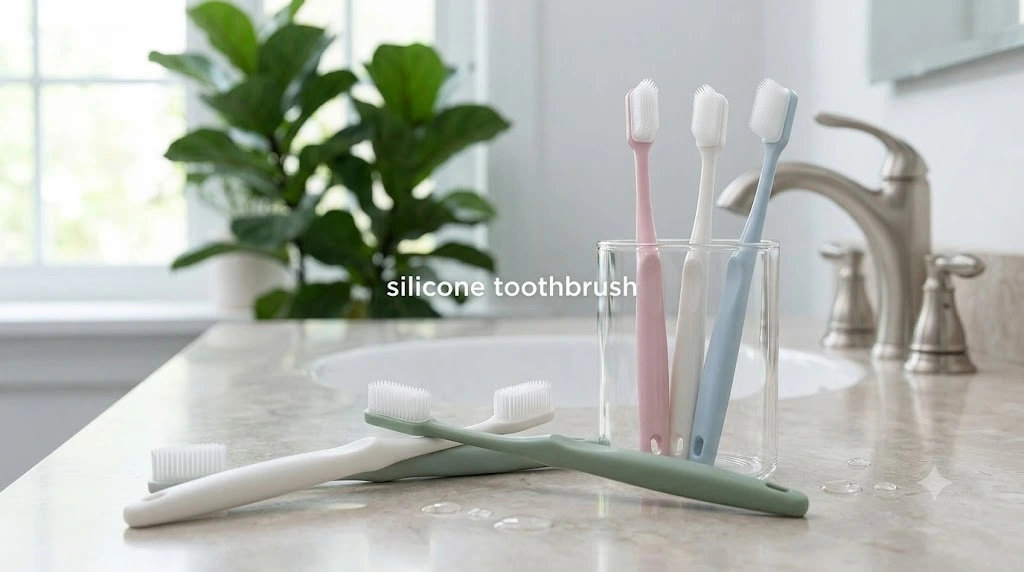
Silicone toothbrush technology is revolutionizing daily dental care by offering a much gentler, ultra-hygienic alternative to traditional nylon bristles.
Transitioning from rigid nylon bristles to a high-performance silicone toothbrush represents a major shift toward gentle, effective oral hygiene. Designed to protect delicate gum tissue while removing everyday plaque, a silicone bristle toothbrush provides a flexible and hygienic option for children, adults with tooth sensitivity, and individuals recovering from dental procedures.
Table of Contents
Key Benefits of a Silicone Toothbrush for Oral Health
Traditional nylon bristles can contribute to gum irritation and enamel wear when combined with excessive brushing pressure. Soft silicone alternatives offer several potential advantages:
- Enamel Protection: Soft silicone bristles provide gentle cleaning while reducing the risk of excessive abrasion to enamel and exposed root dentin.
- Gingival Massage & Trauma Reduction: Flexible silicone bristles gently massage gum tissue and may help reduce irritation caused by aggressive brushing.
- Hydrophobic Hygiene: Non-porous silicone surfaces repel moisture and can dry quickly, helping reduce the retention of bacteria and other microorganisms between uses.
- Teething & Pediatric Comfort: Soft silicone can be suitable for toddlers and infants, providing gentle gum stimulation during teething while helping introduce oral-care habits early.
Chemistry of Medical-Grade Silicone Toothbrush
The performance, safety, and longevity of a silicone toothbrush depend heavily on the properties of the silicone used. Oral-care products can be manufactured using high-purity medical-grade Liquid Silicone Rubber (LSR), which is formulated for flexibility, durability, and biocompatibility.
1. The Inorganic Siloxane Backbone
Unlike many conventional organic plastics that are based on carbon-carbon (C-C) polymer chains, silicone contains an alternating silicon-oxygen (Si-O-Si) backbone.
The relatively high bond energy of the Si-O bond contributes to silicone’s thermal stability, flexibility, chemical resistance, and resistance to repeated mechanical stress. These properties make silicone suitable for applications that require repeated bending and long-term material performance.
2. Platinum-Cured Addition Cross-Linking
Medical-grade silicone compounds can utilize platinum-catalyzed addition curing systems rather than conventional peroxide-based curing methods.
Key characteristics include:
- Minimal Residue Processing: A well-formulated platinum-cured silicone is capable of providing components that have minimal residues from processing materials.
- Biocompatibility: Materials based on silicone can be made to comply with biocompatibility and other regulatory standards based on the formula and use of the product.
- Silicone Formulations without BPA and Phthalates: Silicone formulations are possible without BPA and phthalates; however, the actual formula must be confirmed by the manufacturer’s material data sheets.
3. Dynamic Durometer Engineering
For oral-care applications, silicone can be engineered across a range of Shore A hardness levels. Softer formulations, such as approximately 20A–40A, can provide flexible bristles that bend under pressure rather than remaining rigid.
This flexibility allows the bristles to conform to oral surfaces while maintaining their original shape after use.
Material Comparison: Medical-Grade Silicone vs. Nylon Toothbrushes
| Feature / Material Property | Medical-Grade Silicone | Standard Nylon |
| Material Surface | Non-porous, water-resistant elastomeric surface | Synthetic polyamide fiber |
| Moisture Retention | Generally low surface moisture retention | Can retain moisture between fibers |
| Flexibility | Highly flexible and elastic | Relatively rigid compared with silicone elastomers |
| Gum Contact | Soft and flexible when appropriately formulated | Depends on filament diameter and stiffness |
| Heat Resistance | Generally high, depending on formulation | Lower than silicone and formulation-dependent |
| Durability | Can offer long service life when properly designed | Generally requires more frequent replacement |
| Manufacturing Process | Commonly produced through silicone molding/LIM processes | Commonly produced using polymer filament processing |
Usage Guidelines & Proper Maintenance
To maximize the performance and hygiene of your silicone toothbrush, follow these maintenance practices:
1. Rinsing Thoroughly
Rinse the toothbrush properly using fresh water after brushing to get rid of any remaining toothpaste, food debris, or other residue from the mouth.
2. Cleaning the Toothbrush
Clean your toothbrush regularly according to the instructions given by the producer.
3. Drying Procedure
Place the toothbrush upright in a well-aerated storage box. Drying your toothbrush will reduce the amount of moisture it retains.
4. Monitoring Wear
Examine your silicone bristles regularly. Replace your toothbrush if there is any damage, deformation, cracking, or wear and tear.
Conclusion
A silicone toothbrush combines the flexibility of silicone with the requirements of everyday oral hygiene. When manufactured using an appropriately formulated material, silicone can provide soft, flexible bristles that are comfortable against the gums and suitable for a variety of oral-care applications.
The non-porous nature, flexibility, durability, and customizable properties of silicone also make it an attractive material for toothbrush manufacturing. For manufacturers, selecting the right silicone formulation is essential for producing safe and reliable oral-care products.
Frequently Asked Questions
1. What silicone formulation is recommended for manufacturing soft silicone toothbrush bristles?
A suitable medical-grade Liquid Silicone Rubber (LSR) formulation can be selected based on the required softness, tear strength, flexibility, and intended oral-care application. Softer formulations in the approximate 20A–30A Shore A range may be considered for flexible bristles.
2. Is medical-grade silicone safe for infant oral-care products?
Appropriately formulated and tested medical- or food-contact-grade silicone can be used in infant dental-care products. However, manufacturers should verify the specific formulation against the regulatory and safety requirements applicable to the intended market and product category.
3. How does Liquid Silicone Rubber (LSR) injection molding improve toothbrush production?
LSR provides excellent flow characteristics during Liquid Injection Molding (LIM). This allows manufacturers to produce complex designs, fine bristle structures, and detailed components with high dimensional consistency.
4. Can custom color additives or antimicrobial agents be added during silicone manufacturing?
Yes, silicone compounds can be formulated with compatible color pigments and certain functional additives. However, additives intended for oral-care applications must be carefully selected and tested.
Also Read: Silicone Spray