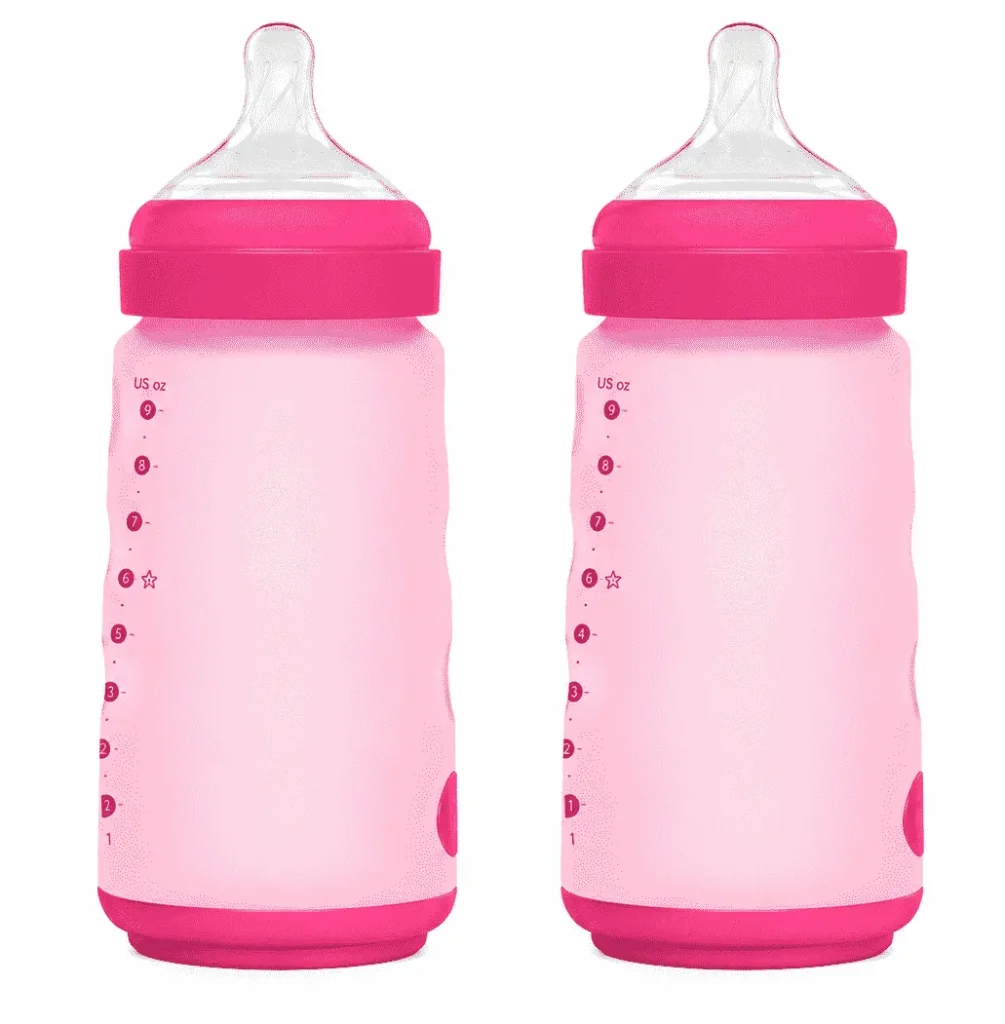
Silicone baby bottles have become a popular alternative to rigid plastic and glass because they are soft, lightweight, flexible and difficult to shatter. For parents, however, the more useful question is not simply whether silicone is “safe,” but whether a particular bottle is made for food contact, how it is manufactured, how it should be heated and sterilized, and whether it is still in good condition. Silicone baby bottles can be a practical choice, but material quality and everyday care matter.
Key Takeaways
Choose a bottle clearly identified as food-contact or food-grade silicone and check the manufacturer’s compliance and care information.
Do not assume every silicone product has the same heat resistance; follow the bottle’s specific sterilizing, warming and dishwasher instructions.
Silicone is flexible and shatter-resistant, which can make bottles easier to handle and useful for travel, but that softness can also affect grip and feeding.
Clean bottles promptly and inspect nipples, valves, seals and the silicone body for tears, roughness, cloudiness or other changes.
Silicone can retain odors or develop staining, especially when exposed to milk fats, formula, strongly scented detergents or colored foods.
Research has detected chemical migration from some tested silicone baby bottles, so product quality and compliance matter more than the word “silicone” alone.
A bottle’s nipple flow, venting system, shape and fit can affect feeding just as much as the bottle material.
What Are Silicone Baby Bottles?
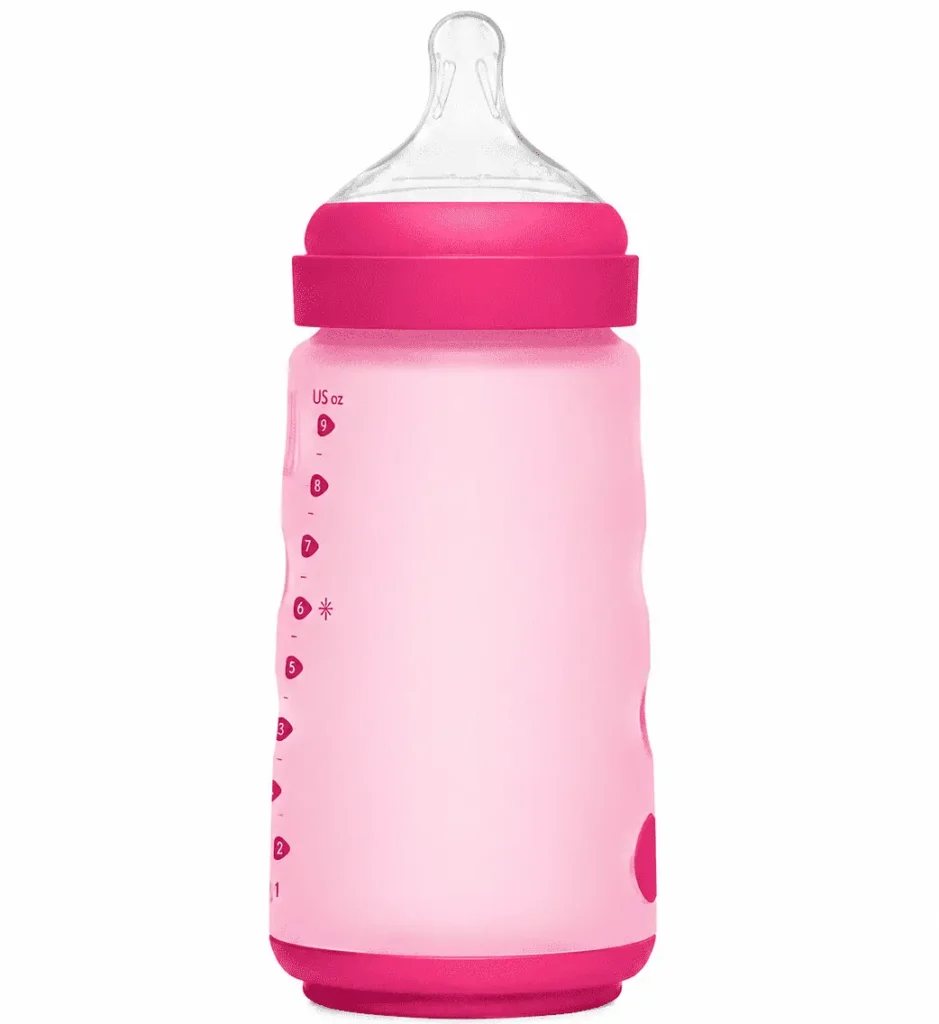
Silicone baby bottles are feeding bottles in which the bottle body, or a major part of it, is made from silicone elastomer. Unlike rigid glass or conventional hard plastic bottles, silicone can flex when squeezed. This gives the bottle a softer feel and can make it easier to grip, particularly as a baby begins trying to hold a bottle independently.
The term “silicone bottle” does not automatically describe the whole product. Some designs combine silicone with plastic collars, caps, valves or other components. That is why parents should check the complete materials list rather than judging safety from the bottle body alone.
7 Essential Safety Facts About Silicone Baby Bottles
1. Food-contact quality matters more than marketing labels
A silicone bottle intended for infant feeding should be designed and tested for its intended food-contact use. In the United States, federal rules include provisions for certain rubber articles intended for repeated food contact, and silicone elastomers are among the materials addressed under 21 CFR 177.2600. That does not mean every silicone baby bottle is automatically FDA-approved. Compliance depends on the finished article, formulation, manufacturing process and intended conditions of use. Parents should therefore look for specific manufacturer information about food-contact compliance rather than relying only on claims such as “non-toxic,” “natural” or “BPA-free.”
2. Heat resistance is useful, but it is not unlimited
Silicone is valued for its ability to tolerate heat, which can be useful when a bottle is sterilized or washed at high temperatures. Still, heat resistance varies by product, formulation and design. The safest approach is to follow the manufacturer’s stated limits for boiling, steam sterilization, bottle warmers, microwaves and dishwashers. Do not assume that because one silicone bottle tolerates boiling, every silicone feeding product can be treated the same way.
3. Flexible bottles have practical advantages
One of the main reasons parents choose silicone is flexibility. A soft bottle is less likely to shatter when dropped and can be comfortable to hold. That makes silicone useful for travel, daycare bags and babies who are beginning to grip their own bottles. Some designs also allow the caregiver to gently compress the bottle, although this should never be used to force milk into a baby’s mouth.
4. Cleaning still matters
Silicone is not a substitute for good bottle hygiene. Milk and formula residues can remain around threads, valves, nipples and seals if the parts are not separated and cleaned properly. Wash the bottle according to the manufacturer’s instructions, use a brush suitable for the shape, rinse thoroughly and allow components to dry completely before storage. If a bottle has several small parts, check each one rather than cleaning only the main body.
5. Odors, staining and surface changes can happen
Some silicone products can retain smells from milk, formula, food or strongly fragranced detergents. Discoloration can also appear over time, particularly after exposure to colored foods. A change in color alone does not necessarily mean that a bottle is unsafe. More important warning signs include a rough or damaged surface, cracks, tears, persistent deterioration, damaged valves or a nipple that has changed shape.
6. Silicone does not mean zero chemical migration
It is tempting to describe silicone as completely inert, but that is too broad a claim for an evidence-based article. Scientific testing has identified migrating compounds in some silicone baby bottles. A 2019 Food Research International study examined polypropylene, Tritan and silicone baby bottles and detected multiple non-volatile migrants in the silicone samples; the authors’ risk assessment raised concerns for the tested silicone products. Other research has also examined volatile compounds and odors from silicone bottles. These findings do not establish that all silicone baby bottles are unsafe, because testing is product-specific and migration depends on formulation and use conditions. They do show why product quality, testing and compliance should not be ignored.
7. The nipple and feeding design matter too
Choosing a bottle is not only a material decision. Nipple flow rate, shape, venting, seal design and the number of components can affect how easily a baby feeds and how convenient the bottle is to clean. A bottle marketed as anti-colic, for example, should not be treated as a guarantee that a baby will have fewer feeding problems. If a baby repeatedly coughs, chokes, refuses feeds, feeds unusually slowly or seems uncomfortable, discuss the feeding pattern with a pediatrician or feeding professional rather than relying on a bottle change alone.
Silicone Baby Bottles vs Glass and Plastic
When comparing silicone with glass or plastic, there is no single material that is ideal for every family. Silicone is flexible, lightweight and resistant to shattering. Glass is rigid and easy to visually inspect, but it can break and is heavier. Plastic is generally lightweight and widely available, while its properties depend heavily on the type of plastic used.
The more useful comparison is therefore based on the actual feeding routine. Consider how often the bottle is sterilized, whether it will be carried outside the home, whether the baby is starting to self-feed, how easy the parts are to clean, and whether the manufacturer provides clear instructions for safe use.
How to Choose Silicone Baby Bottles
- Check the materials and food-contact information rather than relying only on broad safety claims.
- Read the manufacturer’s instructions for sterilization, heating, cooling, dishwashing and storage.
- Look for a nipple flow appropriate to the baby’s developmental stage and feeding pattern.
- Choose a design that can be disassembled enough to clean the areas where milk can collect.
- Inspect the bottle body, nipple, valve, ring and seals before regular use.
- Consider whether measurement markings are easy to read and whether the bottle is stable when placed on a surface.
- Keep replacement nipples and other replaceable components available when the manufacturer recommends changing them.
How to Clean and Care for Silicone Baby Bottles
After feeding, separate the bottle into its individual washable components. Rinse away milk residue and wash with a suitable bottle detergent and brush. Pay particular attention to screw threads, valves and the underside of nipples. Rinse thoroughly so detergent does not remain on the surface.
Use only the sterilization method and temperature permitted by the manufacturer. After washing or sterilizing, allow the parts to dry fully in a clean area before reassembly. Do not store a damp bottle closed up for long periods, because trapped moisture can contribute to hygiene problems.
Inspect the bottle regularly. Replace components if they become torn, cracked, sticky, unusually rough, misshapen or otherwise damaged. If a persistent odor or residue remains after proper cleaning, check the manufacturer’s care guidance and consider replacing the affected component.
Are Silicone Baby Bottles Safe for Everyday Use?
Silicone baby bottles can be suitable for everyday feeding when the specific product is made for food contact, used according to its instructions and kept clean and intact. However, “silicone” should not be treated as a universal safety certification. Different formulations and manufacturing processes can behave differently, and scientific studies have shown that some tested silicone bottles can release measurable compounds into food simulants.
For parents, the practical takeaway is simple: choose a reputable, clearly documented product, follow its care instructions and replace worn parts. That approach is more useful than assuming that one bottle material is automatically safe or unsafe in every situation.
Faqs
Are silicone baby bottles safe for babies?
They can be, provided the specific bottle is intended for food contact, complies with relevant requirements for its market and is used according to the manufacturer’s instructions. Safety should be assessed at the product level rather than from the word “silicone” alone.
Are silicone baby bottles better than plastic bottles?
Not universally. Silicone is flexible and shatter-resistant, while plastic can be lighter, more rigid and widely available. The better option depends on the baby’s feeding needs, the bottle design, cleaning routine and manufacturer instructions.
Do silicone baby bottles contain BPA?
A bottle made entirely from silicone does not need BPA as part of the silicone material. However, some bottles contain additional plastic components, so check the complete materials information if avoiding BPA is important to you.
Can silicone baby bottles be boiled?
Some can, but the exact temperature and duration should come from the manufacturer. Never assume that all silicone feeding bottles have identical heat limits.
Can silicone baby bottles go in the dishwasher?
Many are dishwasher-compatible, but this is product-specific. Check which components can be placed in the dishwasher and whether the manufacturer specifies a rack or temperature limit.
Do silicone baby bottles retain odors?
They can. Silicone may hold onto smells from milk, formula or fragranced cleaning products. Thorough cleaning, rinsing and complete drying can help, but persistent odor may be a reason to replace a component.
When should silicone baby bottles be replaced?
Replace a bottle or component when it becomes damaged, cracked, torn, unusually rough, sticky, misshapen or difficult to clean. Follow the manufacturer’s replacement schedule for nipples and other parts.
Do silicone baby bottles reduce colic?
Not necessarily. Some bottles use venting systems intended to reduce air intake, but a bottle should not be treated as a guaranteed treatment for colic. Persistent feeding discomfort should be discussed with a pediatrician.
Silicone Baby Bottles: What Parents Should Check First
Before buying silicone baby bottles, start with the information that is easiest to overlook: the exact material specification, food-contact compliance, care instructions and replacement guidance. A bottle that looks premium is not automatically better documented. Look for clear information about what the bottle body, nipple, ring and valves are made from, then check how the manufacturer expects the product to be washed, sterilized and heated.
With silicone baby bottles, everyday handling also deserves attention. A soft body can be comfortable and durable against drops, but it can make measurement markings harder to read and may allow the bottle to be squeezed during feeding. Parents should choose a design that matches the baby’s feeding stage and should never squeeze a bottle in a way that forces milk into the baby’s mouth.
Silicone Baby Bottles: A Practical Everyday Safety Checklist
Silicone baby bottles work best when they are treated as feeding equipment rather than as a material that needs no maintenance. Wash each component thoroughly, follow the stated sterilization method and inspect the bottle regularly. If the silicone develops a rough surface, tear, persistent residue or other deterioration, replace it instead of trying to extend its use indefinitely.
For silicone baby bottles used outside the home, check the cap and seals before packing, keep clean parts separate from used parts and avoid leaving milk sitting in the bottle longer than necessary. These simple habits do more for practical feeding hygiene than choosing a material based on marketing claims alone.
Conclusion
Silicone baby bottles can offer a useful combination of flexibility, light weight and shatter resistance, but the material name alone does not answer every safety question. Parents should look at food-contact suitability, product-specific heat limits, cleaning instructions, component quality and signs of wear. Research on chemical migration also shows why it is better to evaluate the finished product than assume that every silicone bottle behaves identically. With a well-documented product and careful routine use, silicone baby bottles can be a practical part of infant feeding.