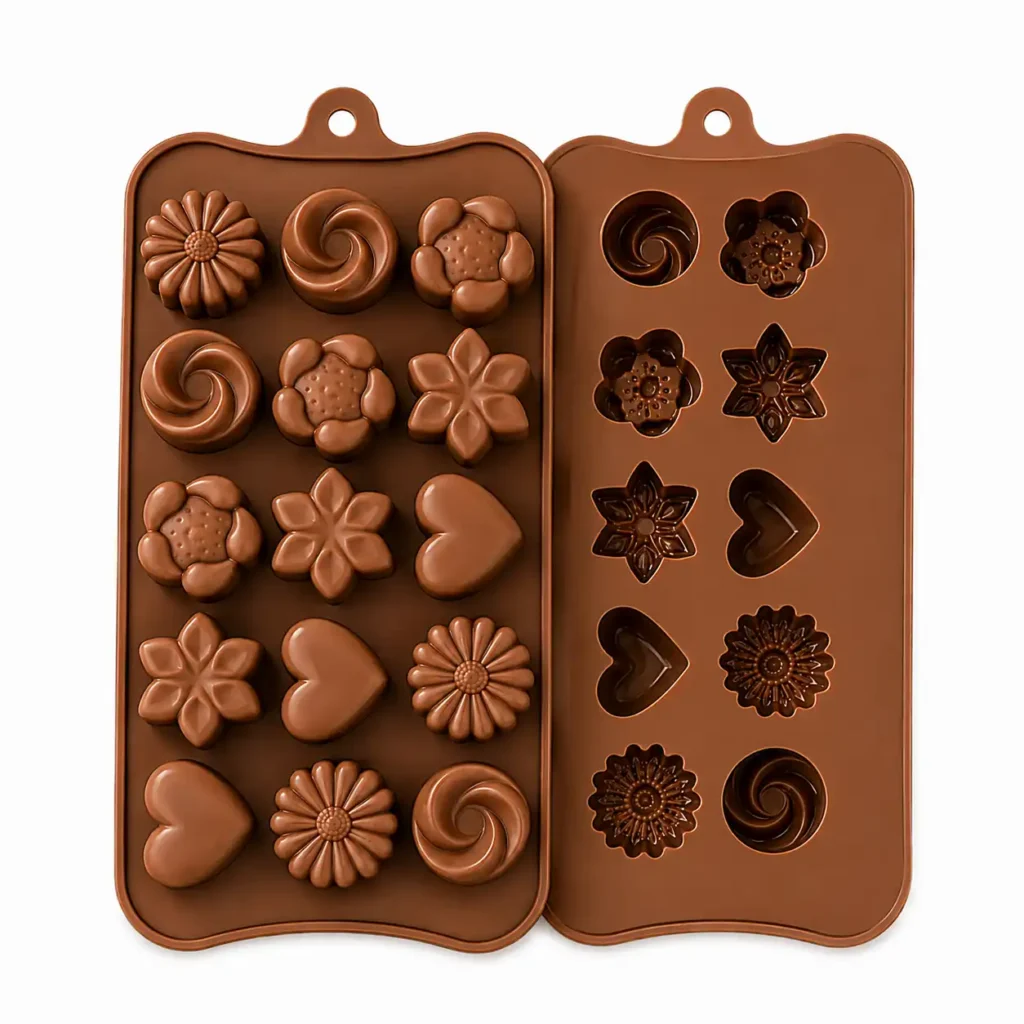
If you have ever pulled a batch of chocolates or gummies out of a mold only to watch half of them tear apart, you already know why so many home candy makers have switched to silicone candy molds. They flex, they release cleanly, and they hold up to far more abuse than the old hard plastic trays most of us grew up with. This guide pulls together everything a candy maker actually needs to know about these versatile molds, from how they work to how to keep them in good shape for years.
Key Takeaways
- Silicone candy molds are flexible, food-grade molds that release chocolate, gummies, caramels, and fondant without sticking.
- Most silicone candy molds do not need to be greased, though a light coat of oil helps with sticky fillings or fine detail work.
- Standard silicone candy molds are best suited to chocolate, caramel, and gummy work; only heavy-duty, heat-rated silicone is built for true hard candy temperatures.
- Proper cleaning and storage can keep a good mold usable for years, while harsh scrubbers and folded storage shorten its life.
- Not all silicone is equal — mold thickness, cavity depth, and food-grade certification matter more than price when you are buying.
What Are Silicone Candy Molds?
Silicone candy molds are flexible, rubber-like molds made from food-grade silicone rather than rigid plastic or metal. Because the material bends, finished candy pops out cleanly instead of cracking or sticking to the sides, which is the main reason silicone molds have largely replaced older hard plastic candy trays in home kitchens and small confectionery businesses alike. They are commonly used for chocolate, gummies, caramels, mints, and fondant work, and they come in cavity shapes ranging from simple circles and bars to detailed 3D figures.
5 Key Benefits of Silicone Candy Molds
Before getting into technique, it helps to understand why silicone has become the default choice for so many candy makers. Here are the five benefits that come up again and again:
- Non-stick release — candy pops out with a gentle push or flex, without needing a coating of grease or spray.
- Wide temperature tolerance — food-grade silicone typically handles temperatures from well below freezing up to roughly 230°C (446°F), so the same mold can go from the freezer to a warm kitchen counter.
- Shape and detail versatility — silicone can be cast into far finer detail than rigid plastic, which is why it is the material of choice for figurines, lace patterns, and textured designs.
- Durability through repeated use — a well-made mold can be reused hundreds of times without cracking, provided it is cleaned and stored properly.
- Lower long-term cost — because the molds are reusable and do not require ongoing supplies like liners or release spray, the cost per batch of candy drops over time.
Why Silicone Candy Molds Outperform Older Mold Materials
The main advantage silicone candy molds hold over metal or hard plastic comes down to flexibility. A rigid mold relies almost entirely on a smooth, well-oiled surface to release candy cleanly, and any imperfection in that coating tends to show up as a torn edge or a stuck piece.
These molds sidestep that problem because the material itself bends away from the candy during release, which is why so many recipes for gummies, chocolates, and molded caramels now call for silicone rather than the metal or hard plastic trays that were standard a generation ago.
That same flexibility is also what makes silicone molds practical for home use in a way that older materials were not. A busy home cook does not want to grease forty individual cavities before every batch, and silicone largely removes that step for chocolate and gummy work. Combined with easy cleanup and a long usable life, it is easy to see why silicone candy molds have become the default recommendation in most modern candy-making guides.
Can You Use Silicone Candy Molds for Hard Candy?
This is one of the more confusing questions for new candy makers, because the answer genuinely depends on the mold. Traditional hard candy syrup is cooked to the hard-crack stage, well above 300°F (roughly 150°C), which is hotter than many standard, thin silicone molds are rated to handle repeatedly without gradually breaking down. Some commercial-grade silicone molds are specifically engineered and marketed for hard candy production and can tolerate those temperatures over many uses.
For most home candy makers, the safer approach is to check the manufacturer’s stated temperature rating before pouring hot syrup into any silicone mold, and to treat lighter, thinner molds as better suited to chocolate, caramel, gummies, and fondant rather than true hard candy. When in doubt, pouring a small test batch is a low-risk way to see how a specific mold holds up before committing an entire batch to it.
Do Silicone Candy Molds Need to Be Greased?
In most cases, no. The non-stick surface of food-grade silicone is designed to release finished candy without any added coating, which is one of the main reasons people switch to silicone molds in the first place. There are a few situations, though, where a light coat of oil genuinely helps:
- Sticky, high-viscosity fillings such as caramel or soft taffy, where a thin brush of neutral oil reduces tearing during release.
- Molds with very fine detail or deep, narrow cavities, where trapped air can make demolding harder.
- The first use of a brand-new mold, where a light wipe with oil can help clear any manufacturing residue.
Outside of those cases, adding oil is usually unnecessary and can even leave a slightly greasy finish on delicate work like tempered chocolate.
How to Use Silicone Candy Molds: A Step-by-Step Guide
- Wash the mold in warm water with a mild dish soap before its first use, then dry it completely.
- Prepare your candy mixture — chocolate, caramel, or a gummy base — and check that it has cooled to a safe pouring temperature for your specific mold.
- Fill each cavity using a piping bag or small spoon, going to about 90 percent capacity to leave room for settling.
- Tap the filled mold gently on the counter, or give it a light shake, to release trapped air bubbles.
- Chill or set the candy according to your recipe — chocolate typically needs refrigeration, while gummies usually set at room temperature or in the fridge.
- Flex the mold gently from the underside to loosen each piece before turning it over onto a clean surface.
Creative Ways to Use Silicone Candy Molds
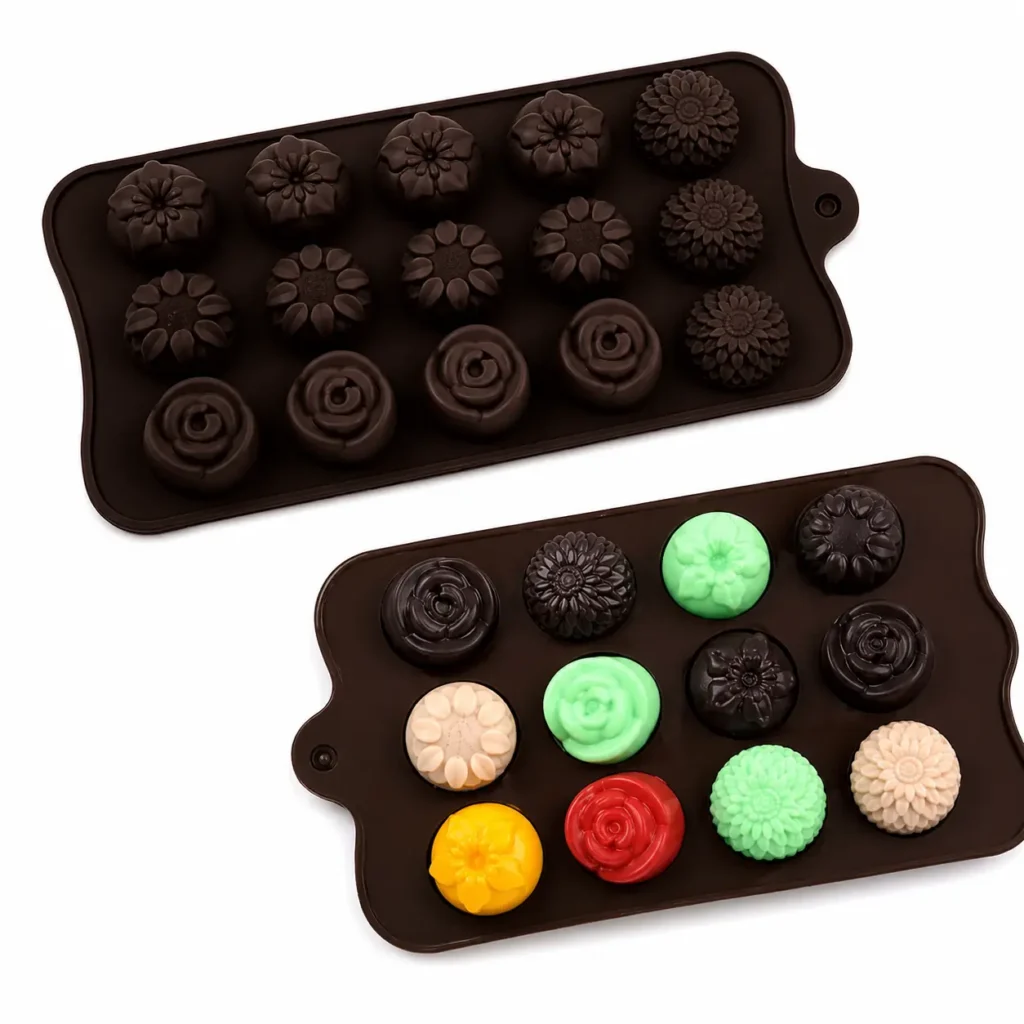
Once you are comfortable with the basics, silicone candy molds open up a lot of creative options beyond a simple bar or disc shape. Seasonal figures — think pumpkins, hearts, or holiday shapes — turn ordinary chocolate into a gift-worthy treat with almost no extra effort. These molds also work well for cake decoration, letting you cast small chocolate or fondant accents to finish off a cake without needing separate sculpting skills. Some silicone molds double as craft molds for wax melts or bath bombs, since the same non-stick, flexible properties that help candy release also work well for those materials, though it is worth keeping a mold used for wax or soap separate from the ones used for food.
How to Clean and Store Silicone Candy Molds
Good cleaning habits are what actually determine how long a silicone mold lasts. Hand-washing with warm water and a mild, non-abrasive dish soap is usually enough, and most candy molds made from silicone are also dishwasher-safe on the top rack, though it is worth checking the specific product listing to confirm. Avoid steel wool or abrasive scouring pads, since they can scratch the surface and create tiny grooves where candy residue and bacteria can build up over time.
For storage, lay molds flat or hang them rather than folding or stacking heavy items on top, since sharp creases can weaken the silicone at the fold line over months of storage. A monthly rinse in a mild vinegar-and-water solution can help clear any mineral buildup from hard water, keeping the surface smooth and fully non-stick.
Buying Guide: What to Look for in Silicone Candy Molds
- Food-grade certification — look for molds explicitly labeled food-grade and BPA-free, since not all silicone products sold online meet food-safety standards.
- Wall thickness — thicker cavity walls generally hold up better to repeated use and higher temperatures than very thin, inexpensive molds.
- Cavity depth and detail — deeper or more detailed cavities need extra care during filling to avoid trapped air, so beginners may want to start with simpler shapes.
- Stated temperature range — check the manufacturer’s listed range if you plan to use the mold for anything beyond chocolate or gummies.
- Size and cavity count — match the mold to your typical batch size so you are not left with half-empty trays or repeated small batches.
Faqs
Do silicone candy molds need to be greased?
Usually not. Food-grade silicone is naturally non-stick, though a light coat of oil can help with sticky fillings, fine detail molds, or a brand-new mold’s first use.
Can you use silicone candy molds for hard candy?
It depends on the mold. Standard silicone molds are best kept to chocolate, caramel, and gummy work, while heavier, heat-rated molds designed for hard candy can tolerate the higher pouring temperatures involved.
Are silicone candy molds oven safe?
Some are, but only those specifically labeled as oven-safe to a stated temperature. Always check the manufacturer’s rating before placing a silicone mold in the oven.
Can silicone candy molds go in the dishwasher?
Most can, typically on the top rack, though checking the specific product’s care instructions is the safest way to confirm.
Are silicone candy molds food safe?
Food-grade silicone molds are generally considered safe for direct contact with food and are BPA-free, but it is worth confirming that a specific product is labeled food-grade before using it for candy.
Can silicone candy molds be used in the freezer?
Yes. Silicone tolerates low temperatures well, which makes it a practical choice for chilling gummies, chocolate, or frozen treats before unmolding.
How long do silicone candy molds last?
With gentle cleaning and flat storage, a good-quality mold can last for hundreds of uses over several years. Harsh scrubbing, folding, and prolonged high heat all shorten that lifespan.
Conclusion
Silicone candy molds have earned their popularity for good reason: they release candy cleanly, tolerate a wide range of temperatures, and hold up to repeated use far better than the rigid molds they replaced. The main nuance worth remembering is that not every mold is built for every job — standard silicone handles chocolate, caramel, and gummies beautifully, while true hard candy calls for a heavier, heat-rated mold. Choose a food-grade mold suited to what you are actually making, treat it gently during cleaning and storage, and it will keep producing clean, professional-looking candy batch after batch.