A silicone sponge can mean two very different things. In industry, it is a soft, cellular rubber used for gaskets, seals and insulation. In the kitchen, it is a squishy scrubber that promises to replace your foam dish sponge.
This guide covers both, so you can see what a silicone sponge really does, where it shines and where it falls short.
Key Takeaways
Industrial silicone sponge is expanded silicone rubber, usually closed cell, made for sealing, cushioning and insulation.
Many standard grades are quoted at roughly -60°C to 230°C, but every grade has its own rating, so check the datasheet.
Suppliers use “sponge” and “foam” loosely. Cell structure, density and water absorption tell you far more than the name.
A silicone dish sponge is gentle, quick to dry and dishwasher friendly, but it struggles with baked-on food.
Silicone copes well with heat, water and weather. It copes poorly with petroleum-based fuels and has lower tear strength than some rubbers.
What Is a Silicone Sponge?
Silicone sponge is silicone rubber that has been expanded into a cellular structure. During heat curing, tiny gas pockets form inside the rubber. The result is a material that is soft, light and springy.
Manufacturers supply it as sheets, rolls, cords and extruded profiles. Most industrial grades are closed-cell silicone, which means each cell is sealed off from the next. That is why the material resists water and air passing through it.
A quick spelling note may save you some confusion. Silicone is the rubbery polymer. Silicon is the chemical element it is made from. They are related, but they are not the same thing.
Key Properties and Typical Ratings
These are the properties engineers look at first. Figures vary between manufacturers, so treat the numbers below as typical ranges rather than guarantees.
| Property | What it means in practice |
| Closed-cell structure | Sealed cells block water, dust and air, which is why the material works well for gaskets. |
| Wide temperature range | A range of about -60°C to 230°C is commonly quoted for standard grades. One thermally conductive grade is rated at -40°C to 200°C continuous. |
| Low compression set | The material springs back after being squeezed, so a seal keeps working over time. |
| Weather resistance | It holds up against UV, ozone and moisture, which suits outdoor and marine use. |
| Density range | Some suppliers list roughly 150 to 530 kg/m³. Lower density feels softer, while higher density feels firmer. |
| Chemical behaviour | It tolerates many chemicals and oils, but it does not cope well with petroleum-based fuels. |
Where This Material Is Used in Industry
The material turns up in more places than most people expect. The uses below cover the bulk of demand.
- Gaskets and seals: HVAC ducts, vehicle doors, aircraft cabin compartments and electronic enclosures.
- Thermal insulation: ovens, pipes, valves and other hot equipment. Standard grades insulate, while special filled grades are made to conduct heat instead.
- Vibration and noise control: stopping rattle and squeak in cars, trains and machinery.
- Food and pharmaceutical equipment: gaskets made from grades tested against food-contact rules.
- Construction and energy: glazing and door seals, plus gaskets in solar and wind equipment.
A silicone sponge sheet is the most common form for cut gaskets, while closed-cell silicone cord suits seals that run around a door or lid. Extruded profiles are better for long, continuous seals.
Silicone Foam vs Silicone Sponge: Is There a Real Difference?
Sometimes, but not always. Some suppliers use silicone foam for softer, open-cell material and silicone sponge for denser, closed-cell material. Others use both words for the same product.
Because of that, the label alone is not a safe guide. Ask four direct questions instead: is it open or closed cell, what is the density, how much water does it absorb, and what is the compression set?
Open-cell silicone foam lets air and moisture through. Closed-cell silicone does not, so it is the usual choice when you need a seal.
Silicone Dish Sponges: Do They Actually Work?
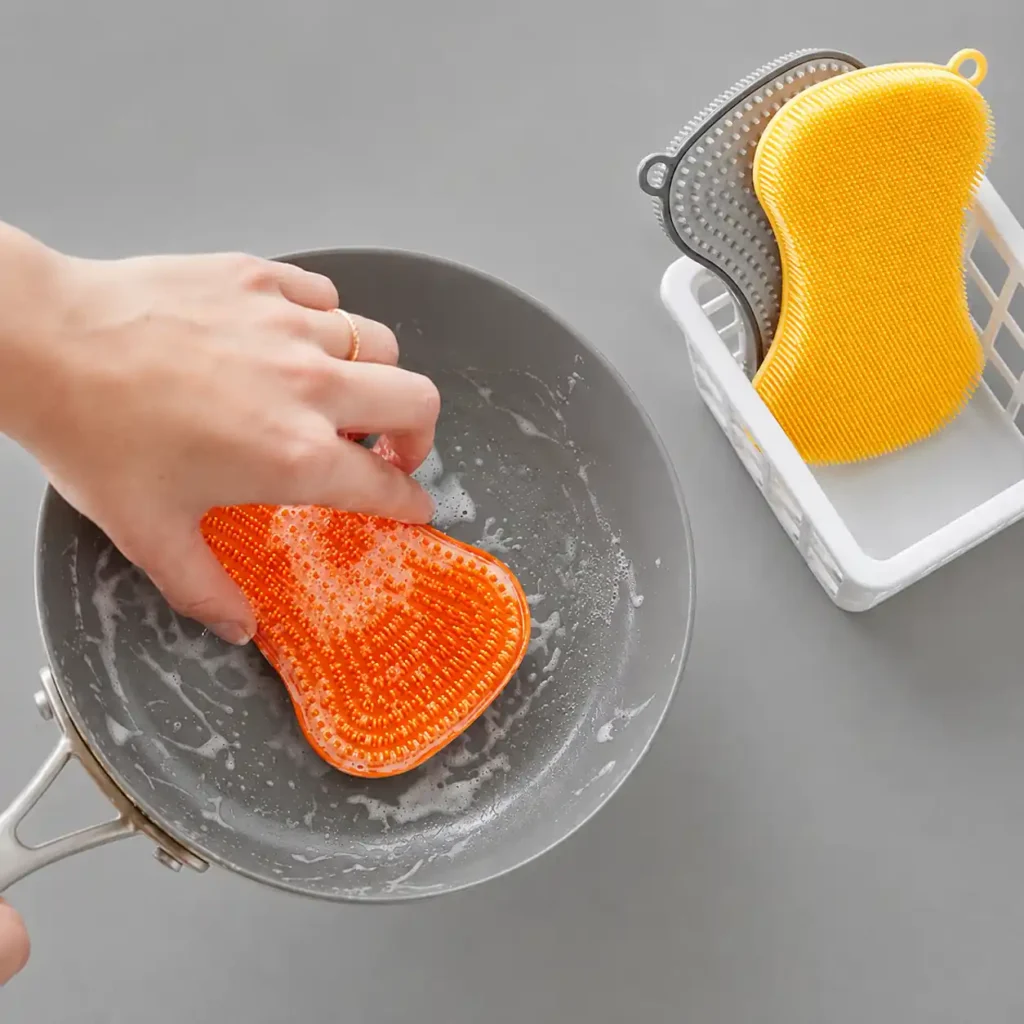
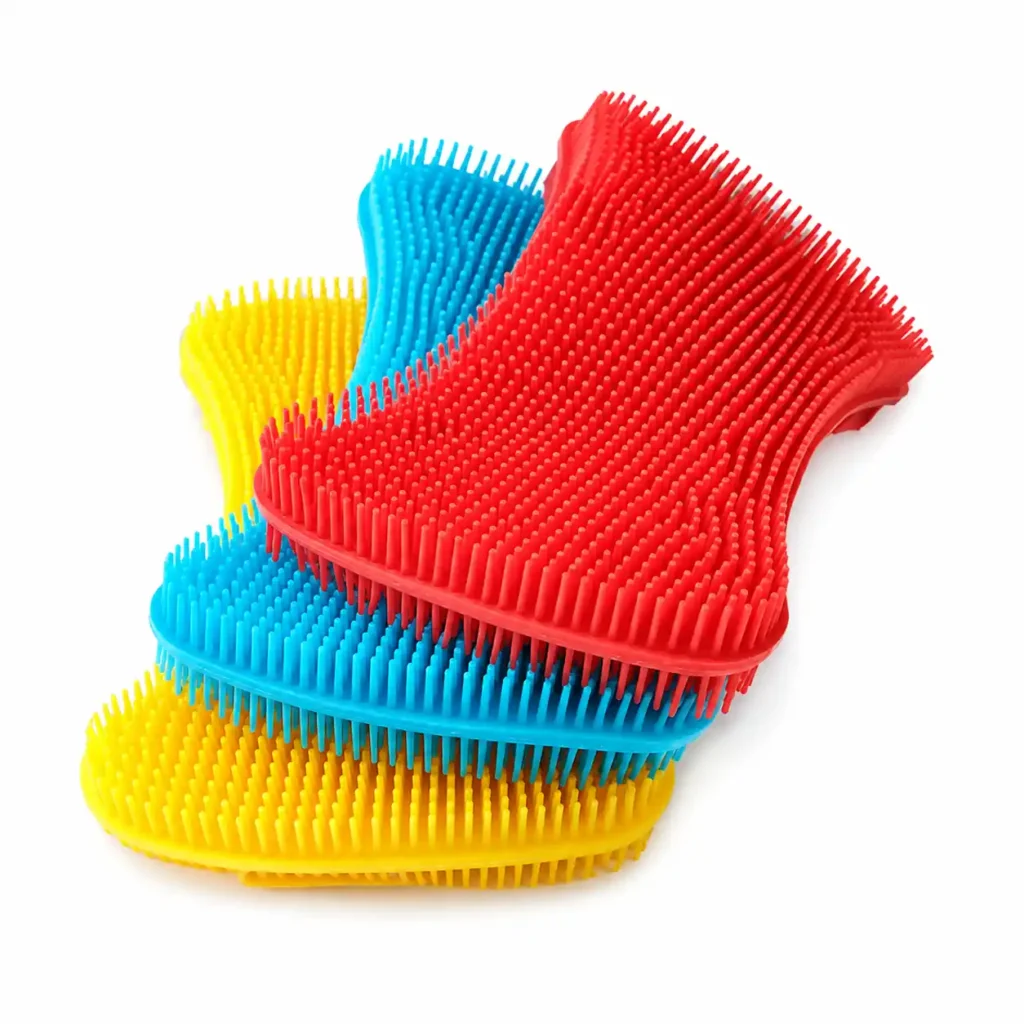
A kitchen silicone dish sponge, sometimes sold as a silicone scrubber, is a different product from industrial sheet. It is usually a flat pad or a set of soft bristles made from food-grade silicone.
Its strengths are easy to see. It does not soak up water, it dries fast, and most designs can go in the dishwasher. It is also gentle on glass and nonstick pans, which is why a silicone scrubber appeals to people who dislike scratched cookware.
The complaints are just as consistent. Many buyers say the soft surface cannot lift baked-on food, the shape is awkward to grip, and soap washes away quickly. Some report bristles wearing or staining over time, so a silicone scrubber with thicker, firmly bonded bristles tends to last longer.
Online reviews are useful for spotting patterns, but they are anecdotal. A cheap, thin pad may disappoint, while a sturdier design may suit lighter washing-up.
What About Hygiene?
Silicone does not absorb water the way foam does, so germs have less to feed on. That is a sensible argument, though claims of superior hygiene are plausible rather than proven.
Any tool that stays wet and carries food residue can harbour bacteria. Rinse it well, let it dry fully, and put it through the dishwasher regularly.
Food-Contact Rules Explained
For food equipment, the wording on a datasheet matters. In the United States, rubber articles intended for repeated food contact fall under FDA regulation 21 CFR 177.2600. In Europe, food-contact materials must meet EC 1935/2004.
Suppliers usually say a product is “FDA compliant” once independent extraction tests are passed. That is not the same as a blanket approval, so ask for the test certificate if compliance is critical.
Three Common Myths
- “Silicone is indestructible.” It handles heat well, but it can still tear, stain or wear out.
- “All silicone is food safe.” Only grades made and tested for food contact qualify.
- “Sponge and foam always mean different things.” Naming varies, so cell structure and density are the reliable details.
Limits to Know Before You Buy
- Fuel exposure: avoid it where petroleum-based fuels are present.
- Tear strength: silicone tears more easily than some other rubbers, so protect thin sections.
- Rating differences: two products with the same name can have different temperature limits and firmness.
- Recycling: silicone is not accepted in many kerbside schemes, so check local options before assuming it is recyclable.
How to Choose the Right Material
- Define the job: sealing, insulating, cushioning or cleaning.
- Match the temperature rating to the real operating range, with some margin.
- Confirm cell structure and density on the datasheet.
- If food contact matters, look for a stated compliance standard. Note that “FDA compliant” is the accurate phrase, because the FDA does not simply approve a material.
- Ask for a sample or datasheet before ordering in bulk. For a kitchen product, check that it is food-grade, dishwasher safe and comfortable to hold.
How to Care for and Clean It
Good care makes a big difference to how long the material lasts. The basics are simple, whether it sits in a factory or a kitchen drawer.
For a kitchen pad or scrubber, rinse it after every use and squeeze out the water. Let it dry in open air, and run it through the dishwasher now and then.
For an installed gasket or seal, wipe it with mild soapy water and avoid harsh solvents. Check it for cracks, flattening or hardening during routine maintenance.
Replace any silicone sponge that has torn, lost its spring or started to smell. A worn seal or pad has stopped doing its job.
Silicone vs Other Sponge Rubbers
Silicone is not always the best pick. Other sponge rubbers can win on price or on resistance to particular chemicals.
- EPDM sponge: usually cheaper and popular for outdoor weather seals, though it generally tolerates less heat.
- Neoprene sponge: often chosen where some oil resistance is needed, with a lower temperature ceiling than silicone.
- Fluoroelastomer (Viton) sponge: suited to fuels and aggressive chemicals, but it costs more.
- Polyurethane foam: a low-cost cushioning option that is not built for high heat.
These are general tendencies, not fixed rules. If fuel contact is likely, a fluoroelastomer sponge is a better candidate than silicone sponge.
If heat, water and weather are the main concerns, silicone is usually the stronger contender.
Faqs
What is silicone sponge used for?
Industrially, it is used for gaskets, seals, thermal insulation, vibration control and cushioning. In homes, it appears mainly as a silicone dish sponge or scrubber for washing up.
Is silicone sponge the same as silicone foam?
Not necessarily. Some suppliers separate them by cell structure, while others use the names interchangeably. Check the datasheet for open or closed cells.
Is a silicone sponge better than a regular kitchen sponge?
It depends on the task. Silicone dries faster and is easier to sanitise, but a foam or scouring sponge usually cleans baked-on residue better.
Is silicone sponge food safe?
Food-grade grades exist and are tested to food-contact rules such as FDA requirements. Not every product is food grade, so check the product’s stated compliance.
What temperature can silicone sponge withstand?
Standard grades are often quoted at about -60°C to 230°C. Some specialist grades have narrower limits, so rely on the specific datasheet.
Is silicone sponge waterproof?
Closed-cell silicone sponge has very low water absorption and can form a watertight seal when designed properly. Open-cell versions can absorb water.
Conclusion
Silicone sponge is a genuinely useful material, but the right answer depends on which kind you mean. Industrial silicone sponge with a closed-cell structure is a proven choice for sealing, insulating and cushioning in hot, wet or outdoor conditions.
A silicone scrubber for the sink is a different story. It is gentle and dries quickly, yet it is not a strong scrubber. Choose it for light washing-up, and always confirm ratings, cell structure and compliance on the datasheet before you buy.