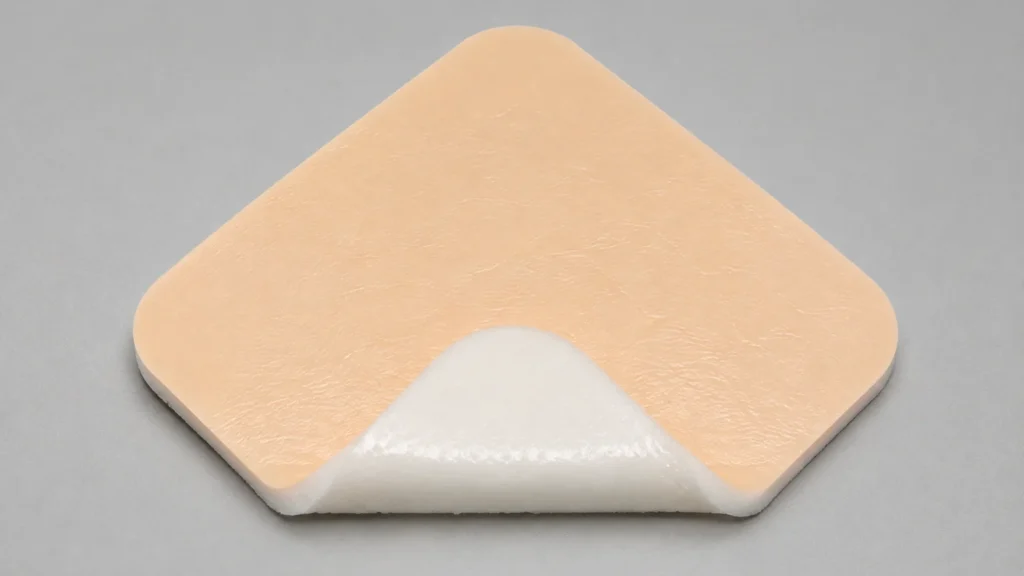
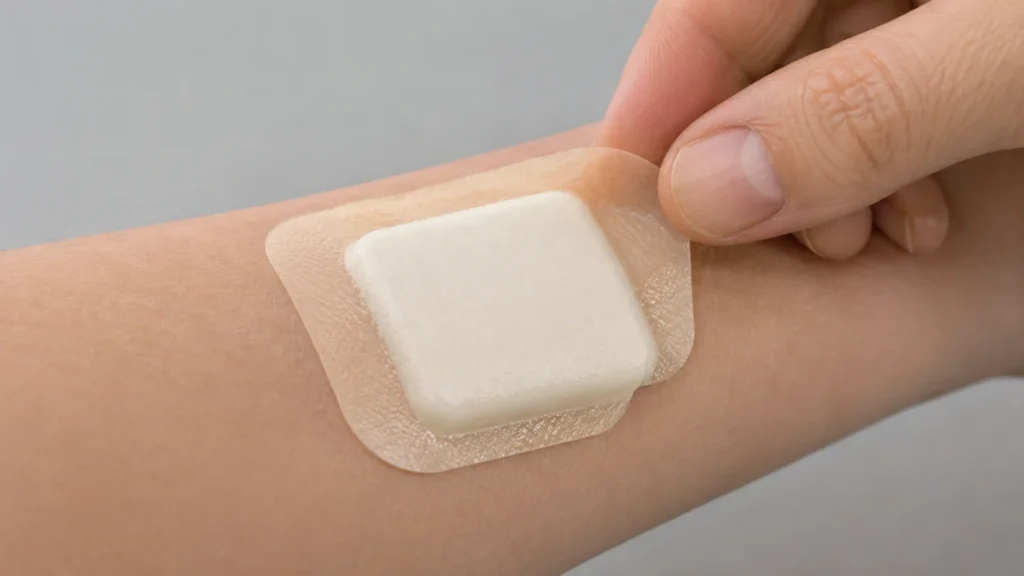
A silicone foam dressing is a soft, absorbent wound cover that grips the skin around a wound without gluing itself to the wound itself. That one design choice explains why nurses reach for it on fragile skin, painful wounds and injuries that leak fluid. It soaks up the drainage, keeps the area moist and is designed to come off with less pulling than gauze or standard adhesive dressings.
This guide explains how these dressings work, where they help, what the research really shows and how to use one properly. It also covers the situations where a different dressing, or a call to a healthcare professional, is the smarter move.
Key Takeaways
- A silicone foam dressing has three main parts: a soft silicone contact layer, an absorbent foam pad and a waterproof outer film.
- It suits wounds that produce light to heavy drainage and skin that is fragile or easily damaged.
- One burn trial found less pain at dressing changes, and guidelines support these dressings for preventing pressure injuries in high-risk areas.
- Evidence that they heal chronic wounds faster than other dressings is limited. Reviews of diabetic foot ulcers and venous leg ulcers found no clear advantage.
- They are not meant for dry, necrotic, heavily bleeding or infected wounds without medical advice.
What Is a Silicone Foam Dressing?
A silicone foam dressing is a layered wound dressing built around a foam pad. Most versions share the same basic design:
- Soft silicone contact layer: a gentle silicone adhesive that sticks lightly to dry skin and does not grab the wound bed. Wound fluid passes through it into the foam.
- Foam pad: usually polyurethane foam, which absorbs and holds the fluid.
- Outer film: a waterproof layer that lets moisture vapor escape while keeping out water and germs.
Some products add a silicone adhesive border so the dressing stays put by itself. A bordered foam dressing needs no tape, while non-bordered versions need a bandage, tape or compression wrap to hold them in place. Shaped versions are also made for curved areas such as the heel and the base of the spine.
Do not confuse it with a silicone scar sheet or a thin silicone contact layer. A scar sheet is a non-absorbent sheet used on healed skin, and a contact layer is a non-absorbent mesh that sits under another dressing. A silicone wound dressing with a foam pad absorbs fluid by design.
How Does a Silicone Foam Dressing Work?
It does three jobs at once.
First, it grips gently. Silicone adhesive is tacky rather than truly sticky, so it holds on to intact skin around the wound, and many products can be lifted and repositioned. Silicone repels water, which is why the skin must be dry before you apply it.
Second, it manages fluid. Drainage moves through the contact layer into the foam and stays there. That keeps fluid off the surrounding skin and lowers the risk of maceration, the pale, soggy skin that breaks down easily.
Third, it protects the wound and balances moisture. The film backing blocks water and bacteria but lets some vapor through. Wound-care experts generally favor a moist wound environment. Even so, a dressing does not heal a wound on its own. It creates better conditions for the body to do the work.
Benefits of Using a Silicone Foam Dressing
- Less pain and trauma: a soft silicone dressing is designed to release without tearing skin or pulling on new tissue, which matters for children, older adults and anyone with fragile skin.
- Fewer dressing changes: many products can stay on for up to seven days, depending on drainage, so the wound is disturbed less often.
- Good fluid control: the foam absorbs drainage and helps protect the skin around the wound.
- Cushioning: the pad adds padding over bony or vulnerable areas.
- Flexibility: it can go under compression bandaging for leg ulcers, and shaped versions fit heels and the lower back.
Manufacturers describe most of these benefits. The research behind them is more mixed, as the next section shows.
What the Research Actually Shows
Product pages tend to promise faster healing. The evidence is more careful, and it depends on what the dressing is used for.
Burns and Painful Dressing Changes
In a randomized study of burns, a soft silicone dressing containing silver was compared with silver sulfadiazine cream. More of the burns treated with the dressing had healed at one week, but overall healing rates ended up similar. Patients using the dressing reported less pain during dressing changes.
That is useful, but it is one study of one silver-containing product. It does not prove that every silicone foam dressing will perform the same way.
Preventing Pressure Injuries
This is where support is strongest. The 2019 international guideline from the European, US and Pan Pacific pressure injury groups recommends a soft silicone multi-layered foam dressing to protect the skin of people at risk. An evidence summary from ECRI noted that four systematic reviews found fewer pressure injuries with protective foam or hydrocolloid dressings on the sacrum and heels than with no protection.
There are caveats. Most of the studies were small, and an expert consensus panel advised using the dressings to enhance standard prevention, not replace it. Repositioning and pressure-relieving surfaces still come first.
Chronic Wounds Such as Diabetic Foot and Leg Ulcers
Here the picture is flatter. A Cochrane review of foam dressings for diabetic foot ulcers included six small trials with 157 participants. It found no research evidence that foam dressings heal these ulcers better than other dressing types. A separate Cochrane review of venous leg ulcers, covering 12 studies and 1,023 people, likewise suggested foam is neither clearly better nor worse than other options.
Some individual studies of polyurethane foam have reported faster healing than conventional dressings. The pooled reviews have not confirmed a consistent advantage. In practice, clinicians tend to choose foam for how it handles drainage and protects skin, not because it has been shown to speed healing.
What Is Not Established
- That a silicone foam dressing prevents scars. This claim is common but poorly supported. Silicone scar sheets are a separate product.
- That it heals chronic wounds faster than other modern dressings.
- That one brand outperforms another, since head-to-head comparisons are scarce.
Silicone Foam Dressing vs Other Wound Dressings
The best dressing depends mostly on how much fluid the wound makes and what the surrounding skin is like.
| Dressing | Usually suited to | Watch out for |
| Silicone foam | Light to heavy drainage, fragile skin, wounds that need infrequent changes | Not for dry or necrotic wounds, costs more than gauze |
| Hydrocolloid | Low to moderate drainage, helping break down dead tissue | Not designed for heavy drainage |
| Alginate or hydrofiber | Moderate to heavy drainage and bleeding wounds | Needs a secondary dressing on top |
| Hydrogel | Dry wounds that need moisture | Absorbs little and can soften surrounding skin |
| Transparent film | Superficial wounds with little drainage | Cannot absorb fluid |
| Gauze | Minor cuts and short-term cover | Can stick to the wound and needs frequent changes |
Gauze is not wrong for a small scrape. A silicone foam dressing earns its higher price when a wound leaks fluid, when skin is fragile, or when every dressing change hurts.
When It Makes Sense to Use One
- Surgical incisions that leak a little fluid.
- Pressure injuries, and prevention on the heels and lower back in high-risk patients.
- Leg ulcers, often under compression, and diabetic foot ulcers with clinician oversight.
- Skin tears, scrapes and lacerations.
- Superficial and partial-thickness burns, and skin graft donor sites.
- Very fragile skin that tears with ordinary tape.
Many of these wounds, especially leg, foot and pressure wounds, need professional assessment before any silicone foam dressing is chosen.
When Not to Use One
- Dry or necrotic wounds: foam is meant for wounds that produce fluid. Black, dead tissue needs a different approach.
- Heavy bleeding: this needs medical attention first.
- Infected wounds: spreading redness, warmth, swelling, pus, a bad smell, fever or rapidly worsening pain all call for a clinician’s review.
- Third-degree burns and sinus tracts: some manufacturers list these as exclusions.
- Wet or oily skin: the adhesive will not hold.
- Oxidizing cleansers: some instructions warn that hydrogen peroxide or hypochlorite can affect the foam.
Contraindications differ by product, so always read the instructions that come with your silicone wound dressing. A wound that has not improved after two to three weeks should be reassessed.
How to Apply and Remove a Silicone Foam Dressing
- Wash your hands, clean the wound as your clinician advises and dry the surrounding skin completely.
- Choose a size that overlaps the wound edge by about 2 cm (roughly one inch) on every side.
- Peel back the release film, place the pad over the wound and smooth the border down. Do not stretch the dressing.
- Leave it in place until it needs changing. Wear time is typically 3 to 7 days depending on drainage. Change it sooner if it leaks, gets soiled or the edges lift.
- To remove it, lift one edge, hold the nearby skin down with your other hand and peel back slowly and low along the skin.
How to Choose the Right Dressing
- Match absorbency to drainage: a lightly weeping wound needs less capacity than a heavily draining one.
- Decide on a border: a bordered foam dressing is convenient, while non-bordered versions suit awkward shapes when paired with a bandage.
- Pick the right shape and size: sacrum and heel versions fit curves better than a flat square.
- Consider skin sensitivity: a soft silicone dressing is usually kinder to fragile skin than acrylic adhesives.
- Check that the silicone wound dressing is registered or cleared as a medical device where you live.
Faqs
What is a silicone foam dressing used for?
It is used to cover wounds that produce fluid, such as surgical incisions, pressure injuries, leg and foot ulcers, skin tears, superficial burns and donor sites. It is also used to protect at-risk skin over the heels and lower back.
How long can you leave a silicone foam dressing on?
Many products can stay on for up to seven days, and 3 to 7 days is typical. Change it sooner if it leaks, is soiled, the edges lift or a clinician tells you to. Follow the instructions for your specific silicone wound dressing.
Are silicone foam dressings painful to remove?
They are designed to hurt less than gauze or standard adhesive dressings because a soft silicone dressing releases without pulling hard on the skin. Peeling slowly and low helps. One burn trial reported less pain at dressing changes, though results vary by product and wound.
Can you use a silicone foam dressing on an infected wound?
Not without medical advice. Some instructions exclude heavily draining or infected wounds. If you see spreading redness, warmth, swelling, pus, a bad smell or fever, have a healthcare professional look at the wound.
Can you shower with a silicone foam dressing?
Most have a waterproof outer film, so a brief shower is usually fine if the edges of a bordered foam dressing are sealed. Avoid soaking, keep the water from hitting the dressing directly and check your product’s instructions. Replace it if the edges lift or it becomes wet inside.
Is a silicone foam dressing better than gauze?
For wounds that leak fluid or sit on fragile skin, usually yes. It absorbs more, sticks less and needs fewer changes. For a minor scrape, plain gauze or a simple bandage may be enough and costs less.
Bottom Line
A silicone foam dressing is a smart choice for wounds that leak fluid, skin that tears easily and injuries where painful dressing changes are a concern. Guidelines support it for pressure injury prevention, and one burn trial found less pain at changes.
It is not a cure-all. Reviews of chronic ulcers found no proof that foam heals them faster than other dressings, and scar-prevention claims are unproven. Match the dressing to the wound, follow the product instructions and see a healthcare professional for infected, bleeding or slow-healing wounds. This article is general information, not medical advice.