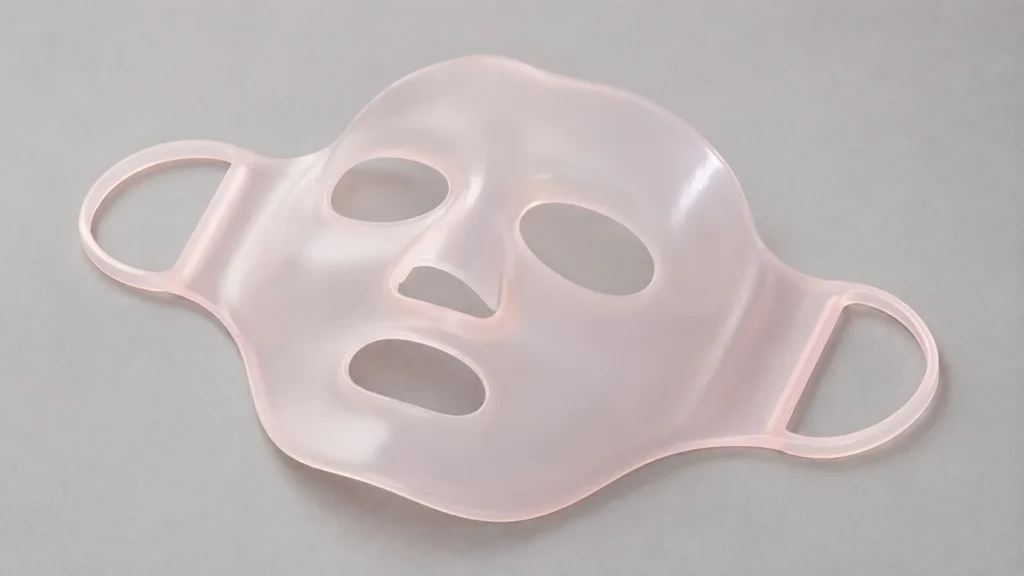
A silicone face mask sounds like one simple product, but the name covers several very different things. Some are skincare covers that sit over your serum. Some are medical gel sheets used on scars. Some are LED light masks with silicone straps, and a few are reusable respirator-style designs built by engineers.
Mix them up and you can waste money or expect results the product was never made to deliver. This guide separates them, shows what the research does and does not support, and helps you decide whether a silicone face mask deserves a place in your routine.
Key Takeaways
- The term covers skincare covers, scar-treatment sheets, LED masks and reusable respirators. Each has a different purpose and a different level of evidence.
- Sealing moisture under a barrier is a well-understood idea. We did not find strong clinical trials testing consumer skincare masks made of silicone.
- A Cochrane review found only weak, low-quality evidence for silicone gel sheeting on scars. We found no good evidence that silicone masks reduce wrinkles or treat acne.
- In LED masks, the light does the work. Silicone is usually just the strap or housing.
- Reusable does not automatically mean eco-friendly. Silicone is durable, yet it does not biodegrade.
- Patch test first, clean after every use, and ask a clinician before putting anything on broken or healing skin.
1. What Is a Silicone Face Mask, Exactly?
Search results for this term mix together products that have almost nothing in common. It helps to sort them by job before you compare anything.
| Type | What it is for | How strong is the evidence? |
| Skincare silicone facial mask | Sits over serum or cream to hold it against the skin | No strong trials found; benefits rest mostly on how occlusion works |
| Silicone gel mask or sheet for scars | Covers scars or healing skin for long periods | Cochrane review: weak, low-quality evidence |
| LED light mask with silicone parts | Delivers light to the face | Evidence relates to the light, not the silicone |
| Reusable silicone respirator | Holds replaceable filters to protect the wearer | Small early fit study; approval status needs checking |
This article does not cover costume or prosthetic masks, silicone masks used with CPAP or medical breathing equipment, or small silicone eye patches.
The respirator-style designs
In 2020, researchers at MIT and Brigham and Women’s Hospital described a molded reusable silicone mask with slots for replaceable N95 filter material. The rubber body could be sterilized, and only the filters were thrown away.
About 20 health care workers passed the standard OSHA fit test. That shows the mask seals well. It does not show that wearers get fewer infections. We could not confirm the current FDA or NIOSH status, so check before assuming anything.
Skincare masks are a different matter. They leave the nose and mouth open and contain no filter, so they offer no respiratory protection.
2. How Does a Silicone Face Mask Work on Skin?
The basic mechanism is occlusion. Silicone does not let water pass through easily, so a mask made of it slows moisture escaping from the skin’s surface. It also keeps whatever you applied underneath in close contact with your face.
That part is sound physics and a familiar principle in skincare. What is less certain is the popular claim that it makes serums “absorb better” in a way you can measure. We did not find good trials testing this on consumer products, so treat it as a plausible idea rather than a proven result.
One more caution. Some descriptions of how silicone helps skin come from patent applications. A patent explains an invention. It does not prove that the invention works.
3. Does a Silicone Face Mask Help With Scars, Wrinkles or Acne?
Scars
This is the best-studied use of silicone gel masks and sheets on skin, though the studies are on adhesive gel sheets rather than full-face designs. A 2013 Cochrane review pulled together 20 studies with 873 participants.
In prevention studies, sheeting was linked with fewer raised (hypertrophic) scars in people prone to scarring. In treatment studies, scars looked thinner and less discoloured.
The reviewers, however, called the evidence weak. Many trials were open to bias, and the groups were small. Newer studies may exist, so ask a dermatologist or plastic surgeon what current guidance says for your situation.
A US patent application (US20220233582A1) describes a non-adhesive silicone gel mask with thicker zones and ear loops. It is an interesting design for sensitive skin and facial hair. Yet the application is listed as abandoned since 2022, and it contains no clinical results.
Wrinkles and acne
We did not find reliable trials showing that a plain silicone mask reduces wrinkles or treats acne. Extra hydration can make skin look smoother for a while, but that effect is likely to be temporary. It is different from treating wrinkles.
Acne deserves extra care. A mask that traps heat and product on oily or breakout-prone skin may not suit you. If acne is a concern, a dermatologist is a better guide than a mask.
4. What About LED Silicone Face Masks?
Many shoppers who type this keyword are really looking for LED light masks. In most of them, silicone is just the strap, the eye cups or the flexible shell. The light is what is meant to act on the skin.
That changes how you should judge them. Any evidence for LED masks is about light therapy, not about silicone. Much of what appears online comes from brands selling the devices, so read it with care.
Some masks are described as “FDA-cleared”. Clearance means a device met the agency’s review for a stated use. It is not the same as approval, and it does not guarantee results for you. You can look a device up in the FDA’s public database, and it is sensible to talk to a dermatologist if you have acne, rosacea or light-sensitive skin, or take medicines that affect light sensitivity.
5. Is a Silicone Face Mask Safe? What to Know About Materials and Skin Type
Silicone is common in medical products, and many people use these masks without trouble. Still, reactions can come from the mask, from the products under it, or from trapped heat and sweat.
Labels such as “medical-grade” or “food-grade” are often seller claims. A better sign is a seller who can tell you what testing the material has passed, for example biocompatibility testing for skin contact. Ask if you are unsure. Scar sheets and skincare masks can also be regulated differently, so a claim that suits one does not automatically suit the other.
Some sensible precautions:
- Patch test a small area before your first full session.
- Go gently with strong actives such as retinoids or exfoliating acids. Sealing them in may increase their effect, so this is a precaution, not a proven risk.
- If your skin is oily or breakout-prone, start with short sessions and a light product.
- Wash the mask after each use and let it dry fully to limit bacteria and product build-up.
- Stop if you notice burning, rash or swelling.
- Speak to a clinician before using any silicone mask on stitches, burns, open wounds or skin recovering from a procedure.
6. Silicone Face Mask vs Sheet Masks and Patches: Is It Worth It and Is It Green?
How it compares
- Sheet masks: soaked in serum and thrown away after one use. A reusable silicone mask contains no product of its own, so you still need to buy one.
- Hydrocolloid pimple patches: made to draw fluid from a single blemish. A face mask does not do this.
- Overnight masks: creams you leave on the skin. A silicone cover can sit over a cream, but it does not replace one.
The environmental picture
A reusable silicone mask can replace dozens of single-use sheet masks and their packaging, which is a genuine advantage. On the other hand, silicone does not biodegrade. Producing it takes energy, and recycling usually needs specialist facilities that many curbside programs lack.
No source we reviewed offered a reliable break-even number, meaning how many uses it takes to beat disposable masks. Lifespan claims, often from six months to several years, come from sellers and blogs rather than independent testing. So buy one good mask, look after it, and use a take-back scheme when it wears out.
7. How to Choose and Use a Silicone Face Mask
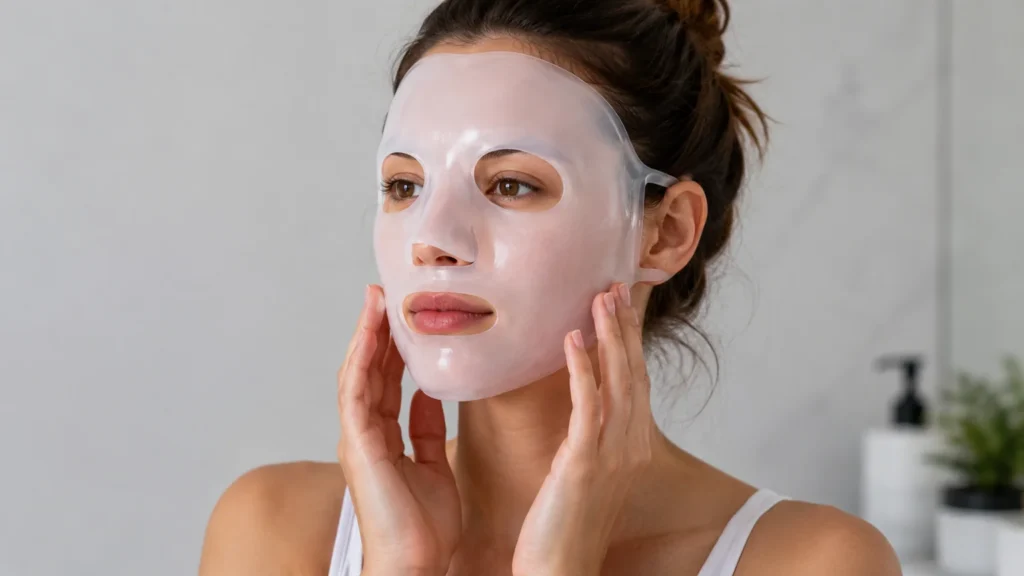
Start with your goal when choosing a silicone face mask. For a hydration boost, a basic skincare cover is enough. For a scar, the right product is a medical silicone gel mask or sheet, ideally recommended by your care team.
- Check the material and ask what testing supports the seller’s claims.
- Look at the fit. Ear loops, flexible edges and clear cut-outs for eyes, nose and mouth help the mask stay put.
- Read the wear-time guidance. Follow the maker’s instructions rather than guessing.
- Apply skincare first, place the mask flat, and smooth out air pockets.
- Clean with mild soap and lukewarm water, then air dry.
What to Look For at a Glance
Use this quick comparison to match the product to your goal before you buy.
| Type | Material | Fit | Wear time | Cleaning | Price range* |
| Skincare silicone mask | 100% silicone; ask what skin-contact testing it has passed | Ear loops, flexible edges, cut-outs for eyes, nose and mouth | Short sessions; follow the label | Mild soap, lukewarm water, air dry | About $10 to $20 |
| Scar gel mask or sheet | Silicone gel; medical-style products vary in regulation | Non-adhesive or adhesive; should sit flat on the scar | Often long wear; follow maker and clinician advice | Wash gently and air dry, as directed | About $10 to $25 |
| LED mask with silicone parts | Silicone strap or shell around the light unit | Adjustable strap; comfortable eye cups | Set by the device instructions | Wipe silicone parts per the maker; keep electronics dry | Around $100 and up |
| Reusable silicone respirator | Molded silicone body with replaceable filters | Must seal to the face; fit testing matters | Per maker; filters are replaced | Body can be sterilized; swap filters | Not widely sold; check status |
*Prices are rough ranges from retail listings seen in September 2026 and vary by seller, pack size and region. Wear times and cleaning steps are general; the maker’s instructions come first.
Faqs
Do silicone face masks actually work?
They do what silicone is good at, which is forming a barrier that slows moisture loss and holds products against the skin. Solid clinical proof for claims such as deeper serum absorption or wrinkle reduction is limited. For scars, evidence for silicone gel sheeting exists but is rated weak.
How do you use a silicone face mask?
Cleanse, apply your serum or moisturizer, then place the silicone facial mask on your face and secure the ear loops if it has them. Leave it on for the time the manufacturer recommends, remove it, and wash it.
Can you sleep in a silicone face mask?
Some products are designed for longer wear, but many are meant for short sessions. Follow the product label, and check with a clinician if you are using one over a scar or healing skin.
How do you clean a silicone face mask?
Wash it with mild soap and lukewarm water after each use, avoid harsh chemicals and rough scrubbing, and let it air dry fully before storing it.
Is a silicone face mask the same as an LED face mask?
No. An LED mask is a light device, and silicone is usually only its strap or shell. A plain silicone facial mask has no light and works as a barrier. Their evidence and safety questions differ.
Is a silicone face mask safe for sensitive or acne-prone skin?
It is often well tolerated, and non-adhesive designs avoid sticky irritation. Sensitivity varies, though, and trapped heat may not suit oily or breakout-prone skin. Patch test first and stop if irritation appears.
Bottom Line
A silicone face mask is a useful tool when you know which kind you are buying. As a skincare cover, it is a reasonable way to keep moisture and products close to the skin, although the stronger claims lack solid trials.
For scars, silicone has some supporting research, but reviewers rate it weak. For wrinkles and acne, the evidence is not there for plain silicone, and LED masks stand or fall on the light. As a respirator, silicone remains an early-stage idea.
Match the product to your goal, care for it well, and speak to a clinician when your skin is healing.