Silicone cream has a funny reputation. Some people swear by the silky, smooth feel it gives their skin, while others avoid it because they heard silicone “suffocates” the face.
The truth sits somewhere in the middle. This guide explains what these creams actually do, where the evidence is strong, where it is thin, and who should think twice before using one.
Key Takeaways
- It leaves a thin, flexible film that helps skin hold on to water.
- The silky feel is real, but the line-softening effect is temporary.
- Silicone gel and sheets have the best evidence for scar care.
- Allergic reactions are uncommon, but a patch test is still wise.
- Acne-prone skin does better with light, non-comedogenic formulas.
- Raised, painful or growing scars deserve a doctor’s opinion.
What Is Silicone Cream and How Does It Work?
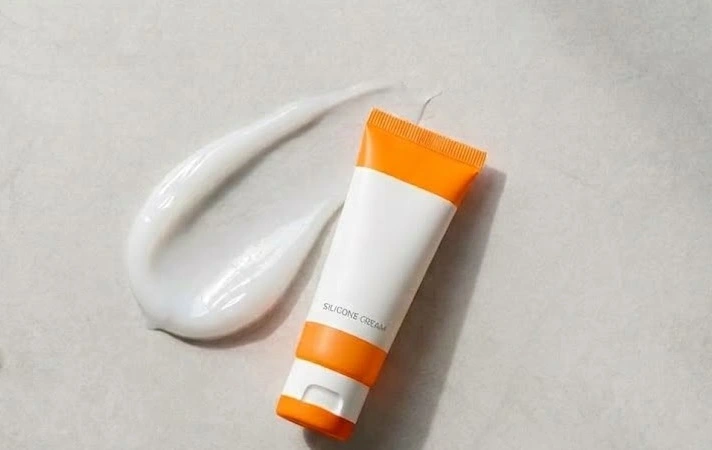
A silicone cream is simply a cream that contains a silicone ingredient, most often dimethicone. Silicones are synthetic compounds built around silicon and oxygen.
On the skin they spread into a thin, flexible film that sits on the surface rather than soaking in. That film slows water loss and gives creams their smooth glide.
You will usually meet three kinds: a silicone moisturizer for daily hydration, a silicone gel or cream made for scars, and a plain dimethicone cream sold as a skin protectant.
To spot silicones on a label, look for names ending in -cone, -conol or -siloxane, such as dimethicone or cyclopentasiloxane.
None of this has anything to do with silicone implants or injections. A cream stays on the skin and uses a grade made for cosmetic use.
Silicone cream is often used as a moisturizer or skin protectant, while silicone gel and silicone sheets are the forms with the strongest evidence for scar care. For a raised scar, choose a product specifically made for scars and follow its directions rather than assuming any silicone moisturizer will work the same way.
Silicone Cream vs. Silicone Gel and Sheets
The three forms look similar on the shelf, but they do different jobs. Here is how they compare.
| Feature | Silicone cream | Silicone gel | Silicone sheets |
| Main use | Everyday moisturising and skin protection | Scar care | Scar care |
| Scar evidence | Limited | Strongest evidence | Strongest evidence |
| Best for | Smooth, silky skin feel and light barrier care | Raised scars, such as hypertrophic scars and keloids | Raised scars, such as hypertrophic scars and keloids |
| How to use | Spread a thin layer on clean skin | Follow the product directions, once the wound has fully closed | Follow the product directions, once the wound has fully closed |
| How soon you notice | Soon after application, but the effect is temporary | Gradual, over weeks to months of daily use | Gradual, over weeks to months of daily use |
Benefits of Silicone Cream for Skin
It Helps Skin Hold On to Water
Skin loses a little water through its surface all day. The silicone film slows that loss, so moisture stays put for longer.
It is usually less powerful than petroleum jelly, but it feels far lighter. That is why many people prefer a silicone moisturizer for everyday use.
It Gives a Smooth, Silky Finish
Silicones help a cream spread evenly and leave skin soft instead of sticky. They also fill tiny surface dips, so fine lines look softer for a few hours.
That effect is cosmetic and temporary. Treat it as a finishing touch, not an anti-ageing treatment.
It Supports Scar Care
Silicone is one of the most widely recommended treatments for raised scars. A 2016 study of 224 people with hypertrophic scars and keloids found that silicone patches improved thickness, colour and flexibility.
Most strong evidence involves silicone gel and sheets rather than creams, and study quality is mixed. Results build slowly, usually over weeks to months of daily use once the wound has fully closed.
It Shields Sensitive or Irritated Skin
Dimethicone is a recognised skin protectant, which is why it turns up in barrier products for chapped hands and dry patches.
Dermatologists sometimes suggest a bland dimethicone cream after cosmetic procedures. Follow that advice only from your own provider, because healing skin needs individual care.
It Plays Well With Other Products
The smooth base helps sunscreen and makeup glide on more evenly. As a rule, apply water-based serums and treatment actives first, then the cream on top, since the film can limit what passes through afterwards.
Is Silicone Cream Safe? Who Should Be Careful
For most people, yes. An independent expert group, the Cosmetic Ingredient Review panel, has judged dimethicone and related silicones safe as used in cosmetics. The molecules are large, so they are unlikely to cross the skin barrier.
Allergy is the main risk, and it is uncommon. Itching, burning, redness, hives or swelling are reasons to stop and speak to a doctor. A patch test on the inner forearm before first use is a sensible habit.
Acne-prone skin deserves extra care. There is no firm proof that silicones clog pores, but a rich formula can feel heavy on oily skin. Pick a light, non-comedogenic product and cleanse well at night.
Avoid putting any cream on broken, infected or weeping skin unless a doctor has told you to.
The environment is the other question. Some cyclic silicones, known as D4, D5 and D6, persist in nature. The EU has banned D4 in cosmetics and restricted D5 and D6. Dimethicone is not covered by those limits.
Three Myths, Checked
Myth: it suffocates skin. A dimethicone cream forms a thin, flexible layer rather than an airtight seal, and normal skin function carries on underneath.
Myth: synthetic means harmful. Silicones are man-made, but so are many gentle, well-tested ingredients, and natural ones can irritate too. Safety depends on the ingredient and the person, not its origin.
Myth: it blocks your other products. It can limit what passes through when applied first, which is why order matters. Used on top of your routine, a silicone moisturizer simply sits above it.
Silicone-Free Options
If you would rather skip silicone, glycerin, ceramides, hyaluronic acid and shea butter all support hydration. None gives quite the same slip, and none has the same scar evidence.
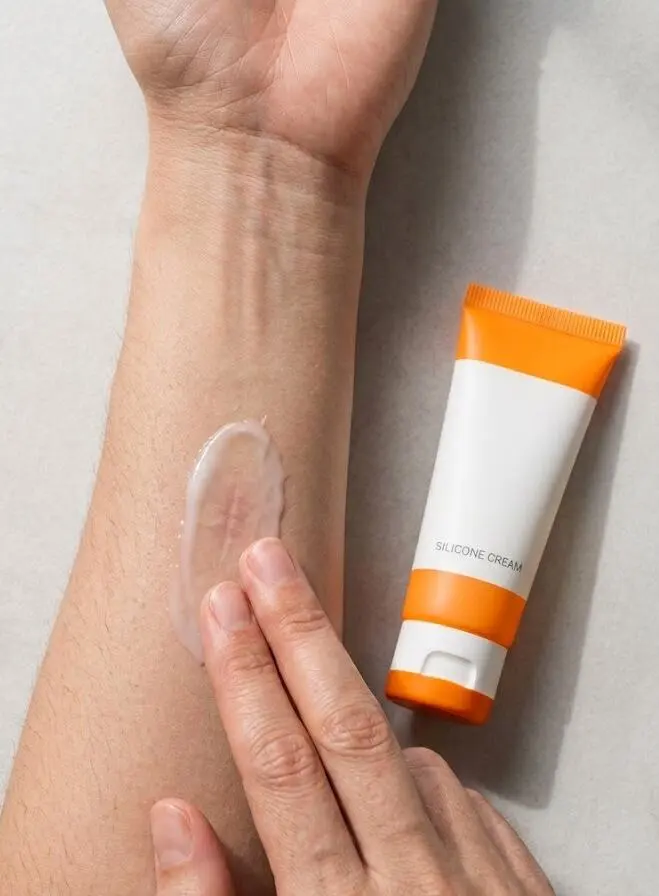
How to Choose and Use a Silicone Cream
- Goal: For daily hydration, pick a moisturizer that pairs silicone with glycerin or ceramides. For scars, pick a product made for scars.
- Skin type: Choose fragrance-free if your skin reacts easily, and non-comedogenic if you break out.
- Label: Dimethicone near the top of the list means a stronger film.
- Application: Spread a thin layer on clean skin. For scars, follow the directions, which often mean twice daily for several months.
- Sun: Cover scars with sunscreen, since UV light can darken them.
How Long Does Silicone Cream Take to Work?
For moisturising and surface smoothing, the effect can be noticed soon after application, but the smoother appearance is temporary.
Scar treatment takes longer. Silicone gel and sheets generally require consistent daily use over weeks to months, and improvement can be gradual. If a scar is not improving or continues to change, a dermatologist can recommend other treatments.
Which Types of Scars Can Silicone Help?
Silicone has stronger evidence for raised scars, particularly hypertrophic scars and keloids, than for ordinary flat scars or other marks.
It is not a universal scar treatment, so the type and age of the scar matter when deciding whether silicone is appropriate.
Who Should Use Silicone Cream and When to Avoid It
Silicone cream suits anyone who wants everyday moisturising, a smoother skin feel or a light protective barrier. It is less necessary if your current moisturiser already meets your skin’s needs.
For scars, choose a product made for scars and wait until the skin has fully closed. Do not apply a scar product over an open, infected or weeping wound unless a healthcare professional has told you to.
See a dermatologist if a scar is raised, painful, itchy or growing, because keloids can need more than a cream. Get advice too if a rash, swelling or signs of infection appear, or if dryness keeps returning despite moisturising.
Faqs
Is silicone cream bad for your skin?
Not for most people. Safety reviews support dimethicone in cosmetics, and reactions are uncommon. If your skin is allergy-prone, patch test first.
Does silicone cream clog pores?
It does not seem to for most people, but the evidence is not conclusive and heavy formulas can overload oily skin. If you break out easily, choose a light, non-comedogenic product.
Does silicone cream work on scars?
It can help raised scars such as hypertrophic scars and keloids, mainly as silicone gel or sheets. Expect slow gains over months, and ask a doctor about stubborn scars.
Can you use silicone cream with retinol or vitamin C?
Generally, yes. Apply the active serum first, let it settle, then follow with the cream. If your skin gets irritated, use the active less often.
Is silicone cream bad for the environment?
Some cyclic silicones persist in nature, which is why the EU restricts D4, D5 and D6. Dimethicone is not covered by those limits, and rinse-off products are generally the bigger concern than leave-on creams.
Bottom Line
A silicone cream is a useful, low-risk tool for holding in moisture, smoothing skin and supporting scar care, as long as your expectations are realistic. It will not erase wrinkles or fix every scar, and a few people will react to it or find it too heavy.
Check the label, patch test, and match the product to your goal. This guide is general information, not medical advice, so see a doctor or dermatologist about stubborn scars or ongoing skin trouble.