
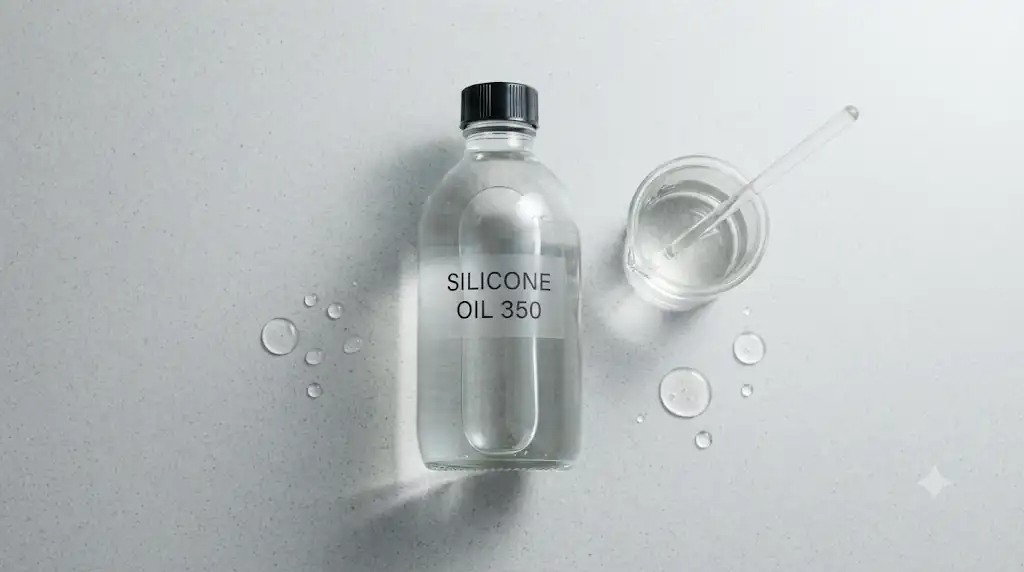
Silicone oil 350 is one of the most common fluids in the silicone family, yet buyers keep asking the same thing: what does the number mean, and is this the right fluid for my job? The 350 is a viscosity rating, and that single figure shapes how the oil pours, spreads, lubricates and lasts.
This article explains what the fluid is, which properties matter, where it is used, how to mix it into silicone rubber and what to check on safety and grade before you buy. Every figure comes from regulator text, manufacturer data or published safety reviews, and where sources disagree, you will see it flagged.
Key Takeaways
- The 350 means a viscosity of 350 centistokes (cSt) at 25°C, a medium-thickness fluid.
- It is a 350 cSt PDMS fluid (polydimethylsiloxane), a clear, odorless liquid that does not dissolve in water.
- Typical jobs include mold release, lubrication, defoaming, electrical insulation and softening silicone rubber.
- Grade matters, because industrial, cosmetic and food-contact versions need different paperwork.
- Keep it out of drains, and ventilate well if you heat it above roughly 150°C in open air.
- Flash point and hazard labels differ between suppliers, so read the data sheet for your exact product.
What Is Silicone Oil 350?
Chemically, silicone oil 350 is polydimethylsiloxane, shortened to PDMS and also sold as dimethyl silicone oil. Cosmetic labels list the same polymer as dimethicone. It is a clear, colorless liquid with almost no odor, and its CAS number is 63148-62-9. Its backbone of alternating silicon and oxygen atoms is why silicones behave so steadily across wide temperature swings.
The 350 is a viscosity rating in centistokes (cSt), measured at 25°C. One centistoke equals one square millimeter per second, and water sits near 1 cSt. So a 350 cSt silicone fluid flows slowly compared with water but far more freely than heavy grades. One manufacturer lists silicone oils from 0.65 cSt to about 2 million cSt, which makes 350 a medium-viscosity grade.
Key Properties of Silicone Oil 350
Published values line up closely between suppliers, though they vary slightly by manufacturer and batch. Treat the table as typical figures and confirm them on the data sheet you receive.
| Property | Typical value |
| Viscosity at 25°C | 350 cSt |
| Density at 25°C | About 0.97 g/cm³ |
| Refractive index | About 1.403 |
| Pour point | About −50°C |
| Surface tension | About 21.1 mN/m |
| Flash point | Varies by test method (see below) |
| Water solubility | Insoluble |
Flash point is the figure that differs most. Dow lists its 350 cSt fluid above 100°C by the closed-cup method, while several other suppliers quote above 300°C. Because the result depends on the test method, ask which one a data sheet used. Refractive index is a smaller gap: reference sources cluster around 1.403, though one supplier lists 1.43. One manufacturer also notes that viscosity shifts relatively little across a wide temperature span.
Where Silicone Oil 350 Is Used
Medium flow, low surface tension and chemical inertness make 350 cSt silicone oil useful across several industries:
- Mold release: a thin film keeps rubber, polyurethane, epoxy and die-cast parts from sticking.
- Lubrication: it suits plastic and rubber surfaces because it does not attack most of them.
- Defoaming: small amounts control foam in industrial processing.
- Electrical insulation and damping: suppliers list it as an insulating fluid for electrical equipment.
- Heat transfer: this 350 cSt silicone fluid works as a transfer fluid across a wide temperature span.
- Polishes and textiles: it adds gloss and water repellency to polishes and a soft feel to fabrics.
- Emulsions: it can serve as the oil phase when a formulator builds a silicone emulsion.
Using Silicone Oil 350 in Silicone Rubber
Moldmakers often add this fluid to silicone rubber to lower hardness and improve flow. One supplier recommends 1 to 10 percent of the total weight, noting that about 8 percent cuts Shore A hardness by roughly 3 to 5 points. It also warns against going past 10 percent, because too much oil can weaken the cured rubber.
Mix parts A and B first, then stir in the oil and pour within the pot life. There is one catch: the oil does not cross-link, so it can slowly bleed out and leave a greasy film on the mold. Run a small test batch before a long production run.
Is Silicone Oil 350 Safe for Skin and Hair?
Dimethicone is the cosmetic name for PDMS, so this question points straight at the Cosmetic Ingredient Review (CIR) expert panel. The panel has assessed dimethicone and related polymers more than once and concluded they are safe as used in cosmetics at current practices and concentrations. Its 2022 amended report even notes that one supplier described 100 and 350 cs fluids as the ones generally used for cosmetics. An earlier review also judged significant skin absorption unlikely because the molecules are large.
A finished cosmetic is still different from a drum of raw fluid. If the oil will touch skin or hair, buy a grade documented for personal care, and patch-test any new product if your skin is sensitive.
Food-Contact and Food-Grade Claims
Food grade is a claim, not a guarantee. The US FDA rule for defoaming agents in food processing, 21 CFR 173.340, lists dimethylpolysiloxane with a viscosity of 300 to 1,050 cSt at 25°C, allowed up to 10 parts per million in food under its conditions. A 350 cSt PDMS fluid falls inside that viscosity band, but only grades meeting every listed requirement qualify.
One European supplier backs its food-grade version with a manufacturer’s declaration covering EU food-contact rules and the E 900 listing, and it calls that paper a declaration, not a certificate. Ask for the same documents before you rely on any food-grade label.

Safety, Storage and Handling
Hazard labels differ by supplier. The safety data sheet for Dow’s 350 cSt fluid lists it as not classified, while another supplier’s sheet marks it harmful to aquatic life with long-lasting effects (H412). Read the sheet that ships with your product, and keep the oil out of drains either way.
Dow notes that temporary eye discomfort is possible, so wear safety glasses against splashes. In open air, PDMS slowly starts to degrade above roughly 150°C and can release formaldehyde among other substances, so ventilate any hot work. Store the 350 cSt silicone fluid in a cool, dry place away from direct sunlight, with the container tightly closed and out of children’s reach. Dow lists a shelf life of 1,080 days, about three years, for its 350 cSt grade, but confirm the figure for your own batch.
How to Choose the Right Silicone Oil 350 Grade
- Match the grade to the job, and ask for cosmetic or food-contact paperwork when it applies.
- Request the technical data sheet and safety data sheet, then compare viscosity, density and flash point, including the test method.
- Check that the label or sheet shows CAS 63148-62-9.
- Confirm viscosity at 25°C, since temperature changes how the fluid flows.
- Pick a pack size that fits your use, from small bottles to 200 kg drums.
A lower viscosity spreads faster, while a higher one leaves a heavier film. If a 350 cSt PDMS fluid feels off for your process, test the neighboring grade.
Frequently Asked Questions
What is silicone oil 350 used for?
It is mainly used as a mold release agent, lubricant, defoamer, insulating fluid and additive that softens silicone rubber. Some grades also go into polishes, textile finishes and personal care products.
What does 350 mean in 350 cSt silicone oil?
It is the viscosity in centistokes at 25°C. A higher number means a thicker fluid that flows more slowly, and 350 sits in the medium range.
Is silicone oil 350 safe on skin?
Dimethicone, the cosmetic name for PDMS, is rated safe as used in cosmetics by the CIR expert panel. Use a cosmetic-grade product on skin and hair, and patch-test if your skin is sensitive.
Does silicone oil 350 dissolve in water?
No. It is insoluble in water. It dissolves in hydrocarbon and low-molecular-weight aromatic solvents, with limited solubility in acetone and alcohols, and solubility varies with viscosity.
Is silicone oil 350 the same as dimethicone?
Chemically, both are polydimethylsiloxane. Dimethicone is the name used on cosmetic labels, and Dow lists its 350 cSt fluid under that name. Grade and paperwork still differ, so never swap an industrial drum into a cosmetic formula.
Bottom Line
Silicone oil 350 is a medium-viscosity PDMS fluid that earns its place in molding, lubrication, defoaming and insulation, and in the right grade, personal care. Know what the 350 cSt rating means, read the data sheet, confirm the grade paperwork and handle it with basic care. Get those four things right and this 350 cSt silicone oil will do its job reliably.