A silicone mould release agent is the thin, easily overlooked layer that decides whether a freshly cured part lifts out of its mould in one clean motion or stays stuck and ruins the cavity. Whether you cast resin, mould rubber, shape polyurethane foam or run a die-casting line, the right product saves you scrap, cleaning time and mould wear.
The wrong product, or too much of the right one, causes the very defects you were trying to avoid. This guide explains what these products are, how they work, which forms exist, and how to choose and apply one. It also covers the problems that catch many moulders off guard, especially paint and bonding trouble.
Key Takeaways
A silicone release film sits between the mould and the part, so the part separates with less force.
Products come as water-based emulsions, aerosol sprays, neat liquids and longer-lasting semi-permanent coatings.
A thin, even coat works better than a heavy one, because excess leaves residue.
Silicone can interfere with painting, printing and gluing, so plan your finishing steps first.
Always follow the supplier’s data sheet for dilution, drying time and temperature limits.
What Is a Silicone Mould Release Agent?
A silicone mould release agent is a coating you apply to a mould surface before filling it. Its job is simple: stop the moulded material from bonding to the tool. Most products are built on polydimethylsiloxane, often shortened to PDMS, which belongs to the same silicone family used in many fluids and silicone lubricants.
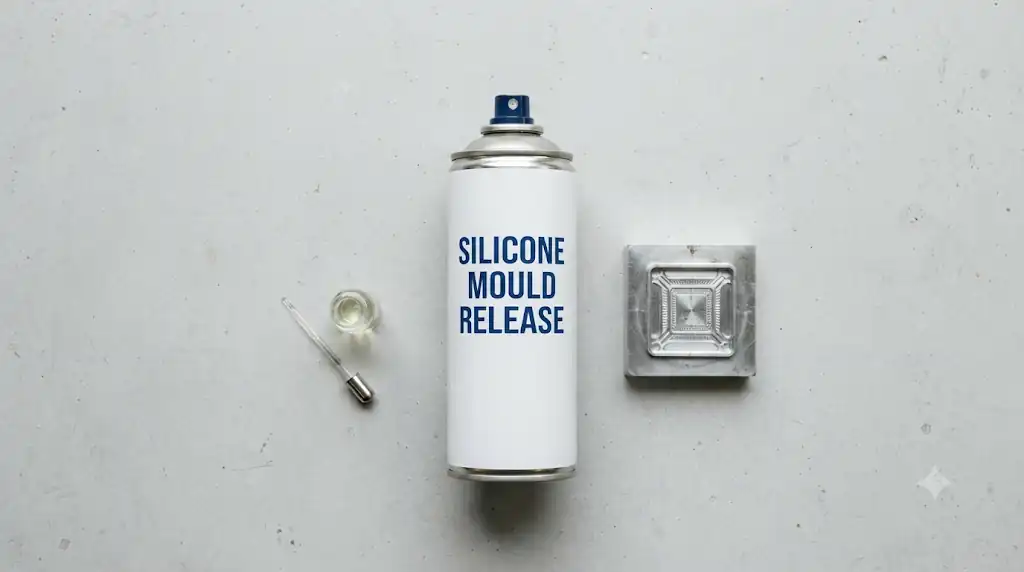
If you want to see how many forms are on sale, a typical silicone mould release agent listing shows the range of sprays and liquids that moulders can choose from. Some people spell it mold and some spell it mould, but the product is the same.
How a Silicone Mould Release Agent Works
Silicone has very low surface energy, which means most other materials struggle to stick to it. When you apply a thin coat of a silicone mould release agent, it spreads across the mould and forms a slick film.
As the part cures and shrinks slightly, it lets go of that film instead of gripping the metal or plastic underneath. The film also lowers the force needed to eject the part, which helps protect fine details and thin sections.
Some products simply leave a lubricating film. Others are designed to cure on the surface and bond to it, which is why they last through more cycles.
Main Forms of Silicone Mold Release Agent
- Water-based emulsions: Silicone is dispersed in water, then diluted and sprayed, wiped or dipped. They are popular in rubber processing.
- Aerosol sprays: Handy for small workshops, quick touch-ups and hard-to-reach cavities.
- Neat liquids and oils: Applied by wiping or swabbing, which gives you control over where the product goes.
- Semi-permanent coatings: Built to stay on the mould for several releases before you need to reapply.
Where Silicone Release Agents Are Used
Silicone release products are one of many everyday silicone uses in manufacturing. You will find them in rubber and plastic moulding, polyurethane foam and elastomer parts, tyre moulding and die casting.
A silicone mold release agent is common in polyurethane work, where it helps release items such as car interior parts, shoe soles and seat foam. In die casting, polysiloxane-based products sit alongside oil-based and wax-based release agents as another option.
Silicone vs Other Release Options
| Release type | Where it helps | Watch out for |
| Silicone | Multiple releases per application and wide material compatibility | Can interfere with painting, printing and gluing |
| Wax | Familiar and widely used | Residue and build-up on the mould |
| PVA film | Follows mould detail well | Single use, so it creates waste |
| Non-silicone (for example, hybrid wax or fluoropolymer) | Cleaner choice when parts are painted or bonded | Needs testing on your own process |
Do You Always Need a Release Agent?
Not always. Silicone rubber generally releases on its own, which is why many craft moulds work without any spray, although new silicone moulds may need extra release for the first few castings.
Some jobs still demand one. Epoxy cast into an epoxy mould can bond permanently, and silicone cast against silicone will fuse without a release. For silicone-on-silicone work, the release should not contain a significant amount of silicone oil.
How to Choose the Right Product
Choosing a silicone mould release agent starts with your process rather than the product label. These questions narrow the choice quickly:
- What is the mould made of, and what are you moulding? If you are moulding silicone rubber itself, pick a release made for silicone-on-silicone work and confirm it with your supplier.
- How hot does the process get? Check the data sheet instead of assuming any silicone product will cope.
- Will the part be painted, printed or glued afterwards? If yes, test for compatibility or consider a non-silicone option.
- How detailed is the cavity? Fine detail calls for a very thin, even film.
- Will the part touch food or skin? Ask the supplier for compliance documents before you buy.
- How many releases do you need between applications? That decides between a spray and a semi-permanent coating.
- Still unsure? Test the product on a small area of the mould first and see how the part releases.
How to Apply a Silicone Mold Release Agent Step by Step
- Clean the mould to remove old residue, dust and oils.
- Let any cleaning solvent evaporate completely.
- Dilute the product only if the data sheet says so, using the recommended diluent.
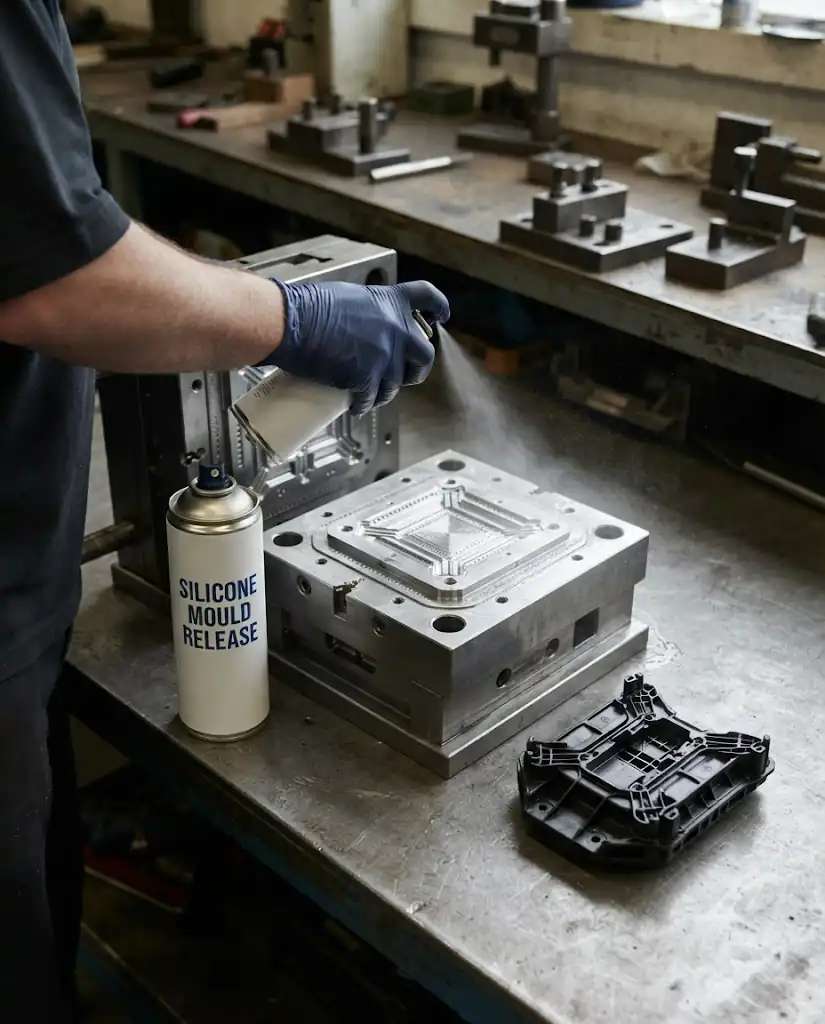
- Apply a thin, even coat by spraying, wiping or swabbing. With an aerosol, some suppliers suggest a light spray, a gentle brush-over, then a second light spray.
- Allow it to dry or cure for the time the supplier recommends.
- Check corners and fine details for gaps or thin spots.
- Reapply only when release starts to feel harder, rather than after every cycle.
Common Problems and Simple Fixes
- Parts still stick: Look for gaps in coverage, a damp mould, or a product that does not suit the material.
- Oily or dull parts: You have probably applied too much silicone mould release agent. Use less, or dilute further if the data sheet allows.
- Paint fisheyes or weak adhesion: Silicone can migrate and cause these defects. Consider a paintable-grade or non-silicone release agent, and test the surface with a simple water break test.
- Tacky or uncured surface: With some epoxy systems, silicone contamination can stop the surface from curing properly. Use a wax or PTFE-based alternative and keep silicone operations separate.
- Build-up on the mould: Heavy over-application is the usual cause, so clean the tool and apply thinner coats.
- Contamination elsewhere: Overspray can travel into other work areas, so spray away from paint and bonding stations.
Storage and Safety Tips
Keep containers tightly closed and store them as the label directs, because shelf life differs between products. Use good ventilation when working with aerosols, and read the safety data sheet before first use. Wear gloves, and wash your hands before handling parts that will be bonded or finished. If a part will touch skin, wash leftover release agent off with warm soapy water; an isopropyl alcohol wipe cuts residue further.
FAQs About Silicone Mould Release Agent
What is a silicone mould release agent used for?
It is used to stop moulded or cast material from sticking to the mould. It helps parts come out cleanly, reduces ejection force and protects the mould surface across rubber, plastic, polyurethane and die-casting work.
How do you apply a silicone mould release agent?
Clean and dry the mould, then apply a thin, even coat by spray, wipe or swab. Let it dry or cure as the supplier directs, and check detailed areas for gaps before filling.
Can you paint or glue parts made with silicone release agents?
It can be difficult. Silicone residue is a known cause of paint fisheyes and poor adhesion. Clean parts thoroughly, test a sample first, or switch to a non-silicone or paintable-grade product.
Can you use a release agent on silicone moulds?
Often you do not need one, because silicone generally releases on its own. When you do, such as for silicone-on-silicone casting, choose a release made for that job and not one heavy in silicone oil.
Is a silicone or non-silicone release agent better?
Neither wins every time. A silicone mold release agent suits many general moulding jobs, while non-silicone options are often safer when parts will be painted, printed or bonded afterwards.
Bottom Line
A silicone mould release agent keeps parts moving out of the mould smoothly and protects your tooling, but only if you match it to your process. Choose by material, temperature and finishing needs, apply thin coats, and test before scaling up. Get those three things right and sticking, residue and rework drop sharply.