
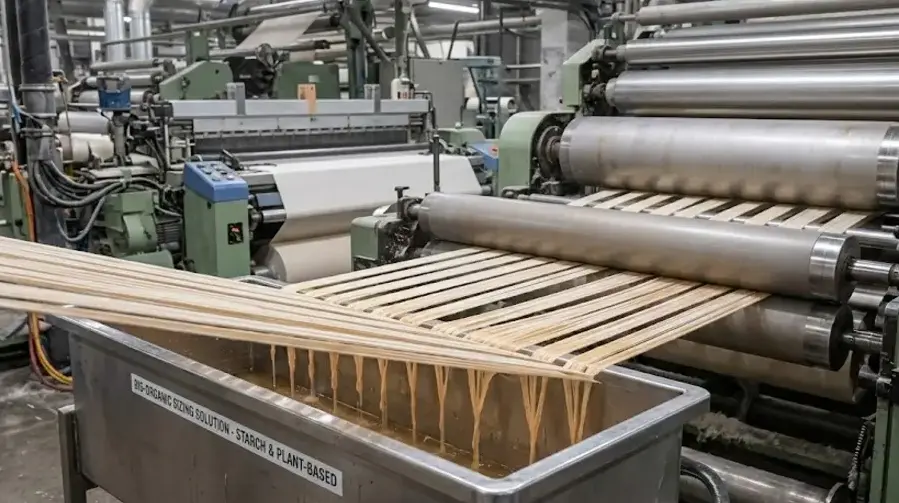
Bio organic sizing chemicals for textiles and for weave are natural or bio-based agents used to coat yarns before weaving, improving strength, elasticity, and abrasion resistance. These chemicals replace conventional synthetic sizes such as polyvinyl alcohol or acrylics with starch, carboxymethyl cellulose, or modified natural polymers. How do these sustainable sizing solutions transform modern textile manufacturing?
Key Takeaways
- Bio organic sizing chemicals offer sustainable alternatives to synthetic agents.
- They improve weaving efficiency, yarn strength, and surface finish.
- Major bio-based agents include starch, CMC, and modified esters.
- Compliance with GOTS and OEKO-TEX supports their industrial adoption.
- Lower effluent load and desizing ease drive their growing demand.
What are bio organic sizing chemicals for textiles and for weave?
Bio Organic Sizing Chemicals for Textiles and for Weave are derived from renewable sources like corn starch, plant gums, and natural polymers. Their purpose is to form a thin film around warp yarns, minimizing breakage during weaving.
Key characteristics:
- Biologically safe and readily decomposable materials
- Outstanding adhesion and uniform film creation
- Promotes efficient desizing during finishing operations
- Decreases COD contamination in process water
How do bio organic sizing chemicals improve weaving performance?
These chemicals enhance mechanical and operational efficiency during weaving by:
- Increasing yarn strength and reducing hairiness
- Preventing thread breakage on high-speed looms
- Ensuring smoother fabric surfaces and fewer defects
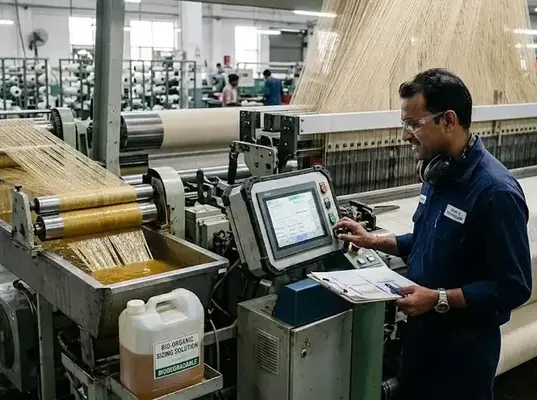
- Supporting efficient desizing using enzymes or warm water
For instance, RAN Chemicals Pvt. Ltd. offers “One Shot Sizing Chemicals,” which combine adhesive and softening functions for both cotton and blended yarns.
What are the major types of bio organic sizing agents used in textiles?
The commonly used bio organic sizing agents include:
| Type | Source | Key Property | Application |
| Starch-based | Corn, tapioca | Film-forming | Cotton yarns |
| Carboxymethyl cellulose (CMC) | Plant cellulose | Lubrication | Blends and synthetics |
| Modified starch esters | Bio-acids | Adhesion and flexibility | High-speed weaving |
| Guar gum derivatives | Natural gum | Smooth finish | Fine yarns |
A textile chemical liquid is often discussed alongside other eco-friendly sizing aids such as lubricants, anti-static agents, and warp conditioning chemicals used in weaving preparation.
What sustainability advantages do bio organic sizing chemicals offer?
- Lower water and energy usage during desizing
- Minimal hazardous residue formation
- Compatibility with OEKO-TEX and GOTS certification
- Safe handling and biodegradability
By replacing petroleum-based chemicals, bio organic options help textile mills meet global sustainability frameworks and reduce overall environmental impact.
How are these chemicals applied during the textile sizing process?
The application involves:
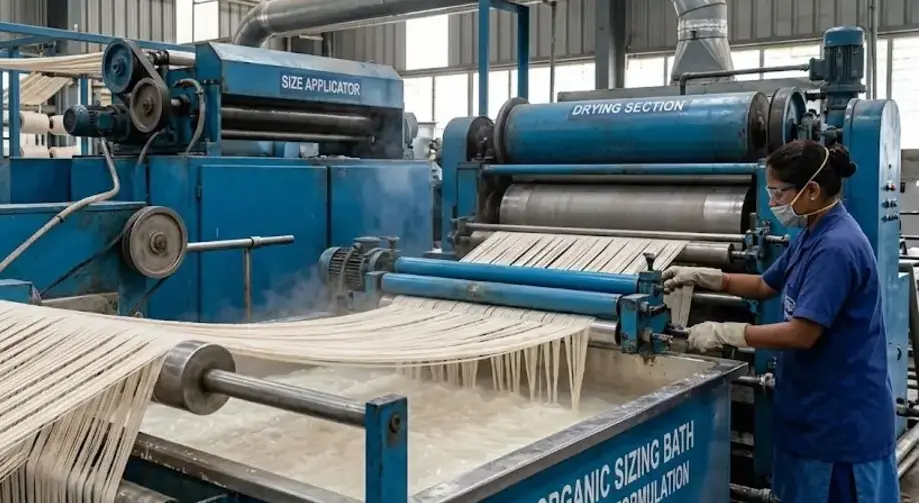
- Preparation of sizing paste: Dissolving the bio organic agent in water at controlled temperatures.
- Yarn impregnation: Passing warp yarns through the paste for uniform coating.
- Drying: Removing moisture under heat to form a protective film.
- Weaving: Sized yarns are used directly on the loom.
This process ensures optimal adhesion and reduces loom stoppage rates.
What standards or innovations guide bio organic sizing adoption?
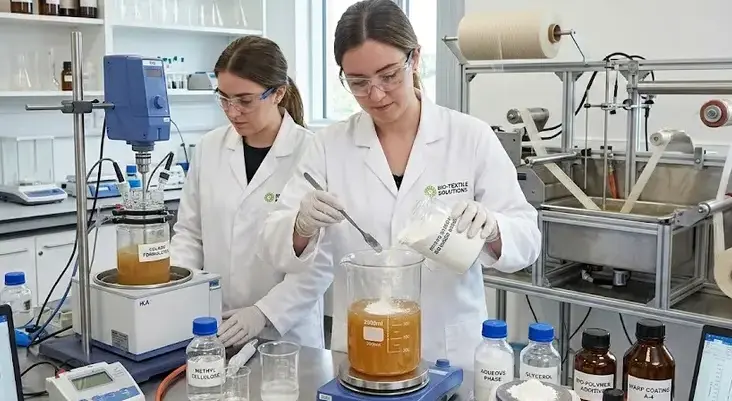
Innovations focus on enzyme-compatible sizing and single-bath applications. Research publications such as Chemical Innovations in Yarn Sizing emphasize starch-polymer hybrids for high tensile strength and easy biodegradation. Industry leaders like Esterchem and Douwin Chem promote modified bio-esters and methyl acrylate derivatives as next-generation sustainable sizing agents.
What is the price range of bio organic sizing chemicals for textiles and for weave?
The price varies depending on composition and supplier:
- Starch-based or CMC types: ₹80–₹150/kg
- Modified bio-esters and hybrid blends: ₹200–₹400/kg
Industrial buyers can explore verified listings on IndiaMART and TradeIndia for region-specific pricing and product certifications.
Conclusion
The rise of bio organic sizing chemicals reflects a global textile commitment to sustainability, productivity, and regulatory responsibility. They enhance weaving performance and contribute to reduced environmental pollution. As more manufacturers adopt bio organic sizing chemicals for textiles, the move toward a cleaner, circular textile ecosystem becomes both feasible and measurable.
FAQ
What are the chemicals used in textile sizing?
Due to their environmental compatibility and cost efficiency, starch and its altered derivatives dominate textile sizing applications.
What is the sizing process in weaving?
It involves coating warp yarns with a thin film of adhesive to improve strength and reduce friction during weaving.
Why is sizing used for weaving?
Sizing enhances yarn durability, minimizes breakage, and ensures smooth weaving on high-speed looms.
Which chemical is mainly used in the textile industry?
Starch and its modified derivatives are the most widely used due to their biodegradability and cost-effectiveness.
What are One Shot Sizing chemicals?
These are multi-functional formulations that combine adhesion, lubrication, and antistatic properties in a single solution.
Sources
https://dir.indiamart.com/impcat/sizing-chemicals.html
https://ranchemicals.in/product/textile/sizing/
https://www.douwin-chem.com/methyl-acylate-textile-sizing-agent.html
https://www.researchgate.net/publication/390743620_Chemical_Innovations_in_Yarn_Sizing_Selection_of_Sustainable_Size_Materials_and_Warp_Performance
https://www.esterchem.co.in/textiles.html
https://www.tradeindia.com/products/textile-sizing-chemicals-8993933.html
https://www.scribd.com/document/128181802/Sizing-Chemicals-Sizing-of-Warp-Yarns-Sizing-Chemicals-for-Textile-Weaving