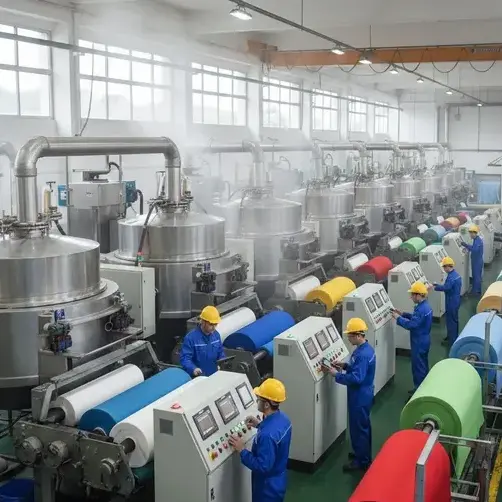
Chemicals used in textile wet processing are substances applied to fibers, yarns, or fabrics during aqueous treatment stages such as desizing, scouring, bleaching, dyeing, and finishing. These chemicals modify the fiber surface, enhance absorbency, and ensure uniform coloration. How do different categories of these chemicals work to achieve specific textile performance?
Key Takeaways
- Textile wet processing relies on sequential chemical treatments.
- Core chemical categories consist of scouring, bleaching, dyeing, and finishing auxiliaries.
- Enzyme-based and eco-friendly formulations are replacing harsh chemicals.
- Regulatory compliance under OEKO-TEX and REACH is essential for global trade.
- Innovation focuses on sustainability, reduced effluent, and functional performance.
What Are the Major Stages Where Chemicals Used in Textile Wet Processing Play a Role?
Chemicals Used in Textile Wet Processing, involves multiple sequential chemical treatments to clean, whiten, color, and finish textiles. Key stages include:
| Stage | Objective | Common Chemicals |
| Desizing | Remove starch and sizing materials | Amylase enzyme, acids, oxidizing agents |
| Scouring | Eliminate waxes and oils | Caustic soda (NaOH), surfactants |
| Bleaching | Whiten fabric | Hydrogen peroxide, sodium hypochlorite |
| Mercerization | Improve luster and dye uptake | Sodium hydroxide |
| Dyeing | Impart color | Dyes, leveling and dispersing agents |
| Finishing | Add softness or performance features | Silicones, resins, softeners |
Within the industry, textile chemical formulations are typically referenced alongside dispersing, leveling, and auxiliary agents employed in dyeing and finishing.
How Do Scouring and Bleaching Chemicals Work in Textile Wet Processing?
- Scouring agents like caustic soda, soaps, and wetting agents remove natural impurities and oils from cotton.
- Bleaching agents such as hydrogen peroxide and stabilizers whiten the fabric by oxidizing natural pigments.
- Stabilizers (e.g., sodium silicate, magnesium salts) control peroxide decomposition and protect fiber strength.
What Types of Chemicals Are Used in Dyeing and Printing?
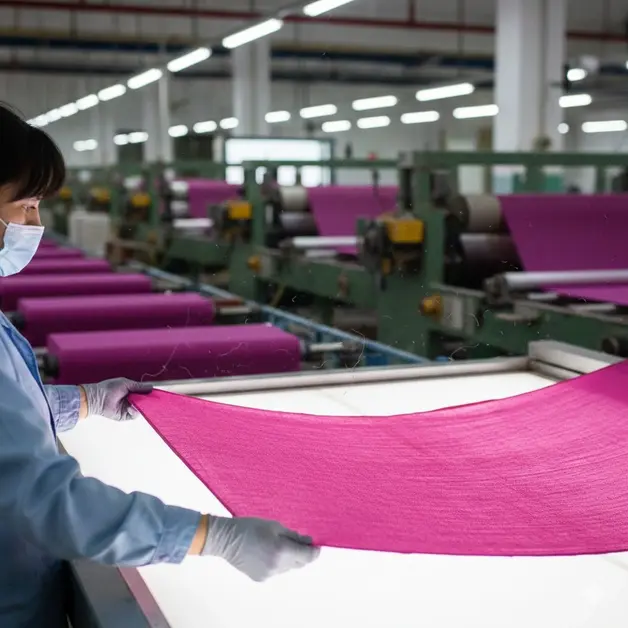
During dyeing and printing, chemicals regulate dye solubility, fixation, and shade accuracy:
- Electrolytes (NaCl, Na₂SO₄): Promote dye exhaustion on fibers.
- Leveling agents: Prevent uneven dyeing by controlling dye migration.
- Dispersing agents: Keep insoluble dyes suspended evenly.
- pH regulators: Maintain dye bath balance for consistent coloration.
- Fixing agents: Improve wash fastness and color retention.
Which Chemicals Enhance Finishing and Fabric Performance?
Finishing chemicals impart functionality and aesthetic appeal:
- Softening agents: Fatty acid condensates, silicones, or polyethylene emulsions.
- Water repellents: Fluorocarbons, wax emulsions, paraffin.
- Wrinkle-resistant resins: Urea-formaldehyde and DMDHEU.
- Antimicrobial finishes: Silver nanoparticles, quaternary ammonium compounds.
These finishes align with increasing demand for functional and sustainable textiles in apparel, medical, and technical sectors.
How Are Enzymes and Eco-Friendly Chemicals Used in Modern Wet Processing?
Sustainable processing substitutes harsh chemicals with bio-based or low-impact alternatives:
- Enzymatic desizing: Amylase replaces acid hydrolysis.
- Bioscouring: Pectinase removes impurities with reduced alkali use.
- Oxygen bleaching: Replaces chlorine with hydrogen peroxide for a more eco-friendly bleaching process.
- Low-salt dyeing: Reduces effluent load through reactive dye innovation.
What Safety and Environmental Standards Govern Chemical Use?
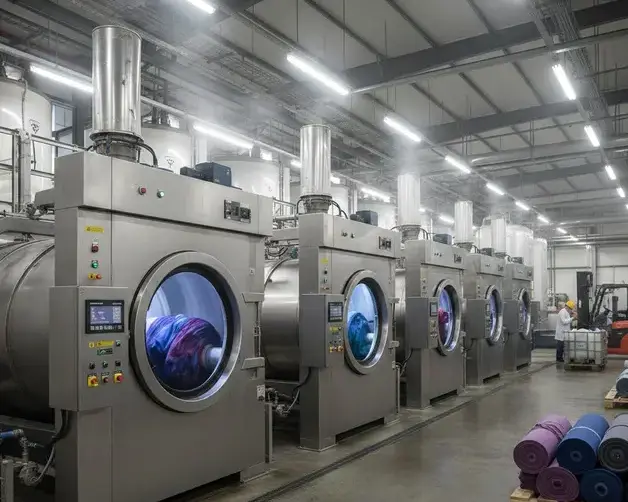
Global standards ensure eco-compliance and worker safety:
- OEKO-TEX Standard 100: Restricts harmful substances in fabrics.
- REACH Regulation: Monitors chemical handling and restricts hazardous substances to protect health and the environment.
- ISO 14001: Focuses on continuous improvement of eco-friendly manufacturing standards.
- ZDHC: Encourages brands and manufacturers to adopt cleaner chemical management programs.
What Are the Future Trends in Textile Wet Processing Chemicals?
The industry is shifting toward biodegradable auxiliaries, low-temperature bleaching, and nanotechnology-based coatings for performance enhancement. Emerging innovations include plasma pre-treatment and enzyme-assisted finishing for reduced water and energy consumption.
Conclusion
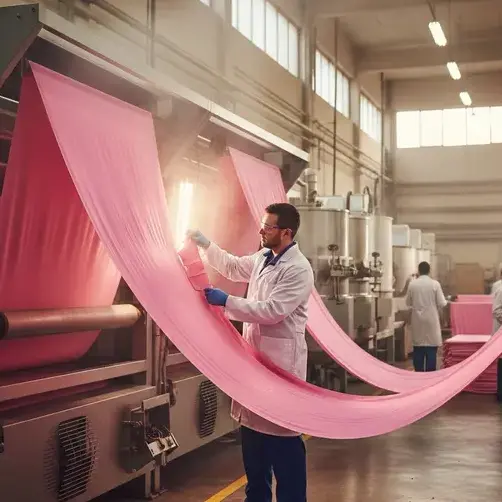
Chemicals used in textile wet processing form an interconnected system of auxiliaries, catalysts, and finishers that ensure product quality, functionality, and sustainability. As regulatory frameworks tighten, industries increasingly adopt cleaner formulations and integrated systems such as textile effluent treatment chemicals for responsible wastewater management.
FAQ
What are some of the chemicals used in textile processing?
Caustic soda, hydrogen peroxide, surfactants, dyes, and finishing agents like silicones are commonly used.
What is a wetting agent in textiles?
Lowering the surface tension of liquids, a wetting agent ensures uniform chemical absorption within textile materials.
What are the top 5 industrial chemicals?
Sodium hydroxide, hydrogen peroxide, acetic acid, sodium chloride, and surfactants.
How to make wetting agent for textiles?
Blend non-ionic surfactants with emulsifiers and solvents in controlled proportions for stable penetration performance.
Sources
https://textilelearner.net/chemicals-in-textile-wet-processing/
https://www.slideshare.net/slideshow/chemicals-used-in-textile-wet-processing-their-function-assignment-work/35353475
https://acmemills.com/industry-news-blog/list-of-chemicals-used-in-textile-dyeing-industry/
https://www.mdpi.com/2071-1050/17/7/3041
https://oecotextiles.blog/2013/01/10/chemicals-used-in-textile-processing/