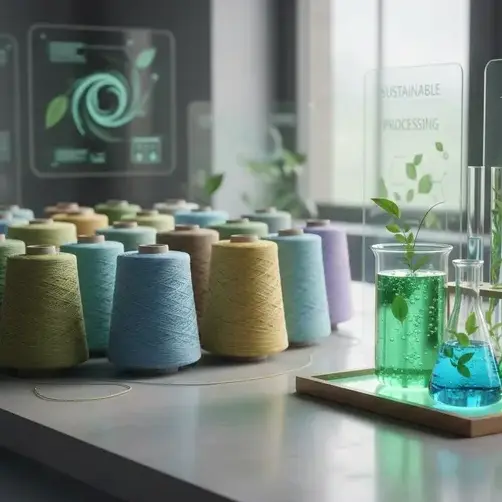
Eco friendly chemicals in textiles are formulations designed to minimize environmental impact during fabric processing, dyeing, and finishing. These chemicals replace hazardous substances with biodegradable, non-toxic alternatives that ensure worker safety and product compliance. How do such eco-conscious innovations reshape textile production for a greener future?
Key Takeaways
- Eco friendly chemicals ensure non-toxic, biodegradable textile processing.
- Enzymes, natural dyes, and bio-based softeners are core agents.
- Regulations like REACH Regulation and GOTS guide eco-compliance.
- India’s textile industry is increasingly adopting sustainable chemical technologies.
- Innovations such as waterless dyeing and enzyme bleaching define future-ready processes.
What Are Eco Friendly Chemicals in Textiles?
Eco friendly chemicals in textiles refer to biodegradable and non-toxic compounds used throughout textile manufacturing.
They aim to achieve:
- Reduced environmental footprint through low-emission processes
- Safe biodegradability and minimal aquatic toxicity
- Regulatory compliance with standards like REACH Regulation, GOTS, and OEKO-TEX
Common examples include:
| Category | Eco-Friendly Agent | Function |
| Surfactants | Alkyl polyglucosides | Wetting and emulsifying |
| Enzymes | Amylase, cellulase | Desizing and bio-polishing |
| Dyes | Natural or low-impact dyes | Coloration with low effluent load |
How Do Eco Friendly Chemicals Enhance Textile Processing?
These chemicals improve both fabric quality and process efficiency by substituting hazardous agents with natural or enzyme-based alternatives.
Key benefits include:
- Energy reduction: Lower curing temperatures in finishing
- Water efficiency: Minimal rinsing cycles
- Improved handle and texture: Use of silicone-free softeners
- Lower effluent load: Biodegradable surfactants minimize chemical oxygen demand (COD)
Which Eco Friendly Chemicals Are Commonly Used in Textiles?
Prominent eco friendly textile chemicals include:
- Enzymes – for desizing, scouring, and stone washing
- Biodegradable surfactants – replace alkylphenol ethoxylates
- Natural dyes and mordants – derived from plants and minerals
- Non-formaldehyde resins – improve wrinkle resistance without toxicity
- Plant-based softeners – provide smooth finish without silicones
Textile chemical liquids are frequently grouped with auxiliary agents, binding chemicals, and post-finishing additives in sustainable textile applications..
What Role Do Eco Friendly Chemicals Play in Reducing Pollution?
Eco friendly chemicals reduce chemical discharge, microplastic formation, and hazardous effluents.
They contribute to:
- Cleaner wastewater through biodegradable molecular structures
- Reduced air emissions by eliminating VOC-based solvents
- Safe sludge disposal due to non-toxic residues
This aligns with sustainable manufacturing frameworks promoted by UNEP and the ZDHC Foundation.
How Are Eco Friendly Chemicals Regulated in Textile Manufacturing?
Global standards and certifications ensure chemical transparency and eco-compliance:
- GOTS: Restricts toxic inputs
- Bluesign Technologies: Monitors chemical management systems
- OEKO-TEX: Ensures consumer safety
Maintaining Material Safety Data Sheets (MSDS) and meeting wastewater discharge requirements are essential responsibilities for manufacturers.

What Are the Latest Innovations in Eco Friendly Textile Chemicals?
Emerging advancements include:
- Bio-based auxiliaries from agricultural waste
- Enzyme-catalyzed bleaching replacing hydrogen peroxide
- Waterless dyeing technology using supercritical CO₂
- Nano-finish coatings with biodegradable polymers
These innovations reflect the textile industry’s transition toward circular production and carbon-neutral goals.
How Are Indian Textile Industries Adopting Eco Friendly Chemicals?
In India, sustainable processing units are integrating:
- Plant-derived wetting and leveling agents
- Enzyme-based scouring and desizing solutions
- Natural dye houses certified under GOTS standards
Indian textile hubs in Tirupur, Surat, and Ahmedabad lead eco-chemical adoption for exports aligned with international green standards.

Conclusion
Eco friendly chemicals in textiles are central to sustainable manufacturing, enabling safer, efficient, and compliant production. As global demand for cleaner fabrics rises, integrating green chemistry will define the next era of textile innovation. Manufacturers increasingly explore advanced formulations, including chemicals used for coagulation and flocculation in textiles, to complement wastewater treatment and circular practices.
FAQs
What are eco-friendly chemicals?
They are non-toxic, biodegradable substances designed to reduce environmental pollution in industrial applications.
What are eco-friendly textile finishes?
They are sustainable treatments such as enzyme finishes, plant-based softeners, and non-formaldehyde resins that improve fabric performance safely.
What are the most environmentally friendly textiles?
With minimal water requirements and excellent biodegradability, organic cotton, hemp, bamboo, and Tencel are leading examples of sustainable fabrics.
Why are eco-friendly chemicals important in textiles?
They ensure cleaner production, regulatory compliance, and minimal ecological impact throughout the textile value chain.
Which organizations certify eco-friendly textiles?
GOTS, OEKO-TEX, and Bluesign Technologies are leading certifying bodies.
Sources
https://unitopchemicals.com/blog/eco-friendly-textile-chemicals-sustainable-processing/
https://www.textileschool.com/30221/eco-friendly-textile-chemicals-and-dyes-for-sustainable-fashion/
https://www.sciencedirect.com/science/article/pii/S2214785315002655
https://www.colourinn.in/10-eco-friendly-innovations-by-textile-finishing-chemicals-suppliers/
https://www.slideshare.net/slideshow/eco-friendly-textile-processing/61179241
https://carbontrail.net/blog/top-sustainable-materials-for-eco-friendly-fashion/
https://www.chemistryworld.com/webinars/textiles-in-the-age-of-sustainability-alternative-methods-for-fabric-dyeing-and-treatment/4022851.article
https://chemistryforsustainability.org/taxonomy/term/1187
https://www.thegoodtrade.com/features/sustainable-clothing-fabrics/
https://www.cottonmonk.com/blog/sustainable-textiles-the-future-of-eco-friendly-fabric-production/