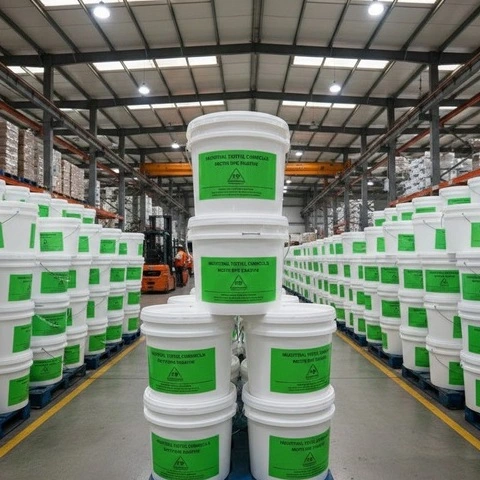
Textile chemical suppliers are companies that manufacture or distribute chemical agents used throughout textile production—from fiber preparation to finishing. These chemicals improve texture, durability, color fastness, and environmental compliance. Selecting the right supplier ensures adherence to regulatory standards and efficient production performance. What differentiates top suppliers is their ability to combine cost-efficiency with eco-conscious formulations.
Key Takeaways
- Textile chemical suppliers enable efficient fiber processing and finishing.
- Global standards ensure product safety and sustainability.
- Supplier selection depends on certification, proximity, and product diversity.
- India is a major player with sustainable chemical innovations.
- Technology and green chemistry define the industry’s future direction.
What Do Textile Chemical Suppliers Provide to the Industry?
Textile chemical suppliers deliver a wide spectrum of products across all textile manufacturing stages.
Key categories include:
- Pre-treatment chemicals: Desizing agents, scouring agents, bleaching agents.
- Dyeing auxiliaries: Leveling agents, dispersing agents, and fixatives.
- Finishing chemicals: Softeners, water repellents, anti-static agents.
- Specialty chemicals: Flame retardants, UV protectants, and antimicrobial agents.
Leading suppliers also support process optimization by offering performance monitoring and regulatory compliance data.
How Are Textile Chemical Suppliers Classified?
Suppliers are classified based on their production specialization and application domain:
| Classification | Focus Area | Examples |
| Basic suppliers | Bulk commodity chemicals | Sodium hydroxide, hydrogen peroxide |
| Performance suppliers | Value-added textile auxiliaries | Silicone emulsions, enzyme-based cleaners |
| Sustainable suppliers | Eco-certified formulations | GOTS- or OEKO-TEX®-compliant chemicals |
This classification enables buyers to align supplier capabilities with operational and environmental goals.
What Quality and Compliance Standards Govern Textile Chemical Suppliers?
Quality assurance and compliance are essential benchmarks:
- OEKO-TEX® Standard 100: Verifies non-toxicity in finished textiles.
- GOTS certification verifies that every stage of textile manufacturing aligns with globally recognized ecological and social responsibility norms.
- REACH Regulation (EU): Restricts hazardous substances in textile chemicals.
- ISO 9001 / 14001: Certifies quality and environmental management systems.
Credible suppliers accompany every chemical product with verified certifications and detailed MSDS records.
How Do Textile Chemical Suppliers Support Sustainable Manufacturing?
Sustainability is now a decisive factor in supplier evaluation. Suppliers achieve this by:
- Introducing bio-based surfactants and enzyme formulations.
- Achieving sustainability goals by reducing water and energy needs with low-liquor-ratio dyes.
- Replacing APEO and formaldehyde-based agents with safer alternatives.
- Implementing circular manufacturing practices.
A textile chemical liquid is often discussed alongside finishing chemicals, auxiliaries, and coating agents that collectively enhance environmental efficiency in textile processing.
What Should Buyers Evaluate When Choosing Textile Chemical Suppliers?
Key evaluation criteria include:
- Product portfolio diversity (compatibility with synthetic and natural fibers).
- Certifications and compliance records.
- Technical support and on-site assistance.
- Pricing models and minimum order quantities.
- Proximity and logistics efficiency (especially when sourcing from textile chemical suppliers near Lucknow, Uttar Pradesh, and other industrial hubs).
These factors determine both operational reliability and long-term sustainability.
Which Global and Indian Markets Lead in Textile Chemical Supply?
India, China, and Germany dominate global textile chemical manufacturing. Gujarat, Maharashtra, and Tamil Nadu serve as India’s leading hubs for textile chemical industries.
Prominent Indian textile chemical suppliers—such as Fineotex, Pure Chemicals, and Chemical Brothers—serve both domestic and export markets. Their innovations in sustainable auxiliaries and specialty coatings are positioning India as a strategic global supplier
How Are Textile Chemical Suppliers Adapting to Technological Change?
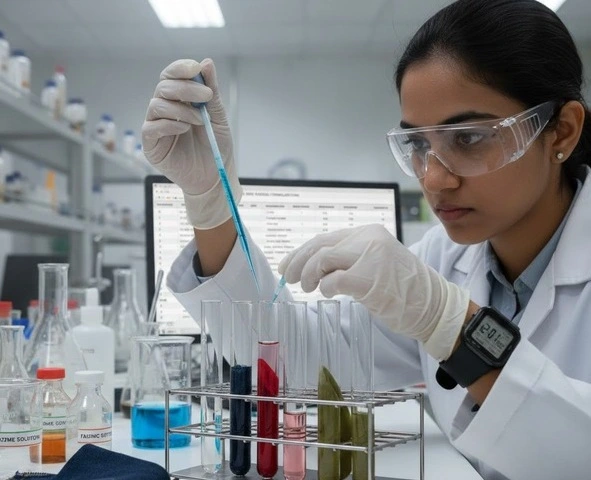
Advancements in digital process control, nanotechnology, and green chemistry are reshaping supply models. Suppliers now integrate data-backed performance analytics and customized formulations for specific textile substrates. This shift supports precision manufacturing and consistent global quality standards.
Conclusion
Ensuring smooth industrial operations, product integrity, and sustainability largely depends on reliable textile chemical suppliers. Their classification—from basic to sustainable suppliers—reflects the industry’s technological and ecological progress. For related insights, explore developments in textile liquid chemical industries in India to understand how local innovation aligns with global sustainability standards.
FAQ
What are textile chemical suppliers?
They are companies providing chemicals for fiber treatment, dyeing, printing, and finishing processes in textile manufacturing.
What types of textile chemicals are commonly used?
Desizing, scouring, bleaching, dyeing, and finishing agents are among the most common types.
Are textile chemical suppliers regulated?
They are obligated to meet international compliance frameworks such as OEKO-TEX®, GOTS, and REACH.
Why is sustainability important in textile chemicals?
The goal is to lessen environmental effects and maintain conformity with worldwide eco-labeling criteria.
Which countries are leading textile chemical suppliers?
India, China, and Germany are global leaders in textile chemical production and export.