The Germany textile chemicals sector is recognized worldwide for its innovation and eco-conscious practices.. But what makes textile chemicals manufacturers in Germany the preferred partners for global textile producers? Let’s explore how German expertise, technology, and quality standards are transforming the future of textile chemistry.
Key Takeaways
- German textile chemical companies are pioneers in sustainable innovation.
- They maintain global competitiveness through advanced R&D and strict quality standards.
- The sector integrates digital and eco-friendly practices for long-term resilience.
What Makes Textile Chemicals Manufacturers in Germany Industry Leaders?
Textile chemicals manufacturers in Germany dominate the global market due to their focus on sustainable innovation and process efficiency. German companies prioritize R&D investments to achieve top quality and sustainability goals.
Key strengths include:
- Advanced R&D facilities aligned with EU environmental policies
- Strong export networks to Asia, Africa, and North America
- Integration of biotechnology in dyeing and finishing processes
- Compliance with REACH and OEKO-TEX standards
Top examples:
Pulcra Chemicals, Rudolf Group, and Dr. Petry GmbH are recognized globally for their eco-friendly chemical formulations and custom textile solutions.
How Do German Textile Chemical Companies Ensure Sustainable Production?
Sustainability is a core principle among the best textile chemicals manufacturers in Germany. These firms are transitioning from petrochemical-based to bio-based ingredients, supported by lifecycle assessments, renewable raw materials, energy-efficient production methods, and compliance with stringent European environmental regulations.
Common sustainable practices:
- Use of biodegradable surfactants and auxiliaries
- Water recycling and energy-efficient dyeing methods
- Elimination of APEO and formaldehyde-based products
- Lifecycle assessments to reduce carbon footprint
Example: TANATEX Chemicals develops eco-friendly finishing agents that enhance fabric softness without harming the environment.
Which Are the Top Textile Chemicals Manufacturers in Germany?
Here’s a concise list of textile chemicals manufacturers in Germany that lead the market in 2025:
| Company Name | Specialization | Key Strength |
| Pulcra Chemicals | Textile auxiliaries, leather chemicals | Global R&D network |
| Rudolf Group | Construction & textile chemicals | Sustainability-focused innovation |
| Dr. Petry GmbH | Textile finishing & auxiliaries | Custom formulations |
| GRAF Chemie | Dyeing auxiliaries & detergents | Eco-compliance |
| PROTEX CHEMICALS Ltd | Performance coatings | High-performance polymers |
| Sarex Chemicals | Textile auxiliaries | Global supply reach |
| Stockmeier Chemie | Multi-sector chemicals | Extensive distribution |
These companies represent the backbone of Europe’s textile chemical innovation and supply chain reliability
How Does German Technology Improve Textile Chemical Applications?
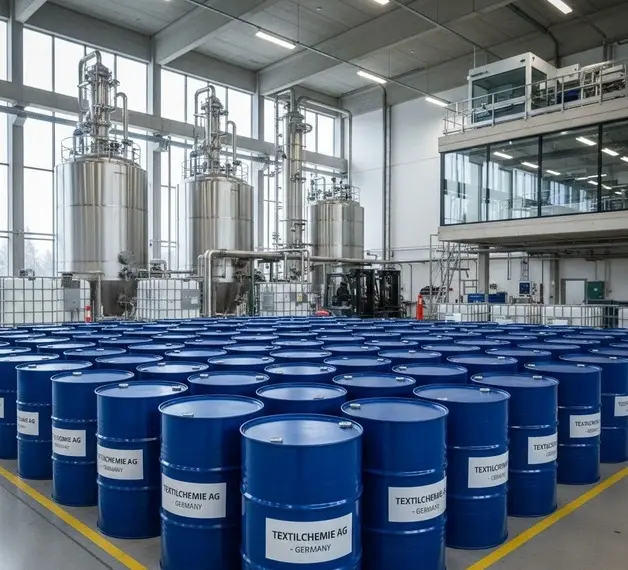
Textile chemicals manufacturers in Germany utilize digitalization and automation to improve production precision, ensure consistent batch quality, reduce process variability, and support compliance with strict industrial and environmental standards.
Technological advancements include:
- Automated mixing systems reducing batch variation
- AI-driven quality monitoring
- Data-based predictive maintenance for chemical plants
Such innovations ensure product consistency, cost optimization, and adherence to global compliance standards.
How Do German Companies Compete with Textile Chemical Manufacturers in India?
While textile chemical manufacturers in India provide cost advantages through large-scale production and competitive pricing, German companies maintain a premium position due to advanced technology adoption, stringent environmental regulations, consistent quality standards, strong R&D capabilities, and long-term reliability across global supply chains.
Comparison snapshot:
| Parameter | Germany | India |
| R&D Investment | High | Moderate |
| Product Quality | Premium | Competitive |
| Sustainability Standards | EU Certified | Evolving |
| Export Market | Global | Asia-focused |
This complementary relationship drives cross-border collaborations, especially in eco-friendly chemical development.
What Are the Key Takeaways from Germany’s Textile Chemical Sector?
- Germany leads in sustainable, high-performance textile chemicals.
- Companies like Rudolf, Pulcra, and Dr. Petry set global standards.
- Integration of digital manufacturing ensures superior efficiency.
- Collaboration with Asian markets strengthens innovation pipelines.
Conclusion
Germany’s textile chemical industry exemplifies innovation, sustainability, and excellence. As global textile production evolves toward greener processes, textile chemicals manufacturers in Germany continue to shape the future of eco-smart fabrics.
For comparative insights into regional developments, explore the article on textile chemicals Malaysia for a broader view of Asia-Europe chemical synergies.
FAQ
What is the role of textile chemicals in fabric manufacturing?
They modify fabric properties such as texture, durability, colorfastness, and water resistance during production.
Who are the top textile chemicals manufacturers in Germany?
Leading names include Pulcra Chemicals, Rudolf Group, Dr. Petry GmbH, and GRAF Chemie.
Are German textile chemicals eco-friendly?
Yes, most comply with EU REACH and OEKO-TEX standards, ensuring low toxicity and biodegradability.
How big is Germany’s textile chemical market?
It represents a major segment of Europe’s textile supply chain, with export value exceeding several billion euros annually.
How do German manufacturers support global sustainability goals?
They invest in green chemistry, waste minimization, and renewable energy-based production systems.