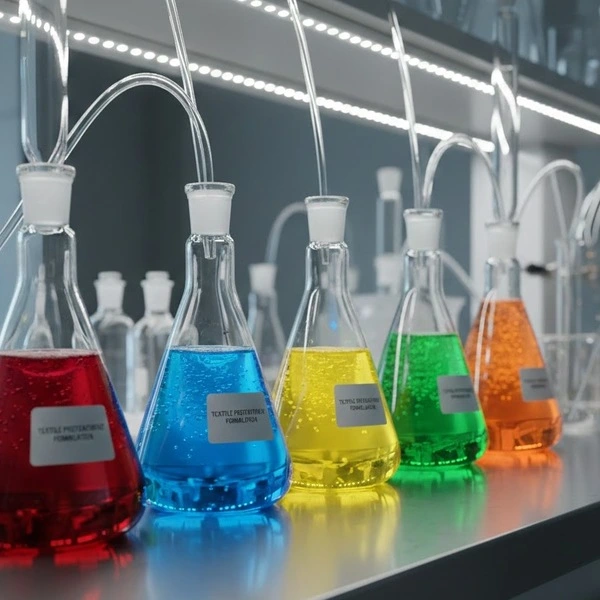
Textile pretreatment chemicals function to cleanse and prepare fabrics prior to dyeing, printing, or finishing procedures. They remove impurities such as waxes, oils, pectins, and sizing materials from fibers to ensure even dye penetration and smooth surface texture. How do these chemicals contribute to the efficiency of modern textile processing? Their precise formulation directly affects the quality, durability, and environmental footprint of finished textiles.
Key Takeaways
- Textile pretreatment chemicals ensure uniform fabric quality and dyeing performance.
- They include wetting, desizing, scouring, and bleaching agents.
- Enzyme-based and eco-certified formulations support sustainable production.
- Compliance with REACH and ZDHC is vital for global textile exports.
- Pretreatment sets the foundation for optimal finishing and dyeing results.
What Are Textile Pretreatment Chemicals and Why Are They Important?
Textile pretreatment chemicals help clean and equalize fabric surfaces to ensure uniform dye application. Their key objectives include:
- Removing natural impurities like wax, fats, and pectins.
- Eliminating added substances such as starch and lubricants.
- Improving wettability and absorbency for uniform dyeing.
- Enhancing fiber strength for smoother downstream processing.
Industrially, these chemicals ensure consistent quality, reduce dye wastage, and comply with ecological standards such as ZDHC Foundation and REACH Regulation.
What Are the Main Types of Textile Pretreatment Chemicals?
Pretreatment chemicals are categorized based on their functional role in fabric cleaning and preparation:
| Category | Function | Example Chemicals |
| Wetting Agents | Improve fabric wettability | Non-ionic surfactants |
| Desizing Agents | Remove starch from yarns | Amylase enzymes |
| Scouring Agents | Eliminate waxes and oils | Caustic soda, detergents |
| Bleaching Agents | Whiten fabrics | Hydrogen peroxide |
| Sequestering Agents | Prevent metal ion interference | EDTA, phosphonates |
| Stabilizers | Control peroxide decomposition | Sodium silicate |
Textile chemical liquids are frequently grouped with supporting agents like softeners, leveling aids, and finishing chemicals used in later processing stages.
How Do Textile Pretreatment Chemicals Work on Different Fibers?
The action of pretreatment chemicals varies according to fiber type:
- Cotton: Alkaline scouring and peroxide bleaching improve absorbency.
- Polyester: Alkali reduction cleaning removes oligomers and spin finishes.
- Wool: Mild enzymatic treatments preserve natural luster and elasticity.
- Blends: Combined enzymatic and surfactant systems optimize treatment balance.
These processes ensure each fiber type reaches its optimal dye-receptive state without compromising strength.
What Are the Environmental and Safety Standards Governing Textile Pretreatment Chemicals?
Global textile regulations enforce strict guidelines to minimize ecological impact:
- REACH (EU): Restricts hazardous substances in formulations.
- ZDHC (Zero Discharge of Hazardous Chemicals): Promotes sustainable manufacturing practices.
- OEKO-TEX® and Bluesign®: Certify eco-friendly textile inputs.
Manufacturers increasingly adopt biodegradable surfactants, enzyme-based desizing, and low-temperature scouring systems to meet sustainability goals and wastewater discharge norms.
Which Textile Pretreatment Chemicals Are Commonly Used in India?
India’s textile industry uses a wide range of locally and globally sourced pretreatment chemicals, including:
- Desizing agents from Fineotex Chemical Ltd. and Sarex.
- Wetting and scouring agents by Belle Laboratories.
- Stabilizers and sequestering agents for peroxide control by regional chemical suppliers.
These formulations are optimized for diverse substrates—from cotton knits in Tiruppur to polyester blends in Surat—reflecting India’s fiber diversity and export standards.
What Is the Role of Textile Pretreatment Chemicals in Quality Improvement?
Pretreatment directly influences the visual, tactile, and structural quality of textiles:
- Enhances whiteness and brightness.
- Improves dye uniformity and color fastness.
- Reduces fabric shrinkage and pilling tendency.
- Ensures compatibility with modern dyeing and finishing operations.
Well-executed pretreatment forms the foundation for superior textile aesthetics and long-term performance.
How Are Textile Pretreatment Chemicals Selected for Industrial Applications?
Selection depends on multiple operational parameters:
- Fiber composition – natural, synthetic, or blended.
- Processing equipment – jet dyeing, continuous ranges, or batch systems.
- Desired finish quality – whiteness, softness, or absorbency.
- Environmental compliance – biodegradable, low-alkali formulations.
Leading manufacturers provide tailored chemical systems optimized for specific fabric types and production scales.
Conclusion
Textile pretreatment chemicals form the essential foundation of efficient textile production, ensuring fabrics achieve the necessary purity, absorbency, and consistency for coloration. As sustainable practices gain prominence, the industry’s focus is shifting toward eco-certified and enzyme-based formulations. To understand the subsequent stages in textile finishing, explore textile dyeing chemicals, which define the next step in the value chain.
FAQ
What is the main function of textile pretreatment chemicals?
They remove natural and synthetic impurities to improve dye uptake and fabric quality.
Are enzyme-based pretreatment chemicals eco-friendly?
Yes, they reduce chemical load and wastewater contamination compared to traditional alkaline systems.
Which industries rely most on pretreatment chemicals?
Textile mills, garment exporters, and home furnishing manufacturers widely use them.
What are common textile pretreatment chemicals?
Amylase enzymes, caustic soda, hydrogen peroxide, surfactants, and sequestering agents.
How does pretreatment affect dyeing results?
Proper pretreatment ensures uniform dye penetration, brightness, and color fastness.
Sources
https://dir.indiamart.com/impcat/textile-pretreatment-chemicals.html
https://fineotex.com/
https://www.sarex.com/textile/pretreatment-auxiliaries
https://www.linkedin.com/pulse/what-textile-pretreatment-chemicals-uses-how-works-top-od6fc/
https://www.technavio.com/report/textile-pretreatment-chemicals-market-industry-analysis
https://www.textilesresources.com/articles/top-chemicals-used-in-the-textile-industry/
https://www.bellelaboratories.in/pretreatment-chemicals.html
https://nptel.ac.in/courses/116102016