Textile processing chemicals manufacturers are companies that develop and supply chemicals used to prepare, treat, and finish fabrics during textile production. These chemicals ensure optimal dye uptake, softness, whiteness, and functional performance. How do they contribute to the textile industry’s quality and sustainability benchmarks?
Key Takeaways
- Textile processing chemicals manufacturers drive performance and sustainability.
- Global standards ensure safe, eco-compliant formulations.
- Top Indian firms lead in innovation and export readiness.
- Buyers should evaluate certification, R&D, and support services.
What Do Textile Processing Chemicals Manufacturers Produce?
Manufacturers produce a range of chemical formulations for different textile stages, including:
- Pre-treatment agents: Desizing, scouring, and bleaching agents.
- Dyeing auxiliaries: Dispersing, levelling, and wetting agents.
- Finishing chemicals: Softeners, water repellents, and flame retardants.
- Functional chemicals: Antimicrobial, UV-protective, and wrinkle-resistant additives.
These products enhance fiber quality and align with eco-compliance norms like OEKO-TEX® Standard 100 and REACH certification.
How Do Textile Processing Chemicals Manufacturers Ensure Product Quality?
Quality assurance involves adherence to global and national standards through:
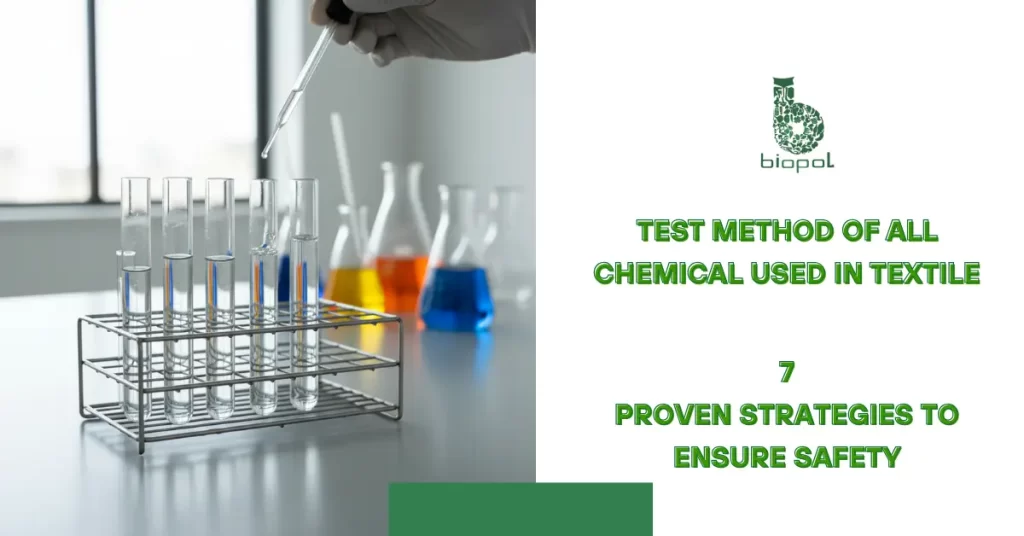
- Laboratory testing: Verifying chemical performance and consistency.
- Batch traceability: Ensuring reliability from raw material to final product.
- Certifications: GOTS (Global Organic Textile Standard) and Bluesign® approval for sustainable processing.
Top textile processing chemicals manufacturers in India employ advanced R&D for biodegradable formulations that meet export market demands.
What Are the Major Types of Textile Processing Chemicals Used?
| Category | Primary Function | Examples |
| Desizing Agents | Remove sizing materials | Amylase enzyme, oxidizing agents |
| Scouring Agents | Eliminate natural oils/waxes | Caustic soda, surfactants |
| Bleaching Agents | Whiten and purify fabric | Hydrogen peroxide, stabilizers |
| Dyeing Auxiliaries | Optimize color absorption | Wetting and dispersing agents |
| Finishing Chemicals | Impart functional effects | Silicone softeners, repellents |
A textile chemical liquid is often discussed alongside textile auxiliaries, coating agents, and related finishing chemicals used to enhance fiber durability and aesthetics.
Which Are the Leading Textile Processing Chemicals Manufacturers in India?
Some of the top textile processing chemicals manufacturers in India include:
- Fineotex Chemical Ltd. – Known for specialty textile and home care chemicals.
- Sarex Chemicals – Offers finishing and pretreatment solutions.
- Pure Chemicals Group – Supplies performance chemicals for multiple fabric types.
- Indofil Industries – Provides dyeing auxiliaries and fabric finishers.
- Chemtreat India Ltd. – Focused on eco-friendly formulations.
These companies cater to both domestic and export markets, including textile processing chemicals manufacturers near Uttar Pradesh, a major textile hub.
How Are Sustainability and Compliance Shaping Manufacturing Practices?
Modern manufacturers prioritize sustainability through:
- Water-based formulations reducing effluent load.
- Enzyme-based alternatives minimizing chemical residues.
- Closed-loop systems for resource efficiency.
- Compliance with ZDHC (Zero Discharge of Hazardous Chemicals).
The transition toward green chemistry aligns with international buyer expectations and circular economy principles.
What Role Do Textile Processing Chemicals Play in Industry Innovation?
Innovation drives performance improvement across:
- Smart finishes: Thermo-regulating or moisture-control coatings.
- Nanotechnology applications: Enhanced stain resistance and UV protection.
- Digital dyeing compatibility: Chemicals designed for low-water digital printing.
These advancements strengthen India’s position among the top 10 textile chemical companies in India, supporting both sustainability and functionality.
How Can Buyers Choose Reliable Textile Processing Chemicals Manufacturers?
To select trusted suppliers:
- Evaluate certifications such as ISO 9001, REACH, and OEKO-TEX®.
- Request sample testing before mass production.
- Compare technical data sheets for chemical compatibility.
- Assess after-sales support for process optimization.
Reliable manufacturers ensure consistency, technical guidance, and adherence to export-grade standards.
Conclusion
Textile processing chemicals manufacturers play a pivotal role in modernizing textile production with safe, high-performance, and sustainable formulations. Their work connects innovation and compliance, shaping the global competitiveness of India’s textile sector. For sourcing partnerships, related insights can be found in textile chemical suppliers directories and trade platforms.
FAQ
What are textile processing chemicals?
They are chemical formulations used in treating fabrics during production to improve quality, color, and finish.
Which industries use textile processing chemicals?
They are used in apparel, home textiles, nonwovens, and technical textiles.
How do manufacturers ensure environmental compliance?
By adhering to standards like GOTS, OEKO-TEX®, and ZDHC guidelines.
What are common textile auxiliary chemicals?
Wetting agents, leveling agents, softeners, and emulsifiers.
Are Indian textile processing chemicals exported globally?
Yes, India exports to Europe, the USA, and Southeast Asia, supported by strong compliance frameworks.
Sources
- Fineotex Chemical Ltd – Textile Chemicals
- IndiaMART – Textile Chemical Manufacturers Directory
- Pure Chemicals Group – Performance & Textile Chemicals
- Sarex Chemicals – Textile Chemical Solutions
- Textiles Resources – Top Chemicals Used in the Textile Industry
- TradeIndia – Textile Processing Chemicals Manufacturers
- 6Wresearch – Top 10 Players of Textile Chemical Market
- Exporters India – Textile Processing Chemical Suppliers