Textile sizing chemicals are compounds applied to warp yarns to improve their strength, elasticity, and resistance during weaving. They form a thin protective layer that minimizes fiber breakage and enhances productivity. Why are these chemicals central to modern weaving operations? Their composition and compatibility with fibers determine not only fabric performance but also water and energy efficiency in desizing and finishing stages.
Key Takeaways
- Textile sizing chemicals enhance yarn strength, flexibility, and weaving efficiency.
- Starch, PVA, and modified polymers are the most common types.
- Eco-friendly formulations support ZDHC and REACH standards.
- Proper viscosity control ensures optimal film formation and easy desizing.
- Sustainability drives innovation in Indian textile sizing markets.
What Are Textile Sizing Chemicals and Why Are They Used?
Textile sizing chemicals are applied to yarns to enhance mechanical properties before weaving. Their key functions include:
- Increasing tensile strength
- Reducing hairiness and friction
- Improving loom efficiency
- Minimizing yarn breakage
Common applications span cotton, polyester, and blended yarns in woven fabric manufacturing.
Which Types of Textile Sizing Chemicals Are Commonly Used?
Sizing agents fall into natural, synthetic, and modified polymer categories:
| Type | Examples | Key Properties |
| Natural | Starch, Guar gum | Biodegradable, low cost |
| Modified | Carboxymethyl starch (CMS), PVA blends | Better adhesion and solubility |
| Synthetic | Polyvinyl alcohol (PVA), Acrylic copolymers | Excellent film strength, reusability |
Manufacturers such as Ester India Chemicals Pvt Ltd and Starco India provide starch and PVA-based formulations widely used in India.
How Do Textile Sizing Chemicals Work on Yarn Surfaces?
When applied as an aqueous film, these chemicals:
- Penetrate the yarn bundle.
- Form a uniform film after drying.
- Bind fibers together to resist mechanical stress.
This process enhances yarn smoothness and reduces friction with loom parts, directly improving weaving speed and efficiency.
What Are Some Common Textile Sizing Chemical Examples?
Widely used examples include:
- Starch derivatives: Oxidized starch, CMS
- Synthetic polymers: Polyvinyl alcohol (PVA), Polyacrylates
- Natural gums: Guar gum, Locust bean gum
- Lubricants and softeners: Polyethylene emulsions, waxes
Each is chosen based on fabric type, desired finish, and reusability in closed-loop systems.
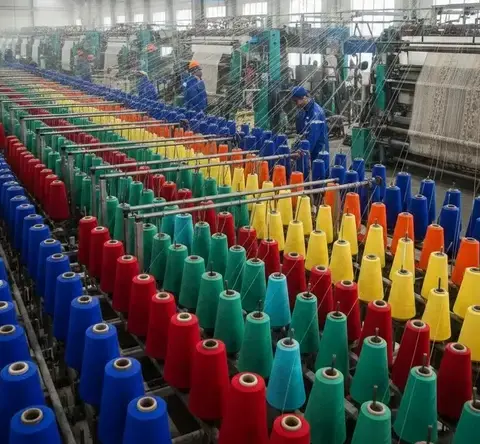
How Are Textile Sizing Chemicals Applied in the Sizing Process?
The sizing process typically follows these steps:
- Preparation: Dissolving or cooking the sizing agent into a homogeneous solution.
- Application: Passing yarn through the size bath.
- Drying: Removing excess moisture using cylinders or hot air.
- Winding: Collecting the treated yarn for weaving.
Precise viscosity and concentration control ensure uniform coating and easy desizing.
What Environmental Standards Regulate Textile Sizing Chemicals?
Compliance focuses on minimizing pollution and improving biodegradability:
- ZDHC (Zero Discharge of Hazardous Chemicals): restricts harmful effluents.
- REACH: ensures chemical safety.
- ISO 14001 standards encourage sustainable manufacturing.
Eco-friendly alternatives such as modified starch and biodegradable PVA reduce effluent load and energy usage during desizing.
How Do Textile Sizing Chemicals Relate to Other Textile Processing Agents?
A textile chemical liquid is often discussed alongside textile auxiliaries, binder agents, and finishing chemicals used in pre-treatment and coating. In production sequences, sizing complements scouring and bleaching for consistent fabric quality.
Conclusion
Textile sizing chemicals remain vital for improving yarn performance and fabric uniformity in weaving operations. Their sustainable evolution—through bio-based polymers and recyclable formulations—supports both environmental compliance and industrial efficiency.
To understand the broader preparation chain, explore textile scouring chemicals, which precede sizing in textile processing.
FAQ
What are the sizing chemicals in textile?
They are film-forming agents like starch, PVA, and acrylic polymers applied to yarns to improve strength and weaving performance.
What is a sizing solution?
A sizing solution is a prepared liquid mixture of sizing chemicals dissolved or dispersed in water for uniform application to yarns.
Which chemical is used in textiles?
Common sizing agents include starch derivatives, PVA, and carboxymethyl cellulose, chosen for specific fiber types and process requirements.
What is the sizing process in textile?
It involves applying sizing chemicals to warp yarns, drying them, and winding for weaving to enhance strength and reduce breakage.
Sources
https://dir.indiamart.com/impcat/sizing-chemicals.html
https://www.esterchem.co.in/textiles.html
https://www.polyestermfg.com/what-is-the-best-sizing-chemical-for-textile/
https://www.douwin-chem.com/methyl-acylate-textile-sizing-agent.html
https://www.persistencemarketresearch.com/market-research/asia-textile-sizing-chemicals-market.asp
https://www.wtin.com/article/2023/november/06-11-23/investigating-textile-sizing-polymers/
https://www.tradeindia.com/manufacturers/sizing-chemicals.html
https://starcoindia.com/product-category/yarn-sizing-chemicals/