Silicone bottles are soft, flexible and tough, which is why they now show up everywhere: in gym bags, travel kits, kitchens and workshops. Not all silicone bottles are the same, though. The grade of silicone, the design and the way you care for the bottle all affect how well it works and how long it lasts.
Key Takeaways
- Silicone bottles are flexible, lightweight and hard to break, so they suit travel, sport and daily use.
- The best choice depends on the job: drinking, squeezing, storing or carrying liquids.
- Check that the bottle is made from food-contact silicone if it will hold drinks or food.
- Heat and cold limits differ from product to product, so follow the maker’s instructions.
- Silicone can hold on to smells and stains, so cleaning and drying matter.
- Look at the whole bottle, including the cap, valve and seal, not just the silicone body.
What Are Silicone Bottles?
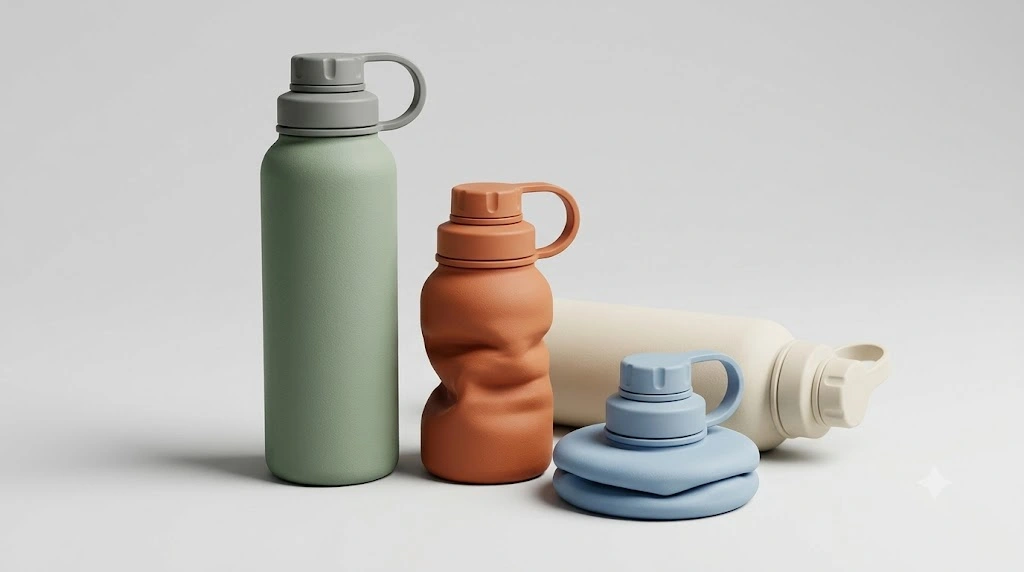
Silicone bottles are bottles made fully or partly from silicone, a soft, rubber-like material that bends and returns to its shape. Some are made entirely of silicone. Others pair a silicone body with a plastic or steel cap, or use silicone only for the seal, straw or sleeve.
Because the word “silicone” can describe very different products, it is worth checking exactly which parts of a bottle are silicone and what each part is meant to do.
Common Types of Silicone Bottles
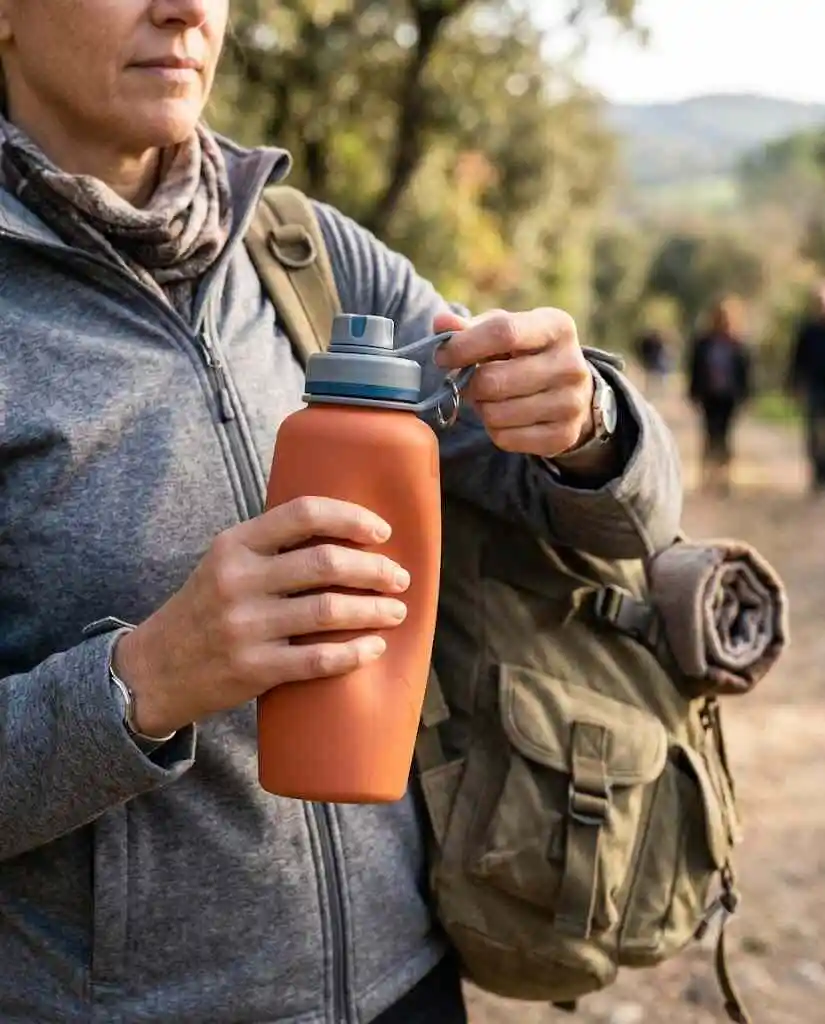
1. Collapsible water bottles. These fold or roll down when empty, so they take up very little space. They are popular with hikers, runners and travellers.
2. Travel bottles. Small squeezable bottles for shampoo, lotion and other toiletries. They are refillable and cut down on single-use miniatures.
3. Squeeze bottles for the kitchen. Used for sauces, oils and dressings, where gentle squeezing gives good control over how much comes out.
4. Sports and gym bottles. Soft-sided bottles that are easy to hold and forgiving when dropped.
5. Storage and dispensing bottles. Used in homes, workshops and small businesses for liquids, creams and pastes, where a flexible body makes it easy to get everything out.
6. Feeding bottles. Silicone is also widely used for baby feeding, which comes with its own safety and care points. If that is what you are looking for, see our detailed guide on silicone baby bottles.
Why People Choose Silicone Bottles
Hard to break. A silicone bottle will usually survive a drop that would crack glass or hard plastic.
Light and portable. Many fold, roll or squash down, which helps with packing.
Comfortable to use. The soft body is easy to grip and squeeze, even with wet or gloved hands.
Handles a wide temperature range. Silicone generally copes with both hot and cold better than many everyday plastics, but limits vary, so check the product details.
Long-lasting when cared for. Good silicone resists cracking and ageing, which can mean fewer replacements over time.
Silicone vs Plastic, Glass and Stainless Steel Bottles
| Silicone | Plastic | Glass | Stainless steel | |
| Breaks when dropped | Very unlikely | Sometimes cracks | Can shatter | Dents, rarely breaks |
| Weight | Light | Light | Heavy | Medium to heavy |
| Folds or collapses | Often | No | No | No |
| Keeps drinks hot or cold | Not usually | Not usually | Not usually | Often, if insulated |
| Holds on to smells | Can | Can | Rarely | Rarely |
No material wins in every case. Silicone is best when you want something light, flexible and tough. If you want drinks to stay cold for hours, an insulated steel bottle may suit you better.
What to Check Before Buying Silicone Bottles
1. Food-contact suitability. If the bottle will hold water, juice or food, look for clear information that it is made for food contact. In the US, silicone rubber for repeated food contact is covered by FDA rules (21 CFR 177.2600). Other markets have their own standards, such as EU food-contact rules and Germany’s LFGB. Terms like “non-toxic” or “eco-friendly” on their own do not tell you much.
2. The full materials list. Many bottles combine silicone with plastic or metal parts. Check the cap, valve, straw and seal as well as the body.
3. Temperature limits. Find out whether the bottle can handle hot liquids, the dishwasher, boiling water or the freezer. Do not assume.
4. Seal and cap design. A leak-proof bottle depends on a good seal. Choose a cap that closes firmly and is easy to take apart for cleaning.
5. Ease of cleaning. Wide openings and removable parts make it much easier to clean the inside properly.
6. Smell and feel. A strong chemical smell or a sticky, oily surface on a new bottle is a reason to ask the seller questions or choose a different product.
How to Clean and Look After Silicone Bottles
- Wash soon after use, and take apart any caps, valves or straws.
- Use warm water and mild soap, and rinse well so no soapy taste or smell is left behind.
- Let every part dry fully before putting the bottle away.
- Check the maker’s instructions before using the dishwasher, boiling water or a steriliser.
- For smells, try a thorough wash and a good dry in fresh air. Strongly scented soaps can make the problem worse.
- Keep bottles away from sharp objects, which can nick or cut the silicone.
Signs It’s Time to Replace a Silicone Bottle
Silicone lasts well, but it is not forever. Replace the bottle or the affected part if you notice:
- Cracks, tears or cuts in the body or seal
- A sticky, rough or chalky surface
- A smell that will not go away after proper cleaning
- A cap or seal that no longer closes tightly
- A bottle that has lost its shape
Are Silicone Bottles Safe?
Silicone bottles can be a good, practical choice when they are made for the job they are used for, kept clean and replaced when worn. The word “silicone” alone does not guarantee safety, because quality depends on the formulation, the manufacturing process and how the bottle is used. Choosing products with clear documentation and following the care instructions is the most dependable approach.
FAQs
Are silicone bottles good for drinking water?
Yes, if the bottle is made from food-contact silicone and cleaned regularly. Check the cap and seal materials too.
Are silicone bottles better than plastic?
It depends. Silicone is more flexible and often more durable, while rigid plastic can be easier to measure and fill. Neither is best for everyone.
Can silicone bottles hold hot liquids?
Some can, but limits vary. Follow the manufacturer’s temperature guidance for your specific bottle.
Can you put silicone bottles in the dishwasher?
Many can, but check the instructions, especially for caps, valves and any non-silicone parts.
Do silicone bottles smell or stain?
They can pick up odours and colours from strong drinks, sauces or scented soaps. Careful cleaning and full drying help.
How long do silicone bottles last?
It depends on the quality, how they are used and how well they are cared for. Replace them as soon as you see cracks, tears or other damage.
Are collapsible silicone bottles worth it?
They are very handy for travel and hiking because they pack down small. They can be a little harder to fill and clean than rigid bottles.
Are silicone bottles the same as silicone baby bottles?
They use the same material, but baby bottles come with extra points to think about, such as nipple flow, sterilising and feeding. See our silicone baby bottles guide for those.
Conclusion
Silicone bottles are flexible, light and tough, and they come in many forms, from collapsible water bottles to travel and squeeze bottles. Choosing well comes down to a few simple checks: food-contact suitability, the full materials list, temperature limits, cleaning ease and seal quality. Looked after properly, a good silicone bottle can be a long-lasting part of everyday life.