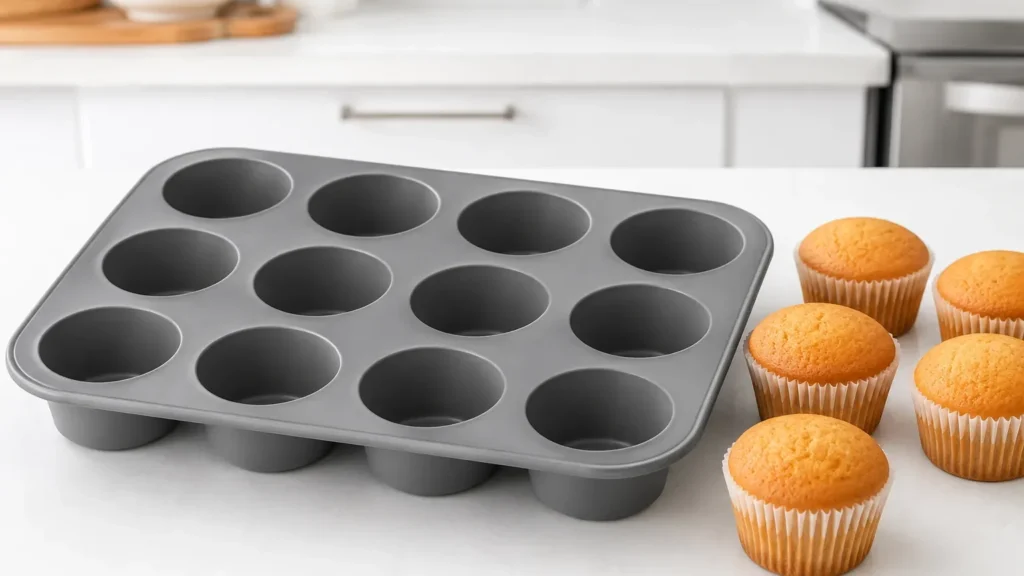
A silicone cupcake pan looks like the answer to every baking headache. Nothing sticks, the cups flex to release your cupcakes, and you can skip the paper liners. Then you read a few reviews and the picture gets muddier. Some bakers love these pans, while others complain about pale tops and sticky trays.
So which side is right? Honestly, it depends on the pan and on how you use it. This guide covers five facts worth knowing before you spend any money, including what the research actually says about safety.
Key Takeaways
- A silicone cupcake pan gives easy release and quick cleanup, but cupcakes usually brown less than they do in dark metal tins.
- Safety evidence is mixed. Labs have found chemicals can move from silicone bakeware into food, especially with high heat and fatty batters, but harm to people has not been shown.
- Quality varies a lot, so buy from a brand that names the material and prints a maximum temperature.
- Wash a new pan before the first bake, use it on a metal baking sheet, and retire it if it turns tacky, smelly or torn.
- Silicone is not biodegradable and is generally not accepted in curbside recycling, so one good pan beats several cheap ones.
What Is a Silicone Cupcake Pan?
A silicone cupcake pan is a flexible baking tray, usually with six or twelve cups, made from a rubber-like synthetic material. Silicone is built on chains of silicon and oxygen atoms, which is why it copes with both freezer and oven temperatures.
You will also see it sold as a silicone muffin pan or a silicone cupcake mold. The names are interchangeable. Most are labeled “food-grade,” which means only that the maker states the material meets food-contact rules. Fact 2 explains what that label does and does not guarantee.
Fact 1: A Silicone Cupcake Pan Bakes Differently From Metal
Sellers promise nonstick release and even heating. The release part holds up. The browning part is more complicated.
A 2007 study in the Journal of Foodservice baked corn muffins from a consumer mix in silicone pans and in dark, nonstick aluminum pans, then compared the results. The silicone muffins were moister and had greater volume. Their top crust, however, was significantly lighter in color and softer in texture, and the authors concluded that silicone did not produce a better product overall.
Keep the limits in mind. The study used one muffin mix and one style of metal pan, and dark pans tend to brown strongly, so it does not prove every metal tin beats every silicone muffin pan. It does match what many bakers report: a paler, more tender cupcake.
These are the fixes bakers commonly use. They come from practical experience rather than controlled trials:
- Set the pan on a sturdy metal baking sheet before filling it, so it does not sag or spill.
- Fill each cup about two-thirds full to leave room for the rise.
- Test with a toothpick rather than the timer, since some pans need a few extra minutes.
- Cool the cupcakes in the pan for five to ten minutes, then push them out from underneath.
Fact 2: The Safety Evidence Is Reassuring but Incomplete
Here is what is settled and what is not.
What is reasonably established
In the United States, food-grade silicone falls under FDA rules for repeated-use rubber articles (21 CFR 177.2600). Health Canada has said it does not react with food or drink or release hazardous fumes within recommended temperatures.
There is one catch. The FDA does not test individual consumer products, so compliance is self-declared by manufacturers. A “food-grade” label is a promise, not proof.
What individual studies found
Laboratory studies have detected small silicone molecules, called siloxane oligomers, moving from baking molds into food or food-simulating liquids. A 2005 study by Swiss food-safety researchers found low migration at modest temperatures and a sharp rise at temperatures common in baking. In some products, migration fell when the same mold was tested a third time.
Later reviews add that migration sometimes exceeded legal limits in a product’s first uses, and that fatty foods increased it. In 2022, European consumer organizations tested 44 silicone baking molds and reported that 23% released high or steadily increasing amounts of chemical constituents, including siloxanes classified as substances of very high concern.
What we still do not know
No study has shown that using silicone bakeware harms human health. That is not the same as showing it is harmless. Data on how much siloxane people actually take in from food are scarce, and long-term studies of repeated high-heat use are lacking.
A 2008 Canadian assessment judged that the common siloxanes D4, D5 and D6 may harm the environment, but it did not find an effect on human health. In Europe, there is still no harmonized rule written specifically for silicone food-contact materials.
The sensible reading is cautious, not alarmed. Pan quality, oven temperature, fat content and early use all seem to matter, and you control most of those.
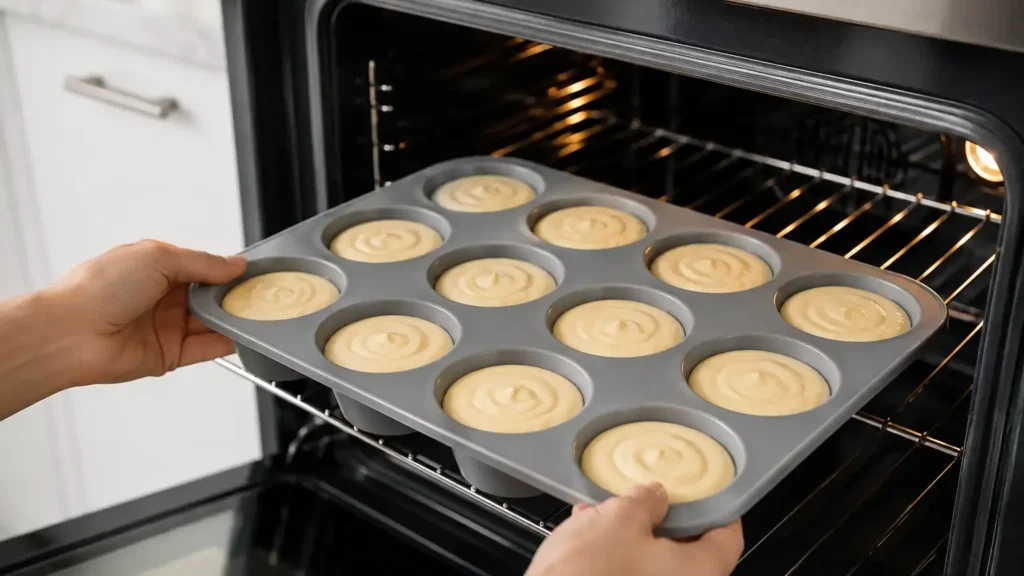
Fact 3: Heat Limits and First-Use Habits Matter
Most silicone cupcake pans are rated around 220–230°C (428–446°F), though the number varies by brand, so check your label. Most cupcake recipes bake at 175–190°C (350–375°F), which leaves room to spare.
Because studies link migration with heat, fat and early use, a few habits make sense:
- Wash a new silicone cupcake mold with warm, soapy water before its first bake.
- Some writers suggest baking a new mold empty at its rated temperature, then washing it again. That is a precaution, not a regulator’s rule, so follow the maker’s instructions.
- Never go above the temperature printed on the pan.
Fact 4: Care Decides How Long a Pan Lasts
Sellers often quote a lifespan of five to ten years. Treat that as a best case, not a tested figure.
- Wash your silicone muffin pan with warm water, mild soap and a soft sponge. Skip abrasive scrubbers and sharp tools.
- Dry it completely before storing, because damp storage can leave silicone discolored or tacky. A baking soda paste or hot soak tackles greasy film.
- Store it flat or loosely rolled, never sharply folded.
Retire the pan if it stays tacky after cleaning, keeps a strong odor, tears, or loses its shape.
Fact 5: Quality Varies More Than You Expect
Two silicone cupcake molds that look identical on a shelf can perform very differently. Consumer-safety writers warn that cheap pans may contain fillers, and the European testing above shows that even pans sold in regulated markets can release more than they should.
When you shop for a silicone muffin pan, look for these signs:
- A clearly stated material, such as 100% food-grade or platinum-cured silicone. Platinum-cured is generally regarded as leaving fewer by-products, though that claim comes largely from makers.
- A printed maximum temperature.
- No strong chemical smell, and a pan that springs back flat after bending.
You may also hear about the twist test: twist the silicone, and white streaks may mean filler. It is a rough check, not a laboratory test, so treat it as a red flag rather than proof.
Silicone is also not biodegradable and is generally not accepted in curbside recycling, so buying one good pan beats replacing cheap ones every year.
Silicone Cupcake Pan Pros and Cons
| Pros | Cons |
| Cupcakes release easily, often with no greasing | Tops brown less, so crusts are paler and softer |
| Reusable, which replaces paper liners | Floppy when filled, so it needs a baking sheet |
| Light, unbreakable and easy to store | Lab studies show some chemical migration, and long-term data are thin |
| Moves from freezer to oven within its rating | Quality varies widely between brands |
| Quick to clean when cared for properly | Can turn tacky if stored damp or poorly cleaned |
| Handy for frozen treats and chocolates | Not biodegradable and hard to recycle |
Which Type of Silicone Cupcake Pan Should You Buy?
The right choice depends on what you bake and how much you value crisp tops. Here is how common types of silicone cupcake molds compare:
| Type | Best for | Watch out for |
| Standard 12-cup, freestanding | Everyday cupcakes and muffins | Wobbles when full, so use a baking sheet |
| Reinforced frame | Easier carrying and filling | Check the care instructions for the frame |
| Mini cups | Bite-size treats and kids’ baking | Much shorter bake times |
| Jumbo cups | Bakery-style muffins | Longer baking, so check the center for doneness |
| Individual silicone cups | Reusable liners set inside a tray | Same quality checks as a full pan |
If you bake often, a medium-thickness, platinum-cured pan from a brand that lists its temperature rating is a reasonable pick. If you mostly want crisp golden tops, a metal tin is the better tool. If the safety questions worry you, silicone still suits cold jobs such as frozen treats, chocolates and jelly.
Faqs
Is a silicone cupcake pan safe to bake with?
Regulators in the US and Canada allow food-grade silicone for baking, and no study has shown human harm. Still, lab tests show some chemical migration, especially at high heat, with fatty batters and in new pans. A reputable brand, a temperature below the rating and a first wash are sensible precautions.
Is a silicone cupcake pan better than a metal one?
Neither wins in every way. Silicone releases cupcakes easily and washes up fast. Metal usually gives deeper browning and a crisper top, as a 2007 muffin study found when it compared silicone with dark nonstick aluminum. Many bakers own both.
Do you need to grease a silicone cupcake pan?
Usually not. Most well-made pans release baked goods without it. A light coat of oil or spray can help the first time you bake, or with sticky batters such as cheesecake or caramel. Avoid heavy greasing, since some bakers find it builds up a film.
Why are my cupcakes pale in a silicone cupcake pan?
Silicone insulates more than metal, so tops brown less. Baking on a metal sheet, adding a couple of minutes, moving the pan slightly higher in the oven, or using convection can help.
Can a silicone cupcake pan go in the dishwasher?
Check the label. Advice conflicts: some makers say their pans are dishwasher-safe, while some experts advise against it. Hand washing suits any pan and removes grease more reliably.
How do you know when to replace a silicone cupcake pan?
Replace it when it stays tacky, smells even after cleaning, tears, or loses its shape.
Bottom Line
A silicone cupcake pan is a handy tool, not a miracle one. It releases cupcakes cleanly and washes up fast, but you will usually get paler tops than from a dark metal tin.
On safety, the fair reading is cautious rather than alarmed. Studies show chemicals can migrate from silicone bakeware under heat, especially early in a pan’s life and with fatty foods, yet no research has established harm to people, and long-term data are missing.
If you decide to buy, choose one well-made silicone cupcake pan, keep the oven well under its rating, wash it before the first bake, and replace it at the first sign of tackiness or odor. If crisp, golden tops matter more to you, or you would rather avoid the uncertainty, a metal tin remains a perfectly good choice.