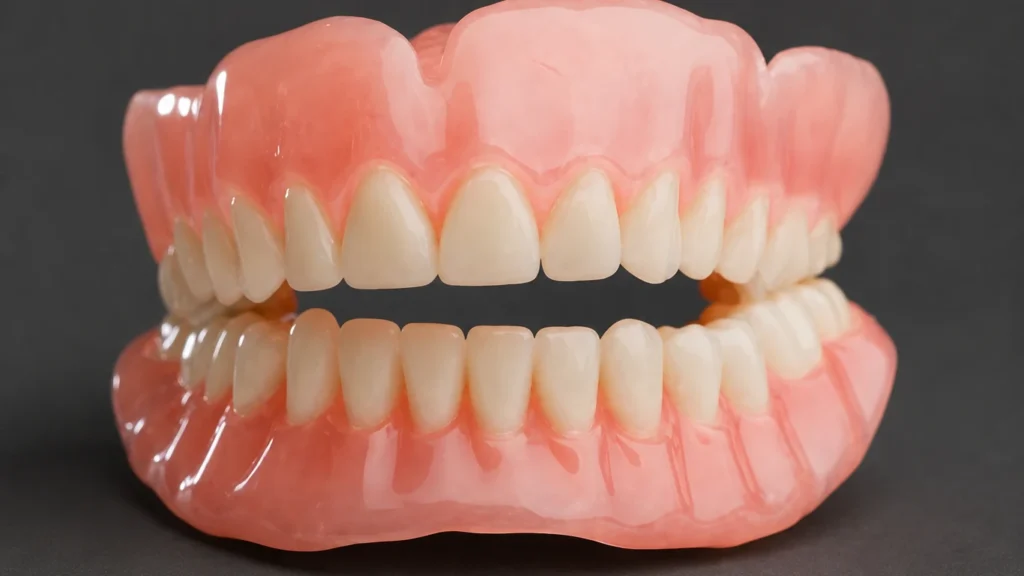
If you have been searching for a silicone denture set, you have probably noticed that the phrase means very different things depending on where you look. Some pages describe a dentist-made denture with a soft silicone cushion. Others sell cheap snap-on teeth that you shape at home. They are not the same product, and the evidence behind them is not the same either.
This guide sorts out the difference, explains what clinical research actually shows, and lays out the pros, the drawbacks and the questions worth asking before you spend any money.
Key Takeaways
- A silicone denture set can mean a dentist-made denture with a soft silicone liner, or an over-the-counter cosmetic kit. Only the first has clinical research behind it.
- Trials of silicone dentures show gains in comfort, bite force and self-reported chewing, but not every measure improved.
- A 2024 systematic review found the cushioning layer wears out sooner than hard materials and may collect more microbes over time.
- Snap-on and moldable sets are short-term cosmetic products, and dental providers say their safety is not well established.
- Daily cleaning and regular dental checkups matter, because the liner needs replacing and can harbor yeast.
What Is a Silicone Denture Set?
There is no single official meaning. In practice, the phrase covers two quite different things:
| Type | What it is | Evidence |
| Soft-lined denture | A denture made or adjusted by a dentist, with a silicone cushion on the gum-facing surface | Randomized trials and a systematic review |
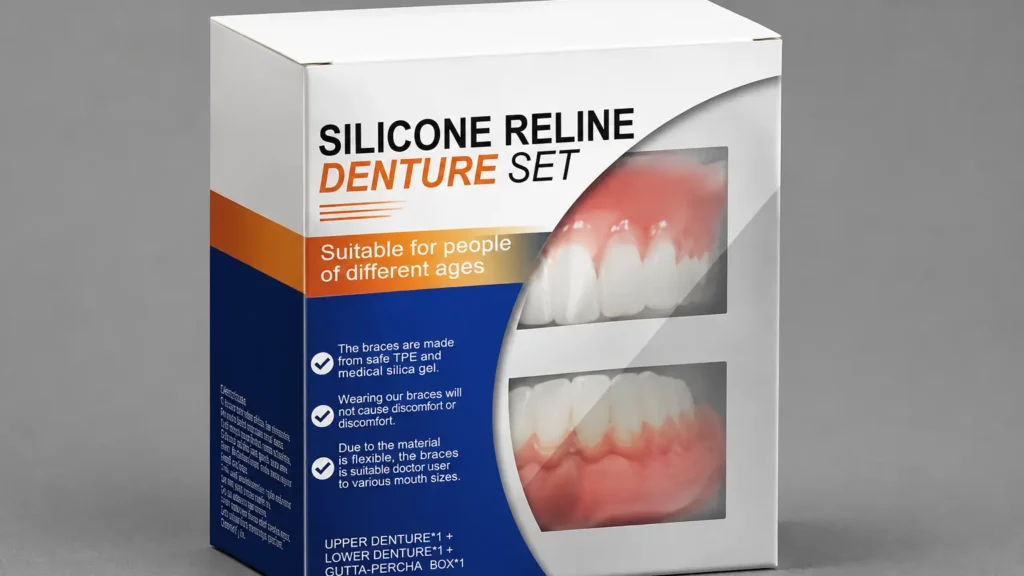
| Over-the-counter cosmetic set | Snap-on or moldable upper and lower teeth sold online, shaped at home | No clinical trials found; dental providers urge caution |
The clinical research focuses on the silicone lining inside otherwise conventional dentures. That distinction shapes everything else in this guide.
How the Silicone Cushion Works
A hard acrylic denture rests directly on the gums. A soft liner adds a flexible layer in between, which spreads pressure and can ease sore spots, especially on thin or tender gum ridges. Dentists also use one during healing after extractions or implant surgery.
One clinical reference makes an important point: a liner should improve a denture that already fits reasonably well. It is not meant to rescue a poorly made one.
What the Research Shows About Silicone Dentures
What is best supported
The strongest evidence is a 2024 systematic review in the Journal of Prosthodontic Research. It examined studies of soft denture liners in people with complete dentures. They improved patient satisfaction, quality of life, chewing ability and ridge resorption outcomes.
The same review found that the soft material lasts for a shorter time than hard relining or acrylic material, and that it is more prone to microbial contamination over the long term. It also noted that many included studies carried a high risk of bias, partly because patients and dentists can tell a soft lining from a hard one.
What individual trials found
Two randomized trials from one Japanese research group, both on lower complete dentures, tell a more mixed story. In a 2021 Journal of Dentistry trial, the liner group produced a higher maximum bite force. Their chewing performance on a gummy jelly test, however, was lower than the conventional group’s. The trial randomized 36 people, and nine dropped out.
A second trial asked patients to rate how well they could chew six foods. The liner group reported better chewing, except for fish sausage at three months. Harder foods such as rice crackers and dry squid took about three months to show any difference.
Put together, people often feel more comfortable and can bite harder, but a liner does not guarantee more efficient chewing of every food.
What material studies add
A 2014 review described silicone liners as more stable than acrylic ones in hardness, water absorption and solubility. It also found them more prone to separating from the denture base, and called yeast (Candida albicans) colonization an unresolved problem.
What we still do not know
Both trials tested lower dentures in small groups, so results may not apply to upper dentures or to every patient. The trials also involved dentures fitted by dental professionals. Over-the-counter kits are not part of that evidence, so their benefits and risks are largely unknown.
Dental providers urge caution with snap-on products. They note that these can interfere with eating and cleaning, and can hide underlying problems. Dentists also point out that impressions taken at home are hard to get right, so fit is often poorer. That is a practitioner view rather than trial data, but it is consistent across sources.
Everyday Care for a Silicone Denture Set
A liner needs a little more attention than a plain acrylic denture:
- Clean it daily with a soft brush and a cleanser your dentist approves. Reviews note that some strong cleansers can change the liner’s properties, so ask before using bleach-based products.
- Handle it gently, since liners can start separating from the denture base.
- Keep regular checkups. Liners are not permanent, and a worn or rough one should be replaced.
- See your dentist if you notice persistent soreness, white patches, a bad taste or smell, or a lifting liner.
How long does a liner last? Sources vary. Some clinical references describe long-term liners as lasting up to about a year, while individual case reports describe several years. Material, hygiene and wear all play a part, so your dentist is the best judge.
Silicone Denture Set Pros and Cons
| Pros | Cons |
| Cushions sore or sensitive gums | Liner wears out sooner than hard material |
| Higher maximum bite force in a randomized trial | May collect more microbes, especially long term |
| Better self-reported chewing and satisfaction | Can separate from the denture base |
| Silicone holds hardness better than acrylic soft liners | Objective chewing performance did not improve in one trial |
| Useful during healing after extractions or implant surgery | Over-the-counter sets lack clinical evidence |
Which Type of Silicone Denture Set Should You Choose?
The right option depends on why you want one:
| Option | Best for | Watch out for |
| Dentist-fitted soft-lined denture | Tender gums or thin ridges that need a long-term solution | Regular checks and eventual liner replacement |
| Temporary soft reline | Healing after extractions or when gums are sore | Short-term use, so plan a lasting fix |
| Over-the-counter cosmetic set | Short-term appearance cover until you see a dentist | Fit, hygiene and eating problems, and unproven safety |
Before you commit, it helps to ask your dentist a few questions:
- Does my current denture fit well enough for a liner?
- Which liner material do you use, and how often will it need replacing?
- Which cleaner is safe for it?
- How will you check the liner for wear and yeast at follow-up visits?
Faqs
What is a silicone denture set?
It usually means either a dentist-made denture with a soft silicone liner or an over-the-counter cosmetic kit sold online. Clinical research covers the first. The second is largely untested.
Are silicone dentures better than acrylic dentures?
Not simply better. Silicone liners can improve comfort, bite force and satisfaction, but they wear out sooner and may collect more microbes. The rest of the denture is usually still acrylic, so the choice is really about whether a soft liner suits your gums.
How long does a silicone denture set last?
Estimates range from about a year to several years, depending on the liner material, your hygiene and how much wear it gets. The liner will need checking and eventual replacement.
Can you eat normally with a silicone denture set?
With a dentist-fitted liner, many people chew more comfortably, though harder foods took about three months to feel better in one trial. Over-the-counter cosmetic sets are meant for appearance, and dental providers warn they can interfere with eating.
How do you clean a silicone denture set?
Brush it gently every day with a soft brush and a cleanser your dentist approves. Some strong cleansers can alter the liner, so check before using bleach-based products.
Are over-the-counter silicone denture sets safe?
Their safety is not well established, and they have not been tested in the clinical trials that support dentist-fitted liners. They may suit a brief cosmetic need, but they are no substitute for a professional fitting.
Bottom Line
A silicone denture set is not one product but a label stretched over very different things. A dentist-fitted denture with a silicone lining has real research behind it, and it can improve comfort and bite force for people with tender gums. The gains are uneven, though, and liners wear out sooner and can collect microbes.
Over-the-counter sets are a different matter. They have no clinical evidence behind them, and dental providers advise caution. If you decide on a silicone denture set, start with a licensed dentist, ask about the liner material, and keep up daily cleaning and regular checkups. This guide is general information and does not replace personal dental advice.