
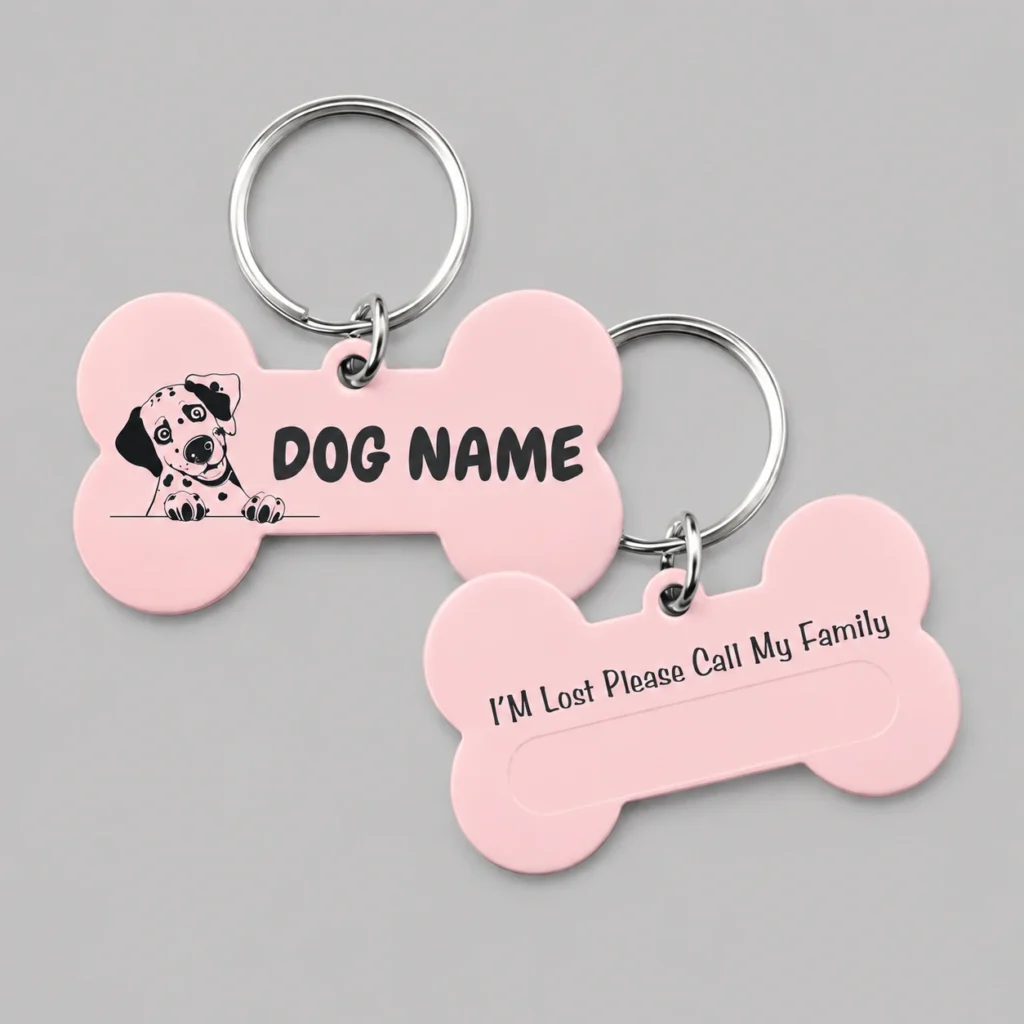
A silicone dog tag may look like a simple, soft accessory, but it does the same serious job as any other ID tag: helping a stranger get your dog back to you quickly.
Silicone solves real everyday problems, like jingling and dents, yet it has limits that product pages rarely mention. Here is what is well supported and what is mostly marketing.
Key Takeaways
A silicone dog tag is quiet, lightweight, and waterproof, which suits active and noise-sensitive dogs.
Durability claims are fair but not absolute, because chewing and worn printing can still cause trouble.
Words like “hypoallergenic” and “eco-friendly” are usually marketing terms, not tested guarantees.
A readable, current phone number matters more than the material the tag is made from.
Pair any tag with a microchip that is registered and kept up to date.
Researchers use silicone tags to measure chemical exposure, but an ordinary ID tag cannot do that.
What Is a Silicone Dog Tag?
A silicone dog tag is an identification tag made from flexible, rubber-like silicone instead of stamped metal. It usually carries your dog’s name and your phone number, added by printing, debossing (pressing the letters into the surface), or engraving.
Some hang from a ring, like a classic tag. Others slide flat onto the collar strap. You will also see them sold as a silicone pet tag or a silicone ID tag, and the terms mean the same thing.
Owners tend to switch for practical reasons. They want a jingle-free dog tag that does not scratch and does not need replacing every time it takes a knock.
Silicone vs. Metal Dog Tags at a Glance
| Feature | Silicone | Metal |
| Sound | Silent | Clinks against the collar and other tags |
| Weight | Very light | Heavier, especially in larger sizes |
| Rust and dents | Does not rust or dent | Can tarnish, scratch, or bend |
| Chewing | Can be bitten through or torn | More resistant to teeth |
| Text durability | Depends on how it is applied | Engraving usually lasts well |
Neither material wins every category. The right pick depends on how your dog actually lives.
1. A Silicone Dog Tag Is Quiet, Light, and Comfortable
A metal tag clinks against the ring, the buckle, and any other tags on the collar. A jingle-free dog tag removes that noise completely, which is a real benefit for light sleepers, small dogs, and dogs that get nervous around sudden sounds.
One popular claim deserves care. Some brands say jingling can damage a dog’s hearing. A 2019 Psychology Today commentary that made that argument acknowledged that no research has examined noise-related hearing loss in dogs, and it leaned on human hearing studies instead.
So treat the quiet of a silicone dog tag as a comfort and behavior benefit, not a proven medical one.
2. Durability Is Real, but It Has Limits
Silicone does not rust, corrode, or dent, and it handles mud, salt water, and pool splashes well. That is the main reason a silicone dog ID tag suits swimmers and trail dogs.
The same softness that makes it comfortable also makes it easier to bite or tear. If your dog chews its own collar, or another dog’s during play, inspect the tag often. Printed text can also rub away over time.
A simple habit helps: check the tag monthly, and replace it once the letters fade or the material splits. This is practical guidance, not a research finding.
3. Readability Depends on How the Details Are Added
A tag nobody can read is no better than no tag. With a silicone dog tag, legibility depends less on the material and more on how the text is applied.
- Handwritten with a marker: cheap and quick, but it smudges and fades.
- Printed: sharp and colorful, though the ink can wear where the tag rubs.
- Debossed or engraved: the letters are shaped into the surface, so they tend to last longer, especially with strong color contrast.
Here is an easy test. Hold the tag at arm’s length in dim light. If you cannot read the phone number, a stranger may struggle too.
Also think about attachment. A slide-on silicone ID tag sits flat and rarely snags, but it needs a collar strap with a free end to thread through. A hanging tag works with any collar that has a ring.
4. “Non-Toxic,” “Hypoallergenic,” and “Eco-Friendly” Need a Closer Look
These words appear on many silicone dog ID tag listings. Silicone is generally considered a stable, low-reactivity material, and most dogs wear it without trouble. Still, they are marketing terms rather than tested guarantees, and listings seldom show any testing behind them.
Look for a maker that names the type of silicone it uses and where each silicone pet tag is made. Also watch your dog’s neck. Redness or hair loss under the collar is a reason to remove it and call your vet.
The eco-friendly claim is only partly true. A long life means fewer replacements, but silicone is often not accepted in curbside recycling, so “recyclable” usually means a specialty program.
5. A Tag Is One Layer of Protection, Not the Whole Plan
The ASPCA’s position statement on pet identification says a personalized tag is likely the fastest way to get a pet home, because anyone can read it. It also warns that collars can come off, and it treats microchips as the safety net.
The best-known figures come from a 2009 study in the Journal of the American Veterinary Medical Association that examined more than 7,700 stray animals entering shelters.
The median return-to-owner rate for stray dogs overall was 21.9%, compared with 52.2% for microchipped dogs. Most microchipped animals that did not go home had missing or incorrect owner details in the registry.
Two cautions apply. The study measured microchips, not tags. It was also cross-sectional, so it shows an association rather than proof that chips alone caused the difference.
On tags themselves, ASPCA-led research in Oklahoma City found that only 33% of surveyed owners said their pet wore a tag all the time.
After clinics fitted personalized tags, 73% said the pet still wore one, and ten pets were recovered because of their tag within six weeks. It was an early, small-scale phase, but it shows that a tag only helps when it stays on the dog.
6. Scientists Also Use Silicone Tags, but Not for ID
Here is a surprising twist. Researchers from Duke University, North Carolina State University, and the CDC tested silicone tags on dog collars as chemical samplers, and published the results in Environmental Science & Technology in December 2021.
They collected residues from tags worn by 30 dogs and wristbands worn by 30 owners over five days. Higher levels of the repellent DEET and the insecticide permethrin on the tags and bands were linked to higher levels of related metabolites in urine and to owners’ answers about product use.
Owners who reported using fipronil flea and tick products also had more fipronil on their wristbands and their dogs’ tags.
That does not make your dog’s ID tag a health monitor. The residues were measured with lab equipment, and one researcher put the cost of testing about 150 chemicals at roughly $250 in 2022.
Silicone also misses substances such as silica, ash, and heavy metals, and what sits near a dog’s face may differ from what reaches the bloodstream. The findings are correlations, and the tags were not yet sold for exposure monitoring.
How to Choose the Right Silicone Dog Tag
- Put legibility first. Choose large, high-contrast text, ideally debossed or engraved.
- Match the attachment to your collar, since slide-on designs need a free strap end and hanging tags need a ring.
- Pick the right size. An oversized silicone pet tag is awkward on a small dog and easier to catch or chew.
- Add the right details: a phone number you always answer, a second contact if possible, and a note that your dog is microchipped.
- Check the maker. Clear details on materials, printing, and returns are a good sign for any silicone ID tag.
- Keep a spare, so a worn tag can be replaced the same day.
Faqs
Are silicone dog tags safe for dogs?
For most dogs, yes. Silicone is a low-reactivity material, and many dogs wear it daily.
Choose a smooth, well-finished tag, check the skin under the collar regularly, and stop using it if you see redness. If your dog swallows pieces of a chewed tag, call your vet.
Are silicone dog tags better than metal tags?
It depends on the dog. As a jingle-free dog tag, silicone wins on noise, weight, and rust resistance, while a metal tag is harder to chew through and its engraving tends to last. Some owners keep one of each.
How long does a silicone dog tag last?
There is no fixed lifespan. It depends on how much your dog chews, swims, and rubs against things, and on whether the text is printed or debossed. Replace it once the letters become hard to read.
Are silicone dog tags waterproof?
The material is waterproof and will not rust. The weak spot is the lettering, since printed text can still wear. Rinse and dry the collar after swimming so moisture does not sit against the skin.
Does my dog still need a microchip if it has a silicone dog tag?
Ideally, yes. A tag can be read by anyone at a glance, but collars can come off. A microchip is the permanent backup, as long as the registry details are current.
How do you attach a silicone dog ID tag to a collar?
For a slide-on style, thread the collar strap through the slots and slide the tag until it sits flat. For a hanging style, attach it with the ring or loop provided. Either way, make sure it does not catch on the collar hardware.
Do dogs have to wear ID tags by law?
Rules vary by country, state, and city, and many places require dogs to wear identification in public. Check your local regulations, because some specify details such as your name or address, and confirm that a silicone dog tag carrying those details is acceptable.
Conclusion: Is a Silicone Dog Tag Worth It?
For most dogs, yes. A silicone dog tag is quiet, light, and waterproof, and those benefits show up in daily life. Its weak points are chewing and worn text, and a monthly check manages both.
What is well established is that tags and microchips help lost pets get home, and that current contact details matter. What remains uncertain is whether jingling harms hearing, and “hypoallergenic” is better treated as marketing than settled science.
Choose a silicone dog tag you can read at a glance, keep the phone number current, and pair it with a registered microchip. That combination does more for your dog’s safety than any single material.