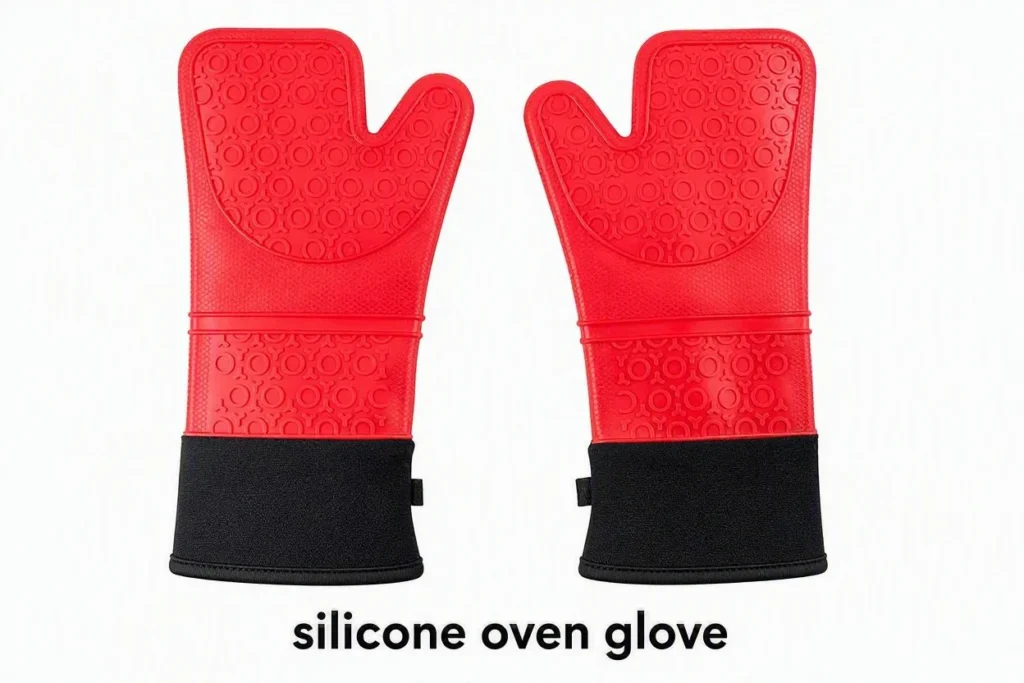
A high-performance silicone oven glove made from premium food-grade silicone material offers heat resistance, waterproofing, and a secure grip for everyday kitchen use.
Handling boiling cookware, heavy baking sheets, and outdoor barbecue grates requires reliable heat-resistant protection. Let’s find out what makes a silicone oven glove so suitable for cooking safety.
What Makes Silicone Oven Glove Superior for Kitchen Safety?
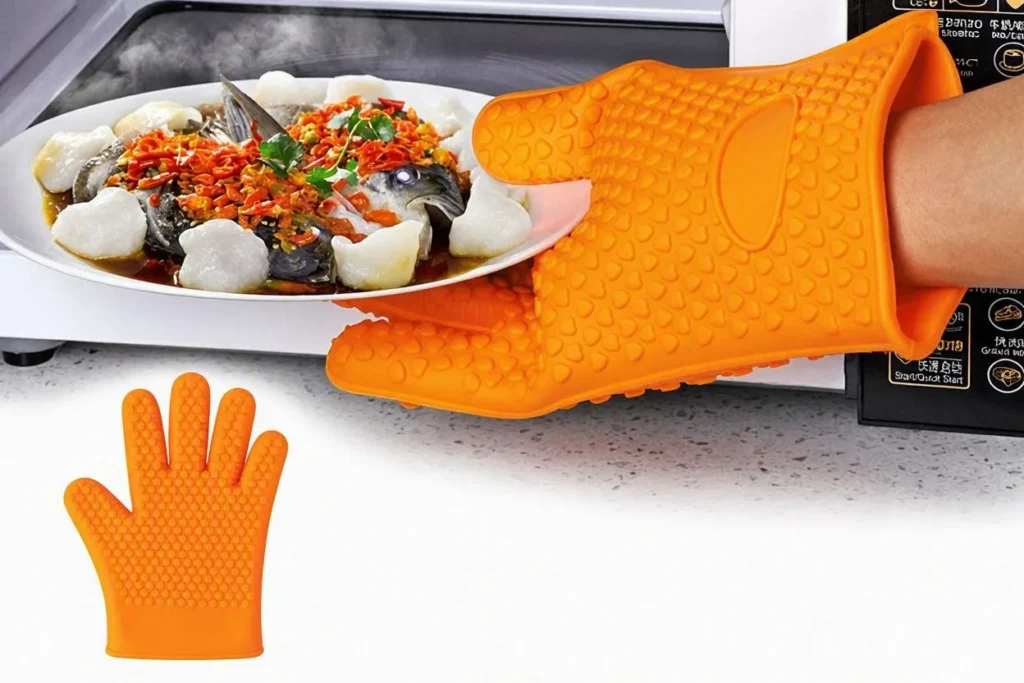
Traditional fabric oven mitts can absorb water, steam, oil, and other liquids. Silicone provides a non-porous outer barrier that helps protect the hand from hot cookware and liquid splashes.
Silicone Oven Glove Dual-Layer Design
| Layer | Material/Feature | Main Function |
| Outer Shell | Food-grade silicone rubber | Heat, water and oil resistance |
| Surface | Textured or honeycomb pattern | Improved grip |
| Inner Lining | Cotton or polyester | Cushioning and comfort |
| Wrist/Cuff | Extended silicone section | Additional wrist and forearm coverage |
Silicone Oven Glove vs. Traditional Material
| Feature | Food-Grade Silicone | Peroxide-Cured Silicone | Quilted Cotton |
| Heat resistance | High; product-specific | High; product-specific | Moderate |
| Water resistance | Excellent | Excellent | Limited |
| Oil resistance | Generally good | Generally good | Limited |
| Grip | Textured surfaces provide good grip | Depends on design | Can become slippery when wet |
| Cleaning | Easy to wash | Easy to wash | Requires regular washing |
| Food-contact suitability | Depends on certification | Depends on formulation and certification | Generally suitable as fabric |
Chemistry of Food-Grade Silicone Oven Mitt
The heat-resistant properties of silicone are linked to its unique polymer structure. Silicone contains an alternating silicon-oxygen backbone, commonly represented as Si–O–Si. This structure contributes to its flexibility and thermal stability.
Key Material Properties
- Siloxane Polymer Backbone: The Si–O–Si structure provides silicone with good thermal stability and flexibility.
- Platinum-Catalyzed Addition Cure: Platinum-cured silicone is widely used in food-contact applications where controlled curing and low levels of unwanted by-products are important.
- Non-Porous Structure: Silicone does not readily absorb water and oils, making it easy to clean.
- Elastomeric Properties: Cross-linked silicone can maintain flexibility over a broad temperature range.
Important: The actual temperature rating, food-contact compliance, and formulation depend on the specific silicone compound and finished product. Always check the manufacturer’s specifications rather than assuming every silicone glove is rated to 550°F.
Silicone Oven Glove: Temperature Resistance
Temperature resistance is one of the main reasons silicone is widely used for kitchen gloves. Depending on the formulation, thickness, construction, and manufacturer specifications, food-grade silicone products may be designed for temperatures ranging from approximately -40°F to 450–550°F (-40°C to 232–287°C).
| Temperature Range | Approx. Celsius | Typical Application |
| -40°F | -40°C | Cold and freezer applications |
| 300°F | 149°C | General baking and cooking |
| 400°F | 204°C | Hot baking trays and cookware |
| 450°F | 232°C | High-temperature oven handling |
| 500°F | 260°C | High-heat cookware, product-dependent |
| 550°F | 287°C | Maximum-rated applications, product-dependent |
Key Benefits of Using Silicone Oven Gloves
Using a silicone oven glove offers the following benefits:
- High Heat Resistance: Provides protection while working with cookware in the desired heat resistance range of the product.
- Non-slip Grip: The textured surface of the silicone ensures that you can hold on to the slippery cookware easily.
- Resistance to Steam and Liquids: The waterproof exterior fabric prevents water and cooking liquids from penetrating the gloves.
- Easier Cleaning: Silicone material is easy to clean with a mild soap solution.
- Durable Fabric: Good quality silicone can withstand multiple heat-and-cool cycles within its intended range.
- Flexible Handling: The flexible silicone material makes the glove bendable around cookware handles and baking tins.
- Extra Coverage: The extra-long cuff provides additional coverage for the wrist and the forearm area.
Precautions and Maintenance
To maintain the performance of your silicone oven glove, follow these basic precautions:
- Do Not Expose the Glove to Direct Flames: Unless the manufacturer recommends otherwise, never place the glove directly into an open flame.
- Use According to the Maximum Temperature Rating: It is crucial not to exceed the maximum temperature indicated by the manufacturer.
- Do Not Use Damaged Gloves: Always replace gloves that show signs of cuts, holes, and damage.
- Dry the Inner Fabric: Ensure that the inner fabric of the glove is fully dried out.
- Clean Often: The silicone part of the glove should be washed using mild dish soap and warm water.
- Protect from Sharp Edges: Do not expose the gloves to knives and sharp edges.
- Inspect the Glove: Look for any cracks and tears on the glove.
Final Thoughts
A silicone oven glove combines heat resistance, water resistance, flexibility, and grip in a practical kitchen accessory. When manufactured from appropriately tested food-grade silicone oven mitt material, it can provide durable protection for handling hot cookware and baking equipment.
For manufacturers, selecting the correct silicone formulation, curing system, pigments, hardness, and compliance testing is essential. For consumers, checking the product’s temperature rating and safety instructions is equally important. Used correctly, silicone gloves can offer a convenient and hygienic alternative to traditional fabric oven mitts.
Frequently Asked Questions
1. What silicone formulation is recommended for manufacturing high-heat kitchen oven gloves?
Food-contact-grade HCR (high-consistency rubber) or LSR (liquid silicone rubber) can be used in a silicone oven glove depending on the manufacturing process and product design. The appropriate Shore A hardness depends on the desired flexibility, grip and durability.
2. Are silicone compounds suitable for direct food contact and high-temperature applications?
Some silicone compounds are specifically formulated and tested for food-contact applications. Manufacturers should verify applicable requirements, such as FDA certification or relevant European food-contact standards, for the specific finished product.
3. How do custom molded patterns like honeycomb grids improve grip?
Raised or textured patterns increase surface texture and can improve friction between the glove and cookware, helping users maintain a more secure grip.
4. Can custom colors be added to silicone oven gloves?
Yes. Suitable pigments can be incorporated into silicone formulations to create different colors. For food-contact applications, the pigments and finished product should meet the relevant safety and compliance requirements.
Also Read: Silicone Masks