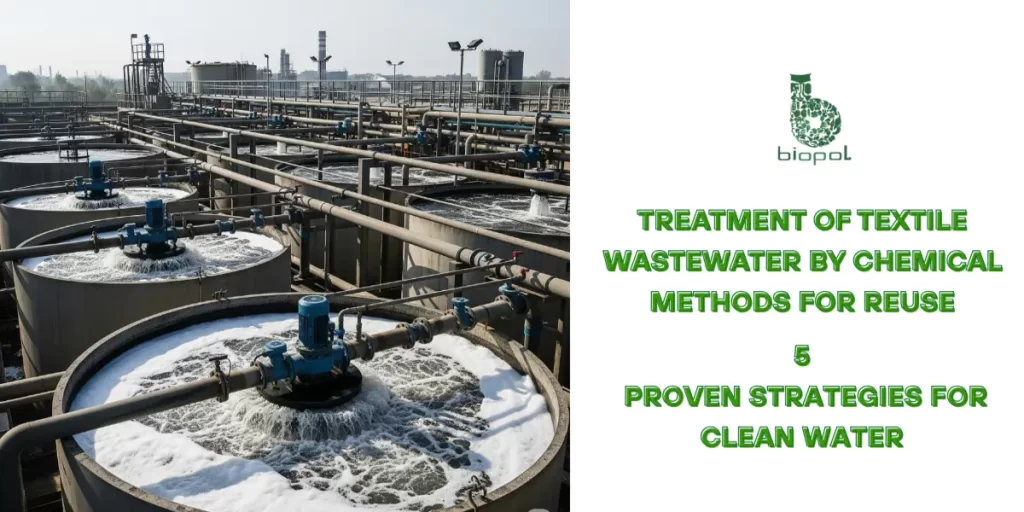
Treatment of textile wastewater by chemical methods for reuse is reshaping how the industry tackles water pollution. With rising environmental concerns and strict regulations, chemical processes offer an efficient way to recover and reuse water, reduce waste, and support sustainable textile production without compromising on operational demands.
Key Takeaways
- Explains why textile wastewater is highly polluted and difficult to reuse without treatment
- Describes major chemical treatment methods used in textile effluent management
- Shows how processes like coagulation, flocculation, oxidation, neutralization, and precipitation work
- Highlights how chemical treatment removes color, COD, suspended solids, and heavy metals
- Clarifies how treated wastewater can be reused in textile processing, reducing freshwater consumption
- Emphasizes the role of chemical treatment in regulatory compliance and sustainability
Textile Wastewater: The Growing Problem
The treatment of textile wastewater by chemical methods for reuse is now more essential than ever for sustainable manufacturing. Textile production fuels economies but leaves behind a murky trail — billions of litres of contaminated water filled with dyes, detergents, and finishing agents. This isn’t just an industrial by-product; it’s a silent environmental alarm.
Consider this — the average textile mill generates up to 200 litres of wastewater for every kilogram of fabric processed. That’s not just water wasted; it’s water poisoned. Without effective treatment, rivers and groundwater absorb these pollutants, turning once-thriving ecosystems into lifeless streams.
What makes textile wastewater so problematic? A quick glance at its contents reveals:
- Persistent dyes that resist natural breakdown.
- Heavy metals from dyes and mordants.
- Detergents and softeners that disrupt aquatic life.
- High chemical oxygen demand (COD) levels, draining oxygen from waterways.
The reality is stark — untreated or poorly managed discharge stifles biodiversity, affects agricultural soil, and even threatens human health. That’s why industries must adopt the treatment of textile wastewater by chemical methods for reuse without delay. It’s a responsibility the industry can no longer sidestep.
The growing problem is undeniable. The solution? It starts with acknowledging the scale — and choosing proven chemical treatment strategies to reclaim this vital resource.
Chemical Reuse of Textile Wastewater
The treatment of textile wastewater by chemical methods for reuse stands as one of the most reliable answers to the industry’s mounting water crisis. As freshwater becomes scarce and regulations grow stricter, factories cannot afford to treat wastewater as waste. Reuse is no longer an afterthought — it’s fast becoming the standard.
But how does this process work? Chemical methods break down, neutralize, or remove harmful contaminants from textile effluents, making the water suitable for reuse within production cycles. The goal is simple: clean, safe water that doesn’t cost the earth.
Common chemical techniques include:
| Method | Function |
| Coagulation & Flocculation | Clumps together suspended solids for easy removal |
| Chemical Oxidation | Breaks down stubborn organic pollutants |
| pH Neutralization | Balances acidity or alkalinity for safe reuse |
| Precipitation | Removes heavy metals and dissolved solids |
The treatment of textile wastewater by chemical methods for reuse offers efficiency, scalability, and consistency. These methods don’t rely on the guesswork of biological processes or the limitations of physical filtration alone.
It’s a pragmatic approach — clean the water, reuse it, reduce fresh water demand, and lower environmental impact. The chemicals do the heavy lifting, but the real result is a more responsible, future-ready textile industry.
Key Chemical Processes for Water Recovery
The treatment of textile wastewater by chemical methods for reuse relies on precise chemical processes that turn polluted effluent into reusable water. It may sound like magic, but it’s pure science — backed by decades of research and real-world application.
Water recovery isn’t a single-step operation. It involves a combination of chemical actions that target the stubborn contaminants lurking in textile effluents. The most effective processes include:
- Coagulation and Flocculation – These are the first line of defence. Special chemicals cause fine particles and dyes to clump together, making them easy to remove.
- Oxidation Processes – Strong oxidants such as ozone or chlorine break down complex organic pollutants that resist ordinary treatments.
- pH Adjustment – Acidity or alkalinity is corrected to stabilise the water and protect both equipment and ecosystems.
- Chemical Precipitation – Heavy metals and harmful salts are removed by converting them into insoluble solids that settle out.
To fully understand how these chemical treatments connect to daily operations, explore how the consumption of chemicals in textile processing machine impacts both water recovery and production efficiency. These methods work hand in hand, stripping wastewater of its harmful load and paving the way for safe reuse. The treatment of textile wastewater by chemical methods for reuse doesn’t just minimise waste; it maximises the value of every litre.
Water recovery is no longer a luxury — it’s a responsibility. And with the right chemical processes, it’s entirely achievable.
Why Industries Choose Chemical Treatment
The treatment of textile wastewater by chemical methods for reuse is not a passing trend — it’s an industrial necessity. But why do so many textile manufacturers favour chemical treatment over other options? The answer is simple: efficiency, reliability, and results that speak for themselves.
Chemical methods deliver what the industry demands — fast, scalable, and cost-effective wastewater recovery. Unlike biological or purely physical processes, chemical treatment handles high pollutant loads, tough dyes, and fluctuating wastewater characteristics without breaking stride.
Here’s what makes chemical treatment the preferred choice:
- Speed and Consistency – Chemical reactions work fast, providing reliable outcomes under varying operating conditions.
- Targeted Pollutant Removal – From dyes to heavy metals, chemical processes tackle specific contaminants with precision.
- Reduced Freshwater Dependency – Recovered water can be safely reused, cutting down freshwater consumption significantly.
- Regulatory Compliance – Meeting environmental discharge standards becomes far more achievable.
The treatment of textile wastewater by chemical methods for reuse isn’t just about ticking compliance boxes. It improves operational efficiency, reduces production costs, and signals environmental accountability.
For industries under pressure to produce more while consuming less, chemical treatment offers a solution that’s both practical and sustainable. The choice, in truth, is no choice at all — it’s the way forward.
Final Thoughts
The treatment of textile wastewater by chemical methods for reuse has reshaped how the industry approaches water management. Once seen as an unavoidable environmental burden, wastewater is now viewed as a resource — one that can be recovered, refined, and reused.
Smarter water reuse isn’t about cutting corners. It’s about applying proven chemical processes that protect natural resources while keeping operations competitive. The technology exists. The benefits are clear. And the environmental stakes? Higher than ever.
Chemical treatment delivers:
- Cleaner water for process reuse
- Reduced freshwater consumption
- Lower effluent discharge volumes
- Stronger compliance with environmental regulations
The treatment of textile wastewater by chemical methods for reuse is not merely an operational upgrade — it’s a commitment to sustainable, responsible manufacturing. With rising production demands and tightening water scarcity, the industry has little room for inaction.
The future of textiles belongs to those who treat water not as waste — but as the essential, reusable asset it truly is.
FAQs
Why is wastewater treatment crucial for textile industries?
Untreated wastewater from textile manufacturing contains harmful dyes, chemicals, and heavy metals that pollute rivers, soil, and groundwater. Treating this water protects ecosystems, public health, and ensures industries meet environmental regulations.
What chemical processes treat textile wastewater?
Common processes include coagulation and flocculation to remove solids, chemical oxidation to break down organic pollutants, pH adjustment for stability, and precipitation to eliminate heavy metals and salts.
Can treated water be reused within textile factories?
Yes. Treated water is often suitable for reuse in processes like washing, dyeing, and cooling, helping industries reduce freshwater consumption and operating costs.
How does chemical treatment compare to biological methods?
Chemical treatment works faster and handles higher pollutant loads, especially with tough dyes and fluctuating wastewater composition. It also provides consistent results, making it highly suitable for industrial applications.
Is chemical treatment cost-effective for small textile units?
While it involves investment, chemical treatment often leads to long-term savings by reducing water procurement costs, improving compliance, and minimising environmental penalties. Many scalable, cost-effective solutions are available for smaller operations.