Chemical safety in textile industry is a critical pillar of responsible manufacturing, protecting workers, consumers, and ecosystems alike. From handling toxic dyes to managing emissions, every step demands vigilance, compliance, and control. This guide explores key hazards, protocols, and safer alternatives shaping modern textile chemical safety.
Key Takeaways
- Chemical safety is essential to protect workers, consumers, and the environment in textile manufacturing.
- Proper handling, labeling, storage, and disposal of chemicals reduce health and environmental risks.
- Compliance with regulations like GHS, REACH, OSHA, and ZDHC is mandatory, not optional.
- PPE, ventilation, SOPs, and regular safety audits are critical control measures.
- Adopting safer alternatives and green chemistry improves sustainability and long-term compliance.
What Hazards Lurk in Textile Chemicals?
Textile manufacturing involves extensive use of chemicals during pretreatment, dyeing, printing, and finishing. Many of these substances pose serious risks if mishandled.
- Toxic and reactive dyes
- Volatile organic compounds (VOCs)
- Formaldehyde-based resins
- Strong acids and alkalis
- Heavy metals such as chromium and lead
Uncontrolled exposure can result in respiratory problems, skin disorders, long-term occupational illness, and environmental contamination.
Regulations and Compliance for Chemical Safety in Textile Industry
Chemical safety in textiles is governed by international and regional regulations that control classification, labeling, handling, and disposal of hazardous substances.
- Globally Harmonized System (GHS)
- REACH (EU)
- OSHA Hazard Communication Standard
- BIS and local environmental regulations
- ZDHC Manufacturing Restricted Substances List (MRSL)
Essential Chemical Safety Protocols
- Clear standard operating procedures (SOPs)
- Mandatory worker training programs
- Routine safety audits and inspections
- Emergency preparedness and spill response plans
- Incident reporting and corrective actions
Labeling, Storage, and Spill Control
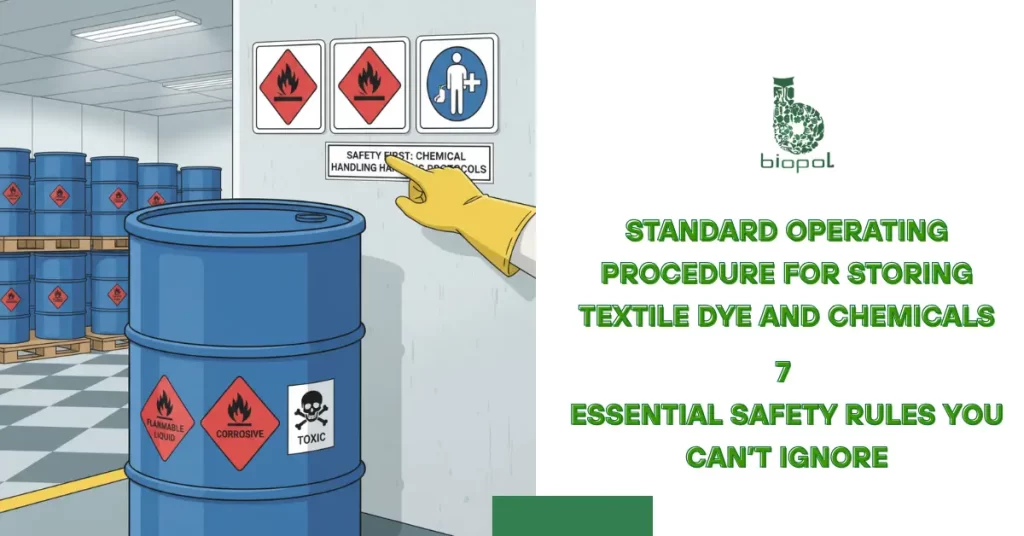
All chemicals must be clearly labeled according to GHS standards. Storage areas should be segregated by hazard class, with secondary containment and restricted access.
Spill kits, eye-wash stations, and emergency showers must be readily available in all chemical handling zones.
PPE and Engineering Controls
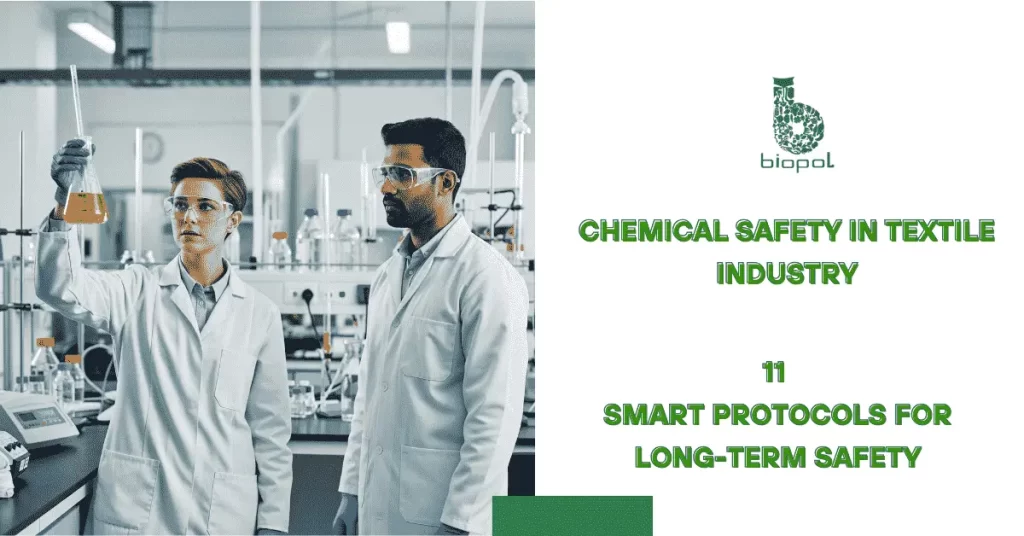
Personal protective equipment must be selected based on chemical hazard type. Engineering controls such as local exhaust ventilation, enclosed dosing systems, and automated handling significantly reduce exposure risks.
Finishing and Wet Processing Safety
Wet processing and finishing stages involve high chemical concentrations, elevated temperatures, and pressurized systems. Closed-loop operations, access controls, and real-time monitoring are essential during these stages.
Cleaner Alternatives and Green Chemistry
- Bio-based and enzyme-based auxiliaries
- Low-temperature and low-liquor dyeing methods
- Digital and pigment printing technologies
- Closed-loop water recycling systems
Adopting safer chemical alternatives improves compliance, reduces environmental impact, and supports sustainable textile manufacturing.
Waste and Emission Management
Chemical safety in textile industry is incomplete without responsible disposal. Waste doesn’t disappear—it migrates, mutates, and magnifies if left unchecked.
Effluent treatment systems must cover:
- pH neutralization
- Biological reactors for organic loads
- Sludge dewatering before disposal
Air emissions demand:
- Activated carbon filters for solvents
- Thermal oxidizers to neutralize VOCs
- Continuous stack monitoring for compliance
Hazardous waste protocols:
- Use GHS-compliant labeled drums
- Maintain waste manifests and disposal certificates
- Contract only with certified handlers
Chemical safety in textile industry includes the afterlife of every compound used. A clean discharge is the final step in a safe process.
Five-Point Safety Audit Checklist
Chemical safety in textile industry is only as strong as its weakest vendor or unchecked corner. Procurement and audit systems are safety tools in disguise.
- SDS availability and accuracy
- PPE condition and usage compliance
- Storage compatibility and labeling
- Emergency system readiness
- Vendor and chemical approval records

Conclusion
Chemical safety in textile industry is no longer just about compliance—it is a core requirement for protecting workers, ensuring product safety, and meeting global sustainability expectations. By combining strong safety protocols, regulatory alignment, and safer chemical alternatives, textile manufacturers can significantly reduce risk across their operations. To strengthen these efforts further, understanding chemical consumption tracing in textile industry plays a vital role in verifying chemical compliance, detecting harmful substances, and ensuring finished textiles meet safety and quality standards before reaching the market.
Frequently Asked Questions
Which chemical is used in the textile industry?
The textile industry uses chemicals such as dyes and pigments, surfactants, bleaching agents, acids, alkalis, finishing resins, solvents, and auxiliaries for processes like dyeing, printing, and finishing.
What are the rules for chemical safety?
Chemical safety rules include identifying hazards through SDS, proper labeling and storage, using appropriate PPE, following standard operating procedures, and being prepared for spills, leaks, or exposure emergencies.
What are 5 chemical hazards?
Five common chemical hazards are flammable substances, corrosive chemicals, toxic materials, reactive chemicals, and carcinogenic substances that can cause long-term health effects.
What are the safety hazards in the textile industry?
Safety hazards in the textile industry include chemical exposure, dust and fumes, fire and explosion risks, machinery accidents, noise exposure, and improper handling or storage of hazardous substances.
Why is chemical safety in textile industry important?
Chemical safety in textile industry is important to protect workers from hazardous exposure, ensure consumer safety, prevent environmental pollution, and maintain compliance with national and international safety regulations.
Sources
- Chemical Safety in Textile Industry — ResearchGate publication
- https://www.researchgate.net/publication/333692016_Chemical_Safety_in_Textile_Industry
- Chemical Management in Textile Factories — SIA Toolbox PDF
- https://sia-toolbox.de/sites/default/files/2023-09/Presentation%207.2_Chemical%20Management%20in%20Textile%20Factories.pdf
- Chemicals in Textiles and the Health Implications — Allergy Standards
- https://www.allergystandards.com/news_events/chemicals-in-textiles-and-the-health-implications/
- Chemical Safety for Clothing and Textiles — TÜV
- https://www.tuv.com/landingpage/en/chemical-safety-for-clothing-and-textiles/
- Responsible Chemical Management in Apparel — CBI Market Information
- https://www.cbi.eu/market-information/apparel/tips-responsible-chemical-management
- Guidelines for Chemical Safety at Enterprises — Labour Dept HK PDF
- https://www.labour.gov.hk/text_alternative/pdf/eng/B127.pdf
- Chemical Safety at Garments Printing — MNS Garments Printing guide
- https://mnsgarmentsprinting.com/chemical-safety/