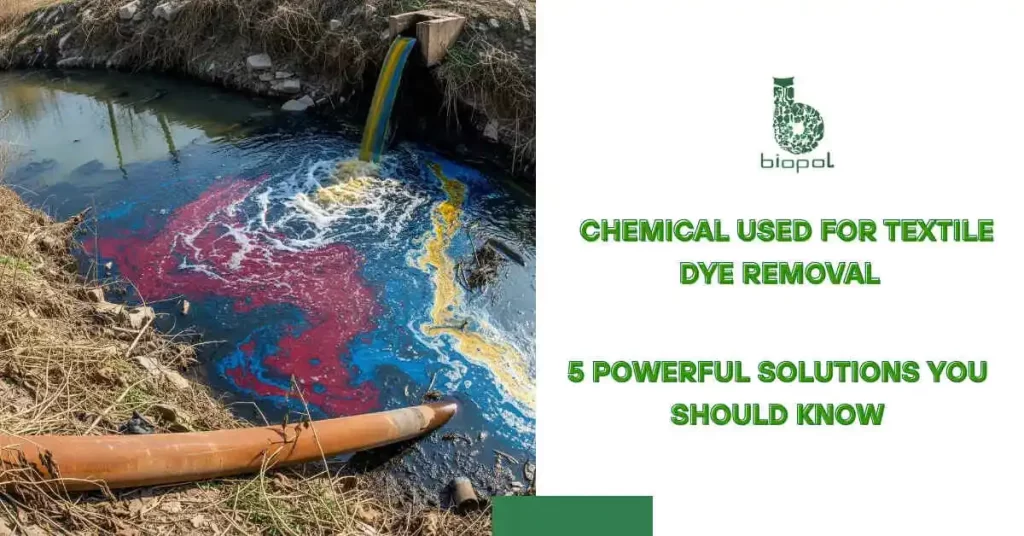
Chemical used for textile dye removal is central to reducing the environmental impact of dye-laden wastewater. From oxidants to biological agents, each method plays a role in restoring water quality. This article explores effective solutions, practical considerations, and buying tips for selecting the right chemical treatment strategy.
Table of Contents
Why Dye Removal Matters for Effluent Control
The chemical used for textile dye removal is a frontline defense against environmental degradation caused by untreated dye effluents. Without proper treatment, dyed wastewater discharged from textile units turns rivers into chemical streams—dark, oxygen-deprived, and biologically inactive.
Dyes are designed to resist fading, which makes them equally resistant to natural breakdown. When left untreated, they:
- Obstruct sunlight penetration in water bodies
- Raise chemical oxygen demand (COD) and biological oxygen demand (BOD)
- Introduce toxic aromatic compounds that affect aquatic and human health
This is where the chemical used for textile dye removal becomes indispensable. It reduces color intensity, neutralizes harmful residues, and brings effluents closer to compliance with discharge norms. In short, ignoring dye removal isn’t just risky—it’s irresponsible.
Physical Methods for Dye Removal
Before even selecting a chemical used for textile dye removal, many facilities turn to physical methods as the first line of defense. These approaches act quickly, separating suspended dye particles from water without altering their chemical structure.
Common techniques include:
| Method | Function |
| Sand Filtration | Traps large particles and residual fibers |
| Microfiltration | Removes larger dye molecules and particulates |
| Ultrafiltration | Targets colloidal dyes and organic macromolecules |
| Nanofiltration | Filters out low-molecular-weight dyes |
| Reverse Osmosis | Purifies water by removing nearly all contaminants |
While these methods improve clarity and reduce dye load, they rarely eliminate the dyes completely. Membranes can clog, filters require constant maintenance, and none address the molecular toxicity of dye compounds.
That’s where the chemical used for textile dye removal steps in—to finish what physical processes can’t. Together, they form a two-pronged approach: one filters, the other neutralizes.
Chemical Used for Textile Dye Removal
The chemical used for textile dye removal often falls under one vital category—oxidizing agents. These compounds break down dye molecules at the structural level, rendering them colorless and less harmful.
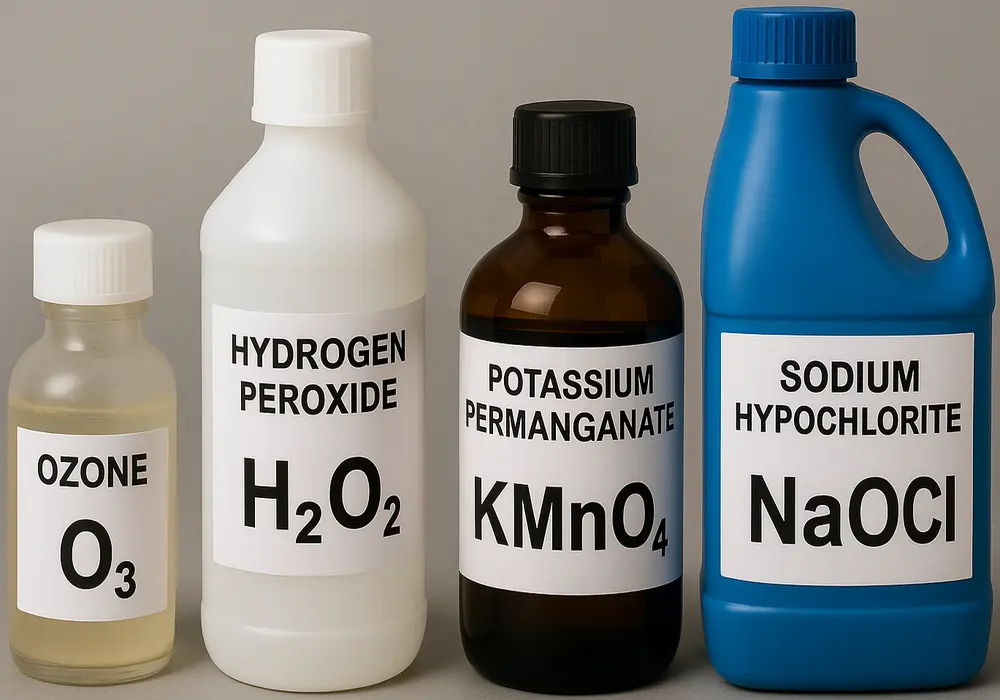
But which oxidants get the job done effectively? Here are the key players:
- Ozone (O₃) – A fast-acting, gas-based oxidant that attacks double bonds in chromophores, fading most synthetic dyes within minutes.
- Hydrogen Peroxide (H₂O₂) – When combined with iron salts (Fenton’s reagent), it becomes a powerful radical generator, ideal for removing complex dyes.
- Sodium Hypochlorite (NaOCl) – Widely used due to availability and cost, though it may produce harmful by-products with certain dyes.
- Potassium Permanganate (KMnO₄) – Effective on vat and disperse dyes, though often used in small-scale applications due to cost.
Every chemical used for textile dye removal in this group functions by oxidation—breaking molecular bonds that give dyes their vivid color and stability. It’s not just about decolorization; it’s about disarming the chemical resilience dyes are built to have.
Used properly, oxidants can dramatically reduce toxicity and color load. Used carelessly, they can generate new problems. Precision and balance are key.
Adsorption Solutions
An effective chemical used for textile dye removal doesn’t always react—it can simply attract. That’s the principle behind adsorption, where solid materials bind dye molecules to their surface, pulling them from the wastewater like magnets.
The most recognized option? Activated carbon. Highly porous and remarkably efficient, it captures a broad range of dyes, especially from synthetic and reactive classes. But high cost and regeneration needs limit its wide-scale use in smaller facilities.
Fortunately, several low-cost alternatives are gaining attention:
- Peat – Rich in lignin, with strong dye-binding capacity
- Coconut shell powder – Affordable and locally available in many regions
- Rice husk ash – A by-product turned into a practical sorbent
- Banana peel or sawdust – Surprisingly effective for specific dye groups
Each chemical used for textile dye removal used in adsorption serves a common goal: remove color without chemical reactions. These methods are especially suitable for polishing stages after oxidation or coagulation. Clean water, minimal side effects, and creative reuse of agricultural waste—adsorption brings more to the table than many expect.
Enzymes and Microbial Dye Breakdown
Another class of chemical used for textile dye removal comes from nature itself—enzymes and microbes that digest dye molecules at the source. Unlike aggressive oxidants, these biological agents work gradually, targeting bonds within dye structures and breaking them down into simpler, less harmful compounds.
Two main biological strategies stand out:
- Enzyme-based removal: Laccases, peroxidases, and azoreductases can degrade a range of dyes, especially azo and anthraquinone types. They function best in controlled pH and temperature conditions.
- Microbial digestion: Bacteria and fungi (e.g., Phanerochaete chrysosporium, Pseudomonas, Bacillus) can metabolize dye molecules, converting them into CO₂, water, and biomass.
The chemical used for textile dye removal in these methods may not look like a traditional reagent—but make no mistake, their impact is measurable. They reduce toxicity, lower sludge generation, and integrate well into eco-conscious treatment setups.
Still, biological paths need time. They’re sensitive to temperature, pH, and competing chemicals. But for long-term sustainability and low residue generation, they’re an essential part of the modern wastewater toolkit.
Choosing the Right Dye Removal Agent
Selecting the right chemical used for textile dye removal isn’t just a technical choice—it’s a financial and environmental decision. With regulations tightening and wastewater scrutiny on the rise, picking the wrong agent can cost more than just money.
Here’s what to weigh before making a move:
| Factor | Why It Matters |
| Dye Type | Azo, reactive, vat, or disperse dyes all respond differently |
| Treatment Objective | Treatment Objective |
| Process Compatibility | Chemical must match pH, temperature, and existing system design |
| Sludge Generation | Some agents produce more waste than others |
| Cost per Kilogram | Look beyond purchase price—include dosage and reusability |
| By-product Safety | Avoid chemicals that form harmful chlorinated residues |
The chemical used for textile dye removal must strike a balance—effective but safe, available but compliant, affordable but efficient. In some cases, a blend of oxidants and adsorbents may offer the best results. In others, enzymatic or biological aids prove more sustainable.
No silver bullets exist, but informed choices do. Always test at lab scale before scaling up. Because the right chemical won’t just treat effluent—it’ll protect process, planet, and profit.
The chemical used for textile dye removal must strike a balance—effective but safe, available but compliant, affordable but efficient. In some cases, a blend of oxidants and adsorbents may offer the best results. In others, enzymatic or biological aids prove more sustainable. For a deeper look at handling and hazard management, explore our full guide on chemical safety in textile industry.
FAQs
What is the formula for dye removal?
There is no single chemical formula for dye removal, as it depends on the process. For example, Fenton’s reagent uses H₂O₂ (hydrogen peroxide) and Fe²⁺ (ferrous iron) to generate hydroxyl radicals (•OH), which oxidize dye molecules. Other formulas vary based on the oxidant, adsorbent, or biological enzyme used.
What chemical is used to fix dye on fabric?
Common fixing agents include cationic compounds such as polyquaternary ammonium salts. These bind dye molecules to fabric fibers more securely, improving wash fastness. While these are not chemicals used for textile dye removal, they directly influence how easily dyes can be removed later during wastewater treatment.
What are the methods of removing dyes?
Dye removal methods fall into four main categories:
- Physical – filtration, adsorption, and membrane separation
- Chemical – oxidation, coagulation, and precipitation
- Biological – microbial and enzymatic degradation
- Electrochemical – electrocoagulation and advanced oxidation processes
Each method has different efficiency levels based on the type of dye and effluent composition.
What are the adsorbents for dye removal?
Besides activated carbon, effective adsorbents include:
- Agricultural wastes (e.g., rice husk, sawdust, banana peel)
- Natural materials (e.g., peat, clay, zeolite)
- Industrial by-products (e.g., fly ash, silica gel)
These adsorbents offer eco-friendly, cost-effective alternatives for removing dyes, especially in the final stages of treatment.