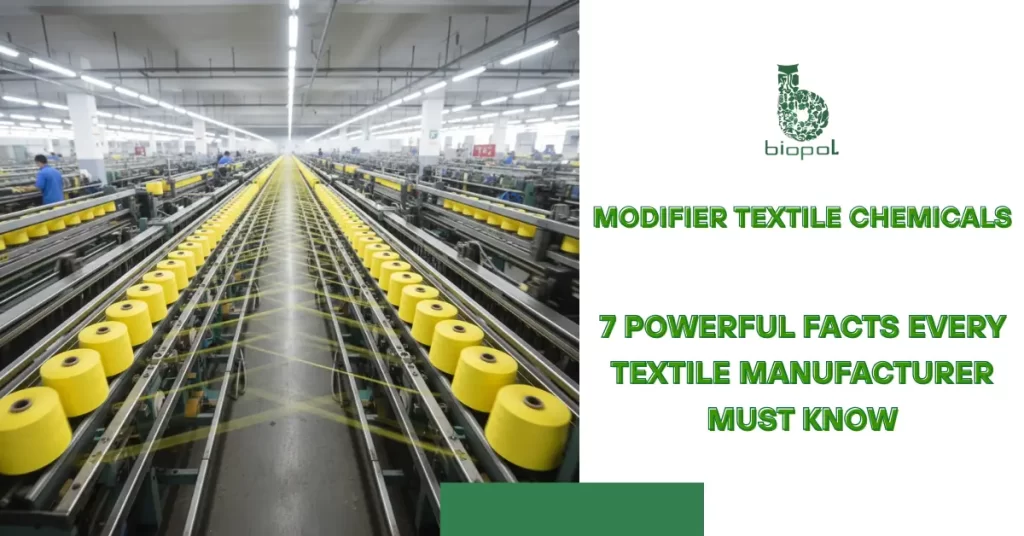
Modifier textile chemicals are not optional helpers; they are process-critical inputs in modern textile manufacturing. Without them, coatings fail, prints bleed, and finishes lose uniformity. Why do advanced textile units invest heavily in modifiers? Because precise control over rheology, dispersion, and surface behavior directly impacts quality, cost, and scalability.
Key Takeaways
- Modifier textile chemicals control flow, stability, and surface behavior
- They are essential in printing, coating, and finishing
- Selection depends on fiber type, compliance, and process speed
- Indian manufacturers increasingly rely on localized modifier solutions
What are they and why are they used in textiles?
Modifier textile chemicals are additives designed to adjust physical or chemical behavior during textile processing.
They are used to:
- Control viscosity and flow in printing pastes and coatings
- Improve dispersion of pigments and functional additives
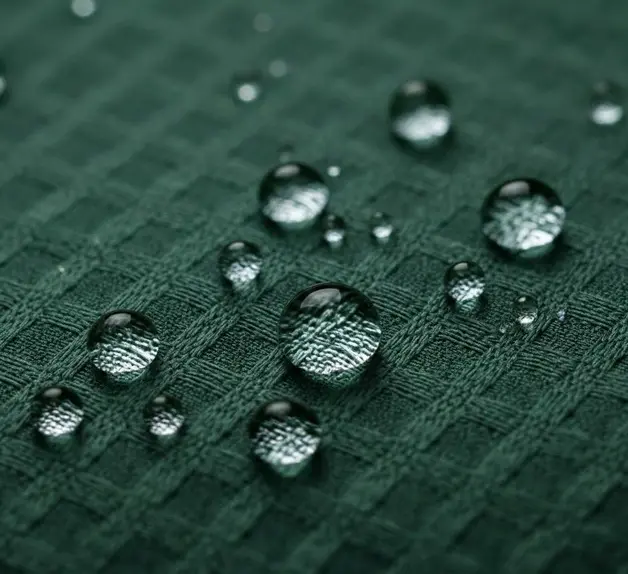
- Enhance surface smoothness, handle, and uniformity
- Stabilize formulations under heat, shear, or storage
Unlike basic textile auxiliaries chemicals, modifiers do not perform a single task; they fine-tune the entire system.
How do modifier textile chemicals work in textile processing stages?
Modifier textile chemicals function through controlled molecular interactions.
Process-level action includes:
- Rheology control – prevents dripping, sagging, or uneven application
- Surface modification – improves wetting and adhesion on fibers
- Stability enhancement – resists separation during storage and use
These mechanisms are critical in coating, digital printing, and high-speed finishing lines where tolerance margins are low.
What are common examples used in industry?
Modifier textile chemicals examples vary by application and fiber type.
| Application Area | Modifier Type | Functional Role |
| Textile printing | Rheology modifiers | Paste stability, sharp prints |
| Textile coating | Thickeners & dispersants | Uniform film formation |
| Finishing | Surface modifiers | Soft handle, reduced friction |
| Technical textiles | Performance modifiers | Strength, durability |
These products often appear within a broader textile chemicals list supplied by global and regional manufacturers.
How are they produced and selected in India?
Modifier textile chemicals in India are selected based on cost, compliance, and performance.
Indian manufacturers prioritize:
- Compatibility with cotton, polyester, blends
- Compliance with REACH and ZDHC guidelines
- Availability from local textile auxiliaries manufacturers
- Ease of integration with existing formulations
Domestic sourcing also reduces dependency on imported Pulcra Chemicals product list equivalents or specialty imports.
How do they differ from standard textile auxiliaries?
Modifier textile chemicals differ fundamentally from conventional auxiliaries.
Key differences:
- Auxiliaries perform defined tasks (wetting, sequestering)
- Modifiers adjust system behavior dynamically
- Modifiers influence multiple parameters simultaneously
This distinction explains why modifiers are often embedded inside advanced formulations rather than sold as standalone bulk products.
What measurable benefits do they deliver?
Modifier textile chemicals deliver quantifiable improvements:
- Reduced formulation rejects
- Improved batch-to-batch consistency
- Lower chemical consumption through optimization
- Enhanced performance in coated and functional fabrics
These benefits are especially visible in industrial and technical applications where tolerance limits are strict.
Conclusion
Modifier textile chemicals define how reliably a textile process performs under real production stress. As fabrics move toward higher functionality, modifiers will increasingly overlap with advanced technical textile chemicals, creating integrated systems rather than isolated additives.
FAQs
Which chemical is used in textiles?
Textiles use a wide range of chemicals including surfactants, modifiers, dyes, finishing agents, and performance additives.
What are modifiers in chemistry?
Modifiers are substances added to adjust physical or chemical behavior such as viscosity, stability, or surface interaction.
What are the 12 technical textiles?
They include Mobiltech, Meditech, Geotech, Agrotech, Indutech, Protech, Sportech, Oekotech, Buildtech, Packtech, Hometech, and Clothtech.
What is the HS code for textile chemicals?
Textile chemicals generally fall under HS code 3809, covering finishing agents and chemical preparations.
Sources
https://www.achitexminerva.com/en/products/rheology-modifiers
https://www.dic-global.com/ap/products/modifier/
https://www.snf.com/industry/textiles/
https://www.sarchem.com/en/textile-coating-chemicals
https://www.nouryon.com/markets/textile
https://www.tianchengchemical.com/dp-modifier-for-textile-k2017762.html
https://www.dow.com/en-us/product-technology/pt-additives-modifiers.html