
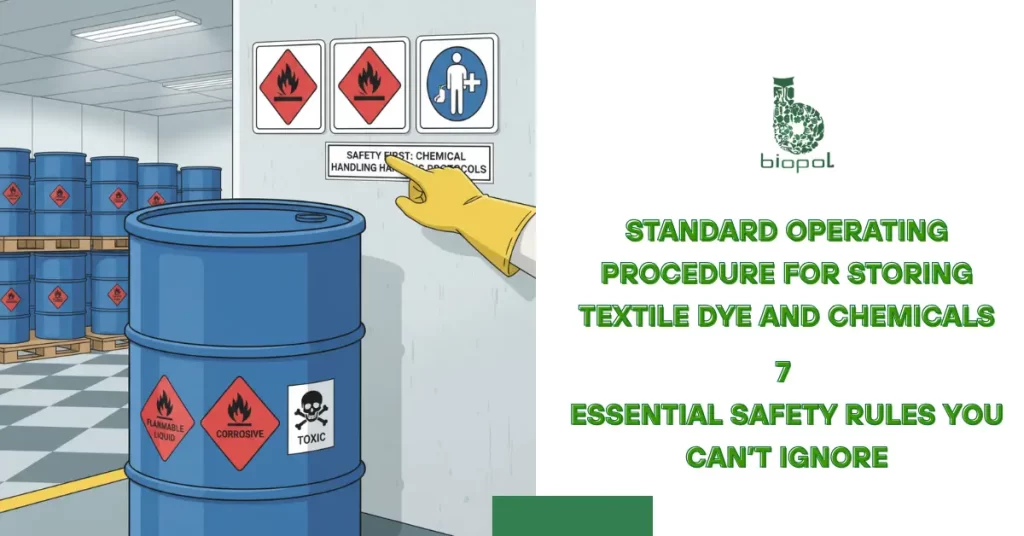
Standard operating procedure for storing textile dye and chemicals is essential for maintaining safety, preserving product quality, and preventing accidents. Following structured storage, handling, and documentation practices ensures a controlled environment where risks are minimized, efficiency is maximized, and every chemical is managed responsibly.
Table of Contents
Safe Storage Basics
The standard operating procedure for storing textile dye and chemicals begins with one simple truth: safety protects both people and product. Mishandling these materials can lead to accidents, wasted product, and compromised quality. Why take risks when prevention is straightforward?
I treat storage as a critical step in production. A misplaced container or poorly sealed drum can cause contamination or dangerous reactions. To guide my practice, I follow three core principles:
- Order matters – Assign clear spaces for every chemical. Random storage invites trouble.
- Protection counts – Safeguard containers with proper seals, covers, and barriers.
- Clarity saves time – Use labels and records that leave no room for doubt.
When these basics are respected, accidents shrink, waste drops, and dye performance stays consistent. Safe storage is less about caution tape and more about good habits. Wouldn’t you agree it pays to start strong?
Standard Operating Procedure for Storing Textile Dye and Chemicals
The standard operating procedure for storing textile dye and chemicals provides a step-by-step roadmap for controlled, consistent storage. Without it, guesswork replaces safety.
- Receiving materials – Check deliveries for damage or leaks before storage.
- Segregating chemicals – Keep dyes separate from acids, bases, and flammables.
- Labeling containers – Include identification, hazard warnings, and handling instructions.
- Choosing storage zones – Maintain cool, dry, and ventilated areas.
- Securing containers – Tight lids, racks, and containment trays prevent spills.
- Routine checks – Inspect shelf life and container integrity regularly.
Documentation is integral: every movement from receipt to usage is logged. Following this procedure saves time, money, and reputation.
Segregation and Labeling
The standard operating procedure for storing textile dye and chemicals makes segregation and labeling essential. Mixing incompatible chemicals can release fumes, cause fires, or spoil dyes.
I assign each chemical type a dedicated zone and use color-coded racks or cabinets. Labels convey vital information:
| Label Element | Purpose |
| Product name | Identifies the chemical at a glance |
| Hazard class | Signals if it’s flammable, toxic, or corrosive |
| Handling notes | Tells staff what gear or precautions to use |
| Expiry date | Flags aging stock before it becomes unstable |
The standard operating procedure for storing textile dye and chemicals also requires labels to be updated if containers are transferred. A drum without a legible tag is not allowed in storage.
Clear segregation and sharp labeling cut out confusion. They also build confidence—because when everyone knows where things belong and what they contain, errors shrink and safety grows. For a deeper understanding of how specific chemicals, such as bleaching agents, affect textile processing and safety protocols, you can explore our detailed guide on the role of chemical bleaching and agent in textile.
Environmental Controls
The standard operating procedure for storing textile dye and chemicals emphasizes environment. Temperature, humidity, ventilation, and fire safety directly impact chemical stability.
Finally, fire safety holds everything together. I follow a simple framework:
- Flammable materials stored in fire-resistant cabinets.
- Sprinkler systems installed in designated storage zones.
- Extinguishers placed at accessible points and checked regularly.
- Emergency exits kept clear and marked.
The standard operating procedure for storing textile dye and chemicals ties all these factors into one cohesive system. By controlling the environment, I protect both workers and the integrity of every container in storage.
Protection and Spill Response
The standard operating procedure for storing textile dye and chemicals prioritizes protective gear and spill readiness. Accidents rarely warn you.
Spills demand calm action, not panic. The steps are straightforward but strict:
- Alert – Notify colleagues and clear the area immediately.
- Contain – Use absorbent pads, neutralizing agents, or sand to stop spread.
- Protect – Wear full protective gear before approaching the spill.
- Clean – Collect waste in sealed containers for safe disposal.
- Report – Record the incident and review how it happened.
The standard operating procedure for storing textile dye and chemicals also reminds me to prepare in advance. Spill kits must be stocked, exits kept clear, and staff trained to act without hesitation.
In truth, protection and spill response are less about reacting fast and more about being prepared. Because in storage safety, preparation is the real hero.
Compliance and Records
The standard operating procedure for storing textile dye and chemicals demands compliance with regulations and thorough documentation. Without records, safety claims are hollow.
Documentation is my silent partner in safety. Every receipt, transfer, and disposal is logged. Tables and charts make information easy to access at a glance:
| Record Type | Purpose |
| Delivery Logs | Confirm quantity and condition on arrival |
| Inspection Reports | Track container integrity and hazards |
| Safety Drills | Show staff readiness and procedure adherence |
| Disposal Records | Ensure proper handling of expired or excess chemicals |
The standard operating procedure for storing textile dye and chemicals ties compliance and records into a single, actionable system. When I keep accurate documentation, I protect the team, the product, and the company’s reputation simultaneously.
Training and Accountability
The standard operating procedure for storing textile dye and chemicals underlines that procedures only work when staff are trained and accountable.
- Training – Handling, PPE, spill drills.
- Accountability – Clear responsibilities and immediate feedback.
- Continuous learning – Refresher sessions and regulation updates.
Competent, informed staff turn protocols into practice, shrinking accidents and increasing confidence.
Supplier and Storage Solutions
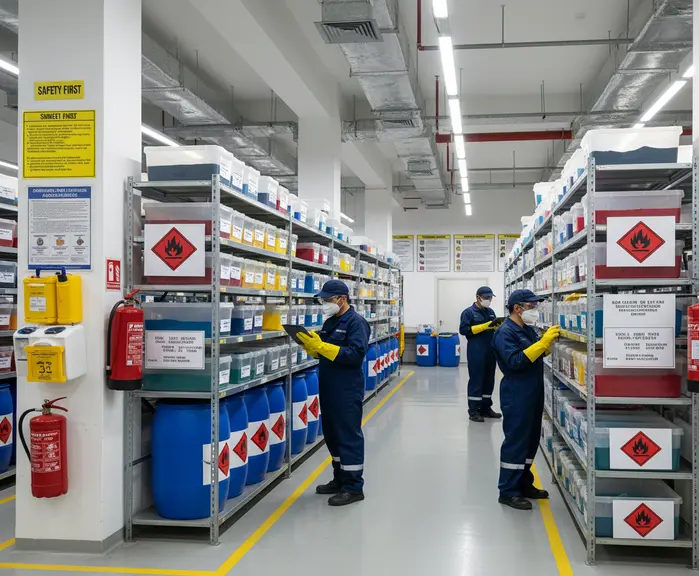
The standard operating procedure for storing textile dye and chemicals starts with the right suppliers and storage systems. Reliable sources, proper documentation, and consistent quality prevent surprises.
Storage systems—racks, cabinets, containment trays—must match chemical type and environment. Ventilation, temperature control, and fire-resistant materials complete the setup. Together, supplier choice and storage design create a smooth, safe, and predictable operation.
FAQs
Why is a standard operating procedure for storing textile dye and chemicals important?
It ensures safety, prevents contamination, preserves chemical quality, and minimizes accidents in storage and handling areas.
How should chemicals be segregated?
Dyes, acids, bases, and flammables should have dedicated storage zones, using color-coded racks or cabinets to avoid hazardous interactions.
What protective gear is necessary in chemical storage areas?
Gloves, goggles, masks, aprons, and safety shoes are essential to prevent exposure to harmful chemicals.
How often should storage areas be inspected?
Regular inspections, ideally weekly or monthly, check container integrity, label clarity, and environmental conditions like temperature and humidity.
What documentation is required?
Delivery logs, inspection reports, spill records, safety drill logs, and disposal records are needed to ensure compliance and traceability.
How can suppliers affect chemical storage safety?
Reliable suppliers provide consistent quality, proper labeling, and safety data sheets, reducing risk and simplifying storage management.
What steps should be taken in case of a chemical spill?
Alert staff, contain the spill, wear protective gear, clean using absorbents or neutralizers, and document the incident immediately.