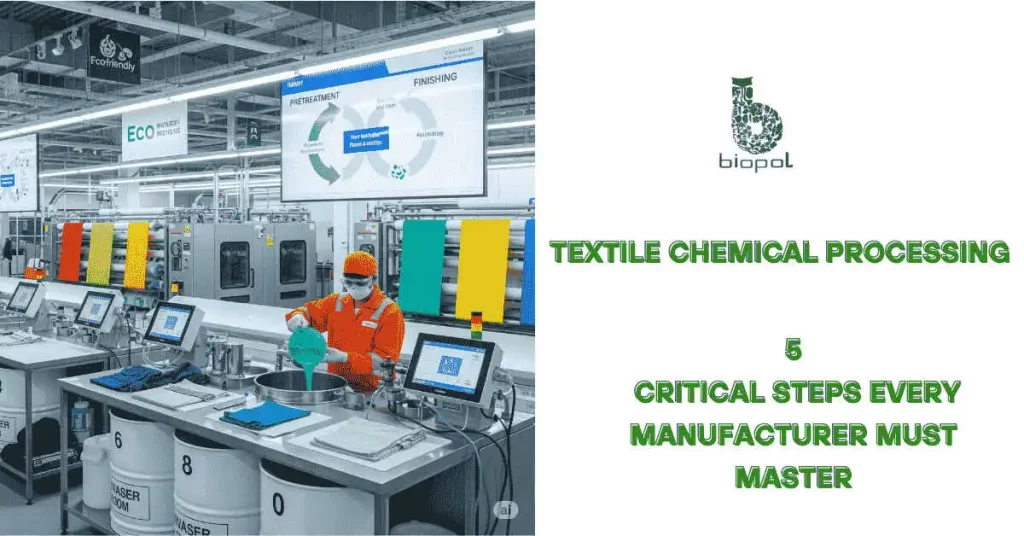
Textile chemical processing drives the transformation of raw fabrics into high-performance textiles through targeted chemical treatments. Each stage—from pretreatment to finishing—affects durability, aesthetics, and sustainability. Understanding these processes is essential for quality control, compliance, and market success. Explore the key steps and smart choices shaping modern textile production.
Table of Contents
Textile Chemical Processing Explained
Textile chemical processing refers to the systematic treatment of fibers, yarns, and fabrics using chemical agents to modify physical and visual properties. From raw cotton to wrinkle-resistant shirts, this process drives transformation.
Textile chemical processing unfolds in sequential stages—each solving a functional challenge or enhancing fabric quality:
- Pretreatment: Removes impurities, oils, and sizing agents (e.g., desizing, scouring, bleaching)
- Dyeing and Printing: Adds color using reactive, disperse, or vat dyes
- Finishing: Applies softeners, repellents, flame retardants, or antimicrobial agents
Is it science? Certainly. But it’s also strategy. Every treatment affects dye uptake, handle, and durability. Efficiency, water conservation, and safer auxiliaries are now essentials—not preferences.
Whether the goal is color brilliance, technical strength, or a luxurious drape, textile chemical processing defines the outcome.
Pretreatment Methods That Matter
Textile chemical processing begins with pretreatment—the foundation of fabric performance. Skipping it? Expect uneven dyeing, rough textures, and costly failures.
Three key stages set the stage:
| Step | Purpose | Chemicals Used |
| Desizing | Removes sizing agents like starch | Enzymes, mild acids, or oxidizers |
| Scouring | Eliminates oils, waxes, and pectins | Sodium hydroxide or other alkalis |
| Bleaching | Breaks down natural pigments | Hydrogen peroxide, sodium hypochlorite |
Desizing strips away weaving aids. Scouring increases absorbency. Bleaching provides a uniform base for color. Textile chemical processing fails when these are rushed or incomplete.
Coloration: Dyeing to Printing
In textile chemical processing, coloration is chemistry with a visual punch. Without proper dyeing or printing, even the finest fabric fails to sell—or survive the first wash.
Two dominant techniques rule:
- 1. Dyeing – Saturated, Permanent Color
- Immerses fabric or yarn in a dye bath. The result? Bonded, long-lasting shades.
- Cotton: Uses reactive or vat dyes
- Polyester: Needs disperse dyes and carriers
- Wool/Silk: Works with acid dyes for vibrant depth
- 2. Printing – Patterned, Precision Color
- Applies localized color to create designs:
- Rotary Screen: Efficient for large runs
- Digital Print: Sharp and sustainable
- Pigment Printing: Surface-level designs with less penetration
- Coloration in textile chemical processing must pass the test—lightfast, washfast, and eye-catching.
Fabric Finishing Made Functional
Fabric finishing gives textiles their final character. In textile chemical processing, this stage transforms usability, texture, and resilience.
Mechanical Finishes: Shape and feel without chemicals
- Calendaring: Smooths with heat
- Raising: Adds softness (flannel)
- Sanforizing: Pre-shrinks for stability
Chemical Finishes: Where performance kicks in
| Finish | Function |
| Softeners | Smooth handfeel, better drape |
| Water Repellents | Resist moisture, spills |
| Antimicrobial Agents | Control odor and bacteria |
| Flame Retardants | Enhance safety standards |
Overdoing it? A common pitfall. Excessive treatment can stiffen fabric or impair breathability. In textile chemical processing, finishing must be precise, not excessive.
Green Shifts in Processing
Textile chemical processing is under pressure to change—fast. Environmental scrutiny, rising compliance costs, and shifting customer expectations leave no room for wasteful practices.
The pivot to sustainability includes:
| Technique | Environmental Gain |
| Enzyme Pretreatment | Cuts chemical load, improves effluent |
| Low Liquor Ratio Dyeing | Reduces water and energy consumption |
| Bio-based Finishes | Minimizes synthetic input |
Global initiatives like ZDHC are no longer suggestions—they’re market-entry requirements. Textile chemical processing must now balance performance with responsibility.
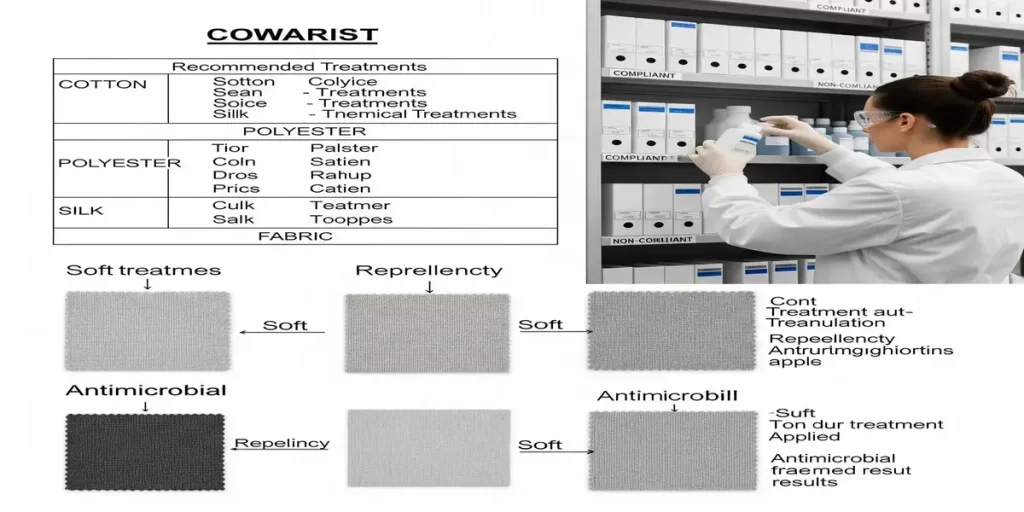
Choose the Right Chemicals
Textile chemical processing doesn’t forgive poor planning. The wrong chemistry on the wrong fabric? It shows—literally and financially.
| Fabric Type | Chemical Compatibility |
| Cotton | Handles alkalis, works with reactive dyes |
| Polyester | Needs disperse dyes and thermal cures |
| Wool/Silk | Requires gentle acids, low-heat chemistry |
| Blends | Demands dual-compatible auxiliaries |
Before treating a fabric, ask:
- Will the chemical survive repeated washing?
- Is it compliant with current regulations?
- Does it match the dye and finishing steps?
Selecting the right chemistry enhances lifespan, protects the brand, and supports consistent output. In textile chemical processing, chemical choice is not just technical—it’s commercial.
For deeper insights into compliance, formulation standards, and safe handling protocols, see our full textile chemical management article.
FAQs
What are the chemical processes of textile?
Textile chemical processing includes a sequence of treatments that alter fabric properties using chemical agents. Key processes involve desizing (removing sizing agents), scouring (eliminating oils and waxes), bleaching (whitening fibers), dyeing and printing (adding color), and finishing (enhancing performance with softeners, repellents, or antimicrobials). Each process is essential for producing high-quality, market-ready textiles.
What are the 4 main textile processes?
The four main stages in textile production, especially where chemical processing is concerned, include:
Pretreatment – Cleans and prepares fabric for subsequent steps
Coloration – Applies color via dyeing or printing techniques
Finishing – Adds functionality such as softness, durability, or resistance properties
Drying & Curing – Fixes treatments through controlled heat exposure
These stages form the foundation of modern textile manufacturing workflows.
What chemicals are used in textiles?
A wide variety of chemicals are used based on fabric type and process objective. Common ones include:
Sodium hydroxide – Used in scouring and mercerizing
Hydrogen peroxide – A standard bleaching agent
Reactive, disperse, or acid dyes – For coloration
Surfactants and wetting agents – Enhance penetration and uniformity
Silicones, softeners, and resins – For texture and wrinkle control
Flame retardants and antimicrobial agents – For functional finishing
Chemical selection is precise and purpose-driven in textile chemical processing.
What are the methods of chemical processing?
Chemical processing in textiles is carried out through several methods:
Batch Processing – Treats fabric in discrete loads (e.g., jet or winch dyeing)
Continuous Processing – Fabric passes through chemical baths without interruption (e.g., pad-dry-cure)
Semi-Continuous Processing – Combines elements of batch and continuous systems
Foam and Spray Application – Reduces water and chemical use, particularly in finishing
Method selection depends on production scale, fabric type, and required finish quality.
Sources
- https://www.cbse.gov.in/publications/vocational/Textile%20Design/CBSE%20CIT%20Textile%20Chemical%20Processing-XII%20text.pdf
- • https://www.sciencedirect.com/topics/engineering/textile-processing
- • https://www.textilesresources.com/articles/top-chemicals-used-in-the-textile-industry/
- • https://www.slideshare.net/slideshow/textile-chemical-processing-1stpdf/256138629