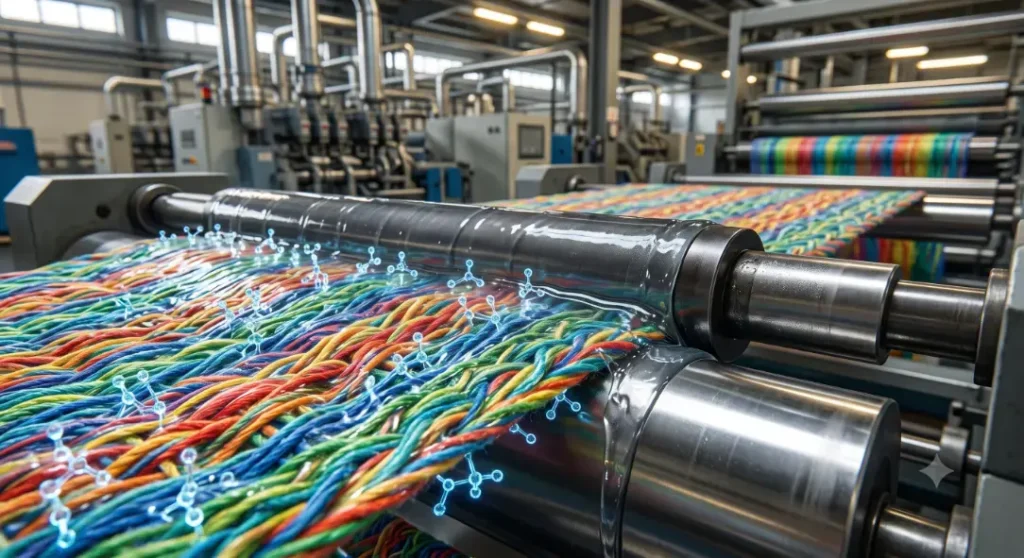
In textile processing, achieving the perfect balance of softness, durability, absorbency, and fabric appearance requires more than just quality fibers—it requires the right finishing chemicals. Among these, silicones play a vital role in delivering premium fabric performance across apparel, home textiles, denim, technical textiles, and industrial fabrics.
At Biopol Chemicals Limited, silicone-based textile chemicals are designed for applications across pre-treatment, dyeing, printing, finishing, and garment wet processing, helping textile manufacturers improve fabric quality and processing efficiency. (Biopolchemicals)
Why Are Silicones Important in Textile Finishing?
Silicone finishes offer multiple performance benefits that enhance both fabric quality and manufacturing efficiency.
Key Benefits
- Excellent softness and smooth hand feel
- Improved fabric drape
- Better sewing performance
- Reduced fiber friction
- Enhanced tear and abrasion resistance
- Long-lasting finish after washing
- Suitable for cotton, polyester, blends, and technical textiles
Also Read: Silicones
Types of Silicones Used in Textile Chemicals
Different types of silicone silicone formulations are developed to meet different textile finishing requirements.
| Silicone Type | Main Benefit | Ideal Applications |
| Amino Silicone | Superior softness | Cotton, knitwear, denim |
| Hydrophilic Silicone | Softness with absorbency | Towels, sportswear |
| Macro Silicone Emulsion | Economical surface finish | General textile finishing |
| Micro Silicone Emulsion | Deep fiber penetration | Premium garments |
| Nano Silicone | Luxury fabric feel | Technical & high-end textiles |
| Block Silicone | Low yellowing | White & pastel fabrics |
| Reactive Silicone | Excellent wash durability | Uniforms, industrial fabrics |
| Silicone Elastomer | Stretch and recovery | Activewear & performance fabrics |
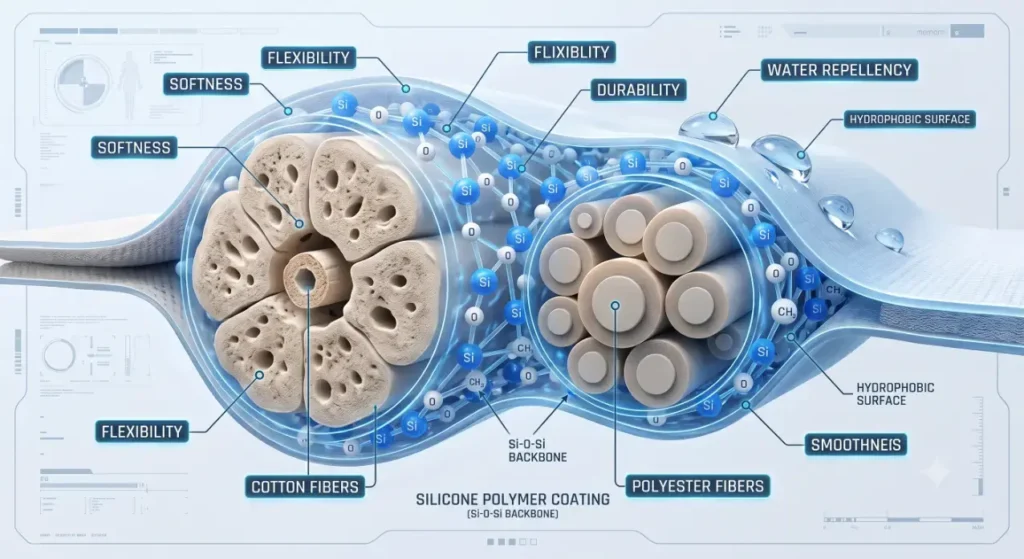
1. Amino Silicone
Amino types of silicones is one of the most widely used textile softeners because it delivers a rich, silky hand feel while improving fabric durability.
Advantages
- Excellent softness
- Smooth fabric surface
- Good elasticity
- Durable finish
Common Applications
- Cotton fabrics
- Denim
- Knitwear
- Home textiles
2. Hydrophilic Silicone
Hydrophilic types of silicones is specially designed for fabrics that require softness without compromising water absorbency.
Advantages
- High absorbency
- Moisture management
- Soft finish
- Breathable fabric feel
Common Applications
- Towels
- Sportswear
- Baby garments
- Medical textiles
3. Macro Silicone Emulsion
Macro types of silicones emulsions mainly remain on the fabric surface, making them a practical and cost-effective finishing solution.
Advantages
- Easy application
- Good lubrication
- Economical
- Consistent finish
Suitable For
- Woven fabrics
- Standard textile processing
4. Micro Silicone Emulsion
Micro silicone emulsions contain finer particles that penetrate deeper into fibers, providing enhanced softness and flexibility.
Advantages
- Better penetration
- Uniform finish
- Improved softness
- Long-lasting performance
Suitable For
- Fashion fabrics
- Premium cotton
- High-quality woven textiles
5. Nano Silicone
Nano silicone technology offers advanced finishing with ultra-fine particles that improve overall fabric performance.
Advantages
- Premium softness
- Better abrasion resistance
- Enhanced durability
- High-quality appearance
Suitable For
- Luxury apparel
- Technical textiles
- Performance fabrics
6. Block Silicone
Block silicones are engineered to provide stable processing while minimizing yellowing, especially on light-colored fabrics.
Advantages
- Low yellowing
- Stable emulsion
- Balanced softness
- Excellent compatibility
Suitable For
- White fabrics
- Polyester blends
- Dyed textiles
7. Reactive Silicone
Reactive silicones chemically bond with textile fibers, resulting in finishes that remain effective even after repeated laundering.
Advantages
- High wash durability
- Permanent softness
- Improved finish retention
Suitable For
- Industrial textiles
- Workwear
- Uniforms
8. Silicone Elastomer
Silicone elastomers improve flexibility and stretch recovery while maintaining a soft fabric feel.
Advantages
- Excellent resilience
- Stretch recovery
- Smooth touch
- Shape retention
Suitable For
- Activewear
- Stretch denim
- Performance apparel
How to Select the Right Silicone?
Choosing the correct types of silicones Adepends on the desired fabric properties.
| Fabric Requirement | Recommended Silicone |
| Maximum Softness | Amino Silicone |
| High Absorbency | Hydrophilic Silicone |
| Premium Finish | Nano Silicone |
| Cost-Effective Processing | Macro Silicone |
| Deep Penetration | Micro Silicone |
| Low Yellowing | Block Silicone |
| High Wash Fastness | Reactive Silicone |
| Stretch Recovery | Silicone Elastomer |
Silicone Solutions from Biopol Chemicals
Biopol Chemicals Limited offers a comprehensive range of silicone-based textile chemicals for textile wet processing. Their portfolio supports applications such as softness enhancement, hydrophilic finishes, emulsions, dyeing and printing auxiliaries, and garment processing. The company also provides specialized product ranges for softness, lustre, and lubricity to meet diverse textile finishing requirements. (Biopolchemicals)
Conclusion
Selecting the right types of silicones is essential for achieving consistent textile quality, improved processing efficiency, and enhanced fabric performance. Whether the goal is superior softness, better absorbency, long-lasting durability, or premium aesthetics, each silicone type offers unique advantages for specific textile applications.
With a broad portfolio of innovative textile chemicals and silicone solutions, Biopol Chemicals Limited helps textile manufacturers achieve reliable finishing performance while meeting the evolving demands of the global textile industry. (Biopolchemicals)
Frequently Asked Questions
Which type of silicone is best for soft cotton fabrics?
Among the different types of silicones, amino silicone is the preferred choice for achieving a soft, silky finish on cotton, knitted fabrics, and denim.
2. Which type of silicone is suitable for towels?
Among the various types of silicones, hydrophilic silicone is ideal for towels because it provides excellent softness while maintaining high water absorbency and moisture management.
3. What is the difference between macro and micro silicone?
The main difference between these types of silicones is that macro silicone primarily coats the fabric surface, while micro silicone penetrates deeper into the fibers, delivering enhanced softness, flexibility, and durability.
4. Why are reactive silicones used in textile finishing?
1. Which type of silicone is best for soft cotton fabrics?
Among the different types of silicones, amino silicone is the preferred choice for achieving a soft, silky finish on cotton, knitted fabrics, and denim.
2. Which type of silicone is suitable for towels?
Among the various types of silicones, hydrophilic silicone is ideal for towels because it provides excellent softness while maintaining high water absorbency and moisture management.
3. What is the difference between macro and micro silicone?
The main difference between these types of silicones is that macro silicone primarily coats the fabric surface, while micro silicone penetrates deeper into the fibers, delivering enhanced softness, flexibility, and durability.
4. Why are reactive silicones used in textile finishing?
Among the advanced types of silicones, reactive silicones chemically bond with textile fibers, providing superior wash durability, long-lasting softness, and improved fabric performance.
Also Read: Silicone Temperature Resistance: 7 Critical Facts Explained