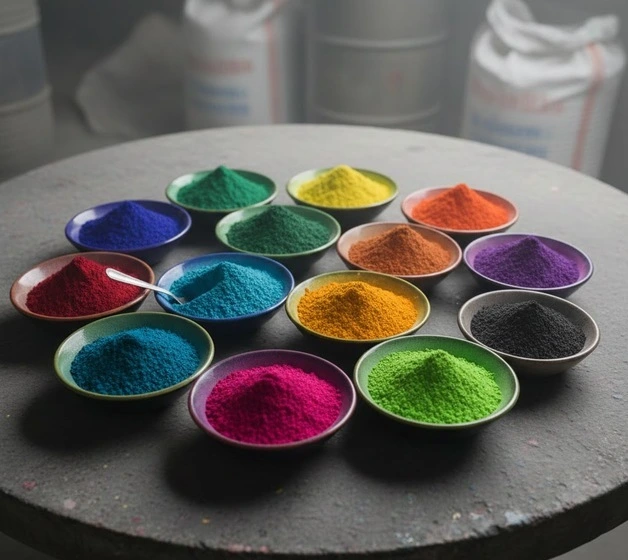
A leading textile dyes chemical manufacturer is an industrial entity specializing in producing dyes and colorants used for fabric processing across cotton, polyester, and blended materials. These manufacturers combine chemical engineering and sustainable innovation to meet the textile sector’s performance and environmental goals. What differentiates them is their adherence to international standards and commitment to eco-friendly dye production.
KEY TAKEAWAYS
- Leading textile dyes chemical manufacturers emphasize sustainable and compliant production.
- India is a global hub for reactive and disperse dye exports.
- Major players include JAY Chemical Industries and Kiri Industries.
- Environmental and digital innovations define the next growth phase.
- Global textile coloration relies on chemistry, compliance, and circular
What Defines a Leading Textile Dyes Chemical Manufacturer?
A leading textile dyes chemical manufacturer demonstrates excellence through scale, innovation, and compliance.
Key defining factors include:
- Global production capacity and export network.
- R&D investment in reactive, azo-free, and low-water dyes.
- Sustainability certifications like OEKO-TEX®, Bluesign®, and ZDHC.
- Integrated chemical facilities ensuring consistent quality control.
Prominent examples include JAY Chemical Industries, Kiri Industries, and Archroma, all recognized for superior dye quality and green chemistry adoption.
How Do Leading Manufacturers Classify Textile Dyes?
Textile dyes are broadly classified based on fiber compatibility and chemical composition:
| Type | Application | Key Feature |
| Reactive Dyes | Cotton, viscose | High wash-fastness |
| Disperse Dyes | Polyester | Excellent thermal stability |
| Vat Dyes | Denim, cellulosic | Deep color penetration |
| Acid Dyes | Nylon, wool | Bright hue intensity |
| Direct Dyes | Cotton, paper | Cost-effective processing |
Leading producers continuously refine these dye classes to minimize effluent load and improve energy efficiency.
What Are the Primary Industrial Applications?
Manufacturers supply dyes to industries including:
- Apparel and fashion textiles
- Technical and automotive textiles
- Home furnishings and upholstery
- Printing inks and nonwoven materials
A textile dyes chemical manufacturer in India typically services both domestic mills and international garment exporters, contributing significantly to the country’s dye intermediates market.
How Are Environmental Regulations Influencing Production?
Environmental compliance is now central to production strategy.
Global leaders adopt:
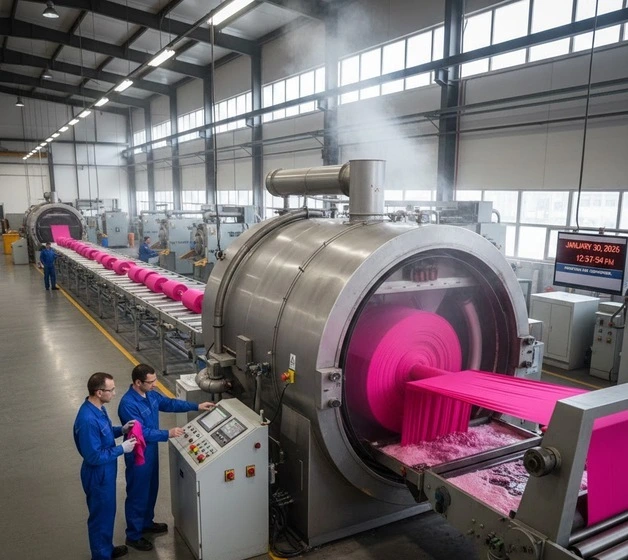
- Effluent treatment systems (ETPs) to reduce dye wastewater.
- Azo-free formulations to meet EU REACH and GOTS standards.
- Low-salt dyeing technology for water conservation.
- Circular production systems ensuring minimal chemical discharge.
This trend is reshaping the top 10 dye manufacturers in the world, encouraging green technology integration across the value chain.
Which Companies Lead the Global Market?
According to industry reports:
- JAY Chemical Industries Ltd – Among India’s top exporters, with advanced facilities in Saykha.
- Kiri Industries Ltd – Renowned for reactive dye specialization and global partnerships.
- Archroma and Huntsman Textile Effects – Dominant players in Europe and Asia.
- DyStar – Known for eco-compliant dye ranges and strong R&D ecosystem.
These companies collectively account for a substantial share of global reactive and disperse dye exports.
How Is India Positioned in the Global Textile Dye Market?
India remains one of the world’s largest producers and exporters of textile dyes and intermediates.
Key competitive strengths:
- Strong raw material base in Gujarat.
- Skilled chemical engineering workforce.
- Government-backed infrastructure for industrial dye parks.
- Expanding global demand for cost-efficient, eco-friendly dyes.
People also explore related categories such as textile auxiliaries, pigment dispersions, and finishing chemicals, which complement dyeing processes in modern textile manufacturing.
What Future Trends Define the Industry’s Growth?
Emerging developments include:
- Bio-based dye innovations using plant-derived pigments.
- AI-driven color prediction systems for precision dyeing.
- Integrated digital dye houses with automated shade matching.
- Collaborative R&D between manufacturers and fashion houses for circular design.
Such advancements strengthen India’s standing as a leading textile dyes chemical manufacturer worldwide.
Conclusion
The textile dye industry’s progress depends on regulatory alignment, sustainability, and R&D-driven growth. As major players such as JAY Chemical and Kiri Industries pioneer eco-smart production, the future lies in greener chemistry and global compliance networks. For a deeper understanding of the chemical landscape supporting dye production, explore the evolving domain of textile speciality chemicals manufacturers.
FAQ
Who is the world’s largest textile manufacturer?
China remains the world’s largest textile manufacturer, followed by India, the U.S., and Bangladesh.
What are the top 5 industrial chemicals?
Sulfuric acid, ethylene, ammonia, sodium hydroxide, and propylene rank among the top five globally.
Which chemical is mainly used in the textile industry?
Reactive dyes and auxiliaries like sodium carbonate and hydrogen peroxide are widely used.
What chemicals are used in fabric dyes?
Common dye chemicals include azo compounds, anthraquinones, indigo derivatives, and reactive dye intermediates.
Sources
- Mordor Intelligence – Textile Dye Market Companies Report
- Dial4Trade – Top 10 Textile Dyes Manufacturing Companies in India
- JAY Chemical Industries Official Website
- Global Textile Source – Textile Dyes & Chemicals Companies
- Kiri Industries Ltd Official Website
- Dyes & Pigments Blog – Best Reactive Dyes Companies in India
- Textile Pages – Textile Dyes and Chemicals Directory