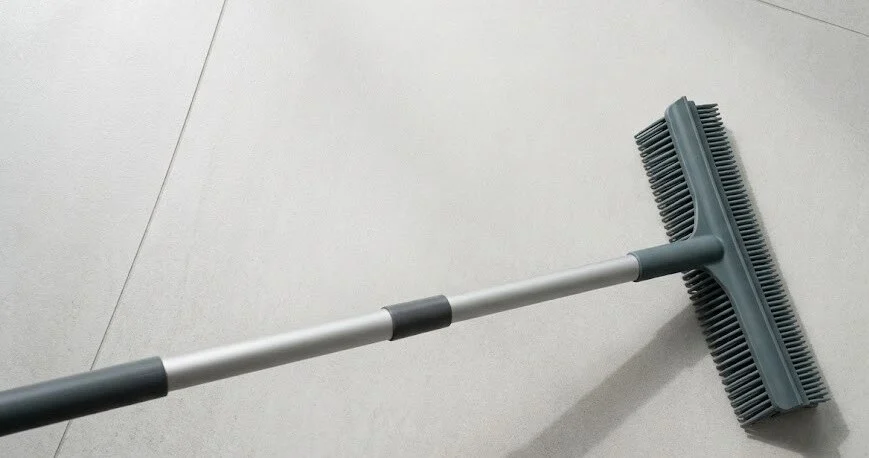
A silicone broom looks a bit strange the first time you see one. Silicone brooms come in a few designs, from a flat, flexible blade to short silicone bristles or a squeegee-and-bristle combination. Either way, it’s closer to a squeegee that has taken up sweeping.
Strange or not, it fixes problems ordinary brooms never quite solve: scattered pet hair, spreading puddles and bristles that stay grubby for weeks. Here is how it works, where it shines and where it doesn’t.
Key Takeaways
- The blade replaces bristles, so hair and crumbs get gathered instead of scattered.
- Water moves toward a drain, which cuts down on mopping.
- A quick rinse is all the cleaning it needs.
- Thick carpet, gravel and broken glass are not its strengths.
- Blade quality, handle length and head design matter more than the product name.
What Is a Silicone Broom and How Does It Work?
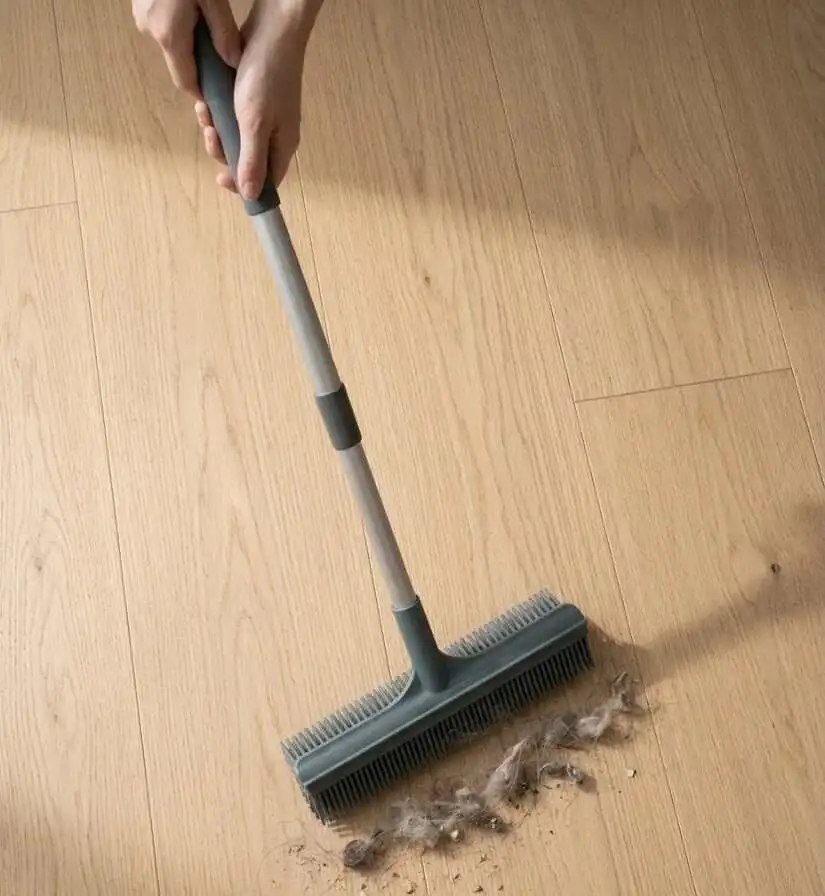
Think of it as a squeegee with a sweeper’s job. The head is a strip of soft, bendy silicone, often with a ridged edge, and you drag it across the floor so that hair, crumbs and liquid travel ahead of it.
Because the blade lies flat, it touches the floor along its whole length, so fine debris has far fewer gaps to slip through.
Most models add a telescopic handle and a head that pivots, so you can angle the blade under a sofa or into a corner. Shops sell the same idea as a silicone wiper broom, a silicone air broom or even a rubber broom. The labels are loose, and we’ll untangle them shortly.
Silicone Broom vs Traditional Broom: What Really Changes
A traditional broom flicks dry debris forward, which suits a garage or back step. Indoors, its weak points show up fast.
Bristles scatter fine dust and hair, soak up moisture and dry slowly, so they can start to smell. Hair and lint also wedge deep into the head.
A silicone blade flips most of that. It collects rather than flicks, shrugs off water and doesn’t hold on to grime. What it gives up is the scraping action of bristles, which is why a bristle broom still earns its place outdoors.
5 Reasons to Make the Switch
Here is where a silicone broom earns its keep in everyday life.
1. It Gathers Hair Without Tangling
Pet hair is where most people notice the difference. The soft blade grips strands lightly and rolls them into a tidy ridge instead of sending them flying. Long human hair behaves the same way.
Nothing winds around the blade, so a rinse or a quick wipe clears the pile.
2. It Moves Water Like a Squeegee
Wet floors are the second big win. Drag the blade across a damp bathroom floor and the water follows it to the drain. Kitchen spills and soggy entry mats take a few passes.
It won’t leave a floor completely dry, so finish with a towel where slipping is a worry. Even so, you’ll reach for the mop far less.
3. It Stays Clean and Holds Up Well
Silicone is non-porous, so it doesn’t soak up water, soap or odours the way fibres do. Hold the blade under a tap and the dirt slides off.
It also copes with heat, moisture and sunlight better than most natural fibres, so a decent blade can stay flexible for years. Very cheap blends can harden or curl, so quality matters.
4. It Reaches the Spots Bristles Miss
A pivoting head lets you turn the blade flat and slide it under beds, sofas and kitchen units. Measure the gap first, though, as many heads need roughly five centimetres (two inches) of clearance.
5. It Does More Than Sweep Floors
Many telescopic handles stretch far enough to reach windows, shower screens, mirrors and car glass. The same blade clears spilled cat litter, mud on a garage floor and rainwater on a patio table.
Where a Silicone Broom Falls Short
Thick carpet is the big one. The blade glides over the surface and can’t pull dust from deep in the fibres, so a vacuum usually does better.
Rough ground is another weak spot. On gravel or coarse concrete the soft edge folds over and wears faster, so a stiff outdoor broom suits better.
Broken glass can nick the blade, so use a dustpan and brush for that. You’ll also need a dustpan for dry mess, because the blade gathers the pile but doesn’t lift it. A lightly damp blade often picks up very fine dust more cleanly.
Silicone Wiper Broom, Silicone Air Broom or Rubber Broom?
Sellers use these names loosely, but a rough pattern holds. A silicone wiper broom usually has a wide, flat, squeegee-style blade that suits tile and water. A silicone air broom tends to have a softer blade and a pivoting head, often pitched at pet hair and tight spaces. A rubber broom uses firmer material that grips carpet and rough surfaces better but glides less smoothly on tile.
Blade vs Bristle Silicone Brooms
Blade types are the best fit for water and fine dust on hard floors. The flat edge touches the floor along its whole length, so liquid and powder travel ahead of it instead of slipping through gaps.
Bristle types suit pet hair on low-pile carpet. The short silicone bristles reach into the surface and pull hair loose, which a flat blade tends to skim over.
Which Surfaces Suit It Best?
| Surface | How it performs | Handy tip |
| Tile and vinyl | Excellent for hair, crumbs and water | Rinse the blade first so stray grit doesn’t scratch |
| Hardwood and laminate | Good; the soft edge is gentle | Wipe up spilled water promptly |
| Bathroom and shower floors | Excellent at moving water to the drain | Dry the blade before storing it |
| Low-pile rugs | Fair; lifts surface hair only | Use short strokes in one direction |
| Thick carpet | Poor | Use a vacuum instead |
| Garage and patio | Good for water and light debris | Switch to a stiff broom for gravel |
How to Choose the Right Silicone Broom
Quality varies, so a few checks can save you from a blade that curls within a month.
- Blade: Flexible but not floppy, and it should spring back when bent. Avoid stiff, strong-smelling blades and reviews mentioning curling.
- Width: Wide blades cover floors quickly. Narrower ones cope better with corners.
- Handle: A firm lock and a rust-resistant tube, such as aluminium or stainless steel.
- Head: A pivoting head helps under furniture. A fixed head gives better control on open floors.
- Clearance: Compare the head’s height with the gap under your furniture.
- Extras: A hanging hole helps it dry; spare blades are a bonus.
How to Use It Properly
- Work in one direction with short, overlapping strokes and light pressure.
- Gather dry debris into a pile and lift it with a dustpan.
- For spills, drag the water toward a drain or doorway, then finish with a towel.
How to Clean and Store It
Rinse the blade after every use, especially after gritty floors, because trapped grit can scratch delicate surfaces. Wash it with mild dish soap every few weeks.
Dry it, then hang it up or stand it blade-up, since resting on its edge for months can bend it for good. Keep it away from radiators, which can warp the plastic head.
Faqs
Does a silicone broom really work?
Yes, for hair, liquid spills, crumbs and fine debris on hard floors. It’s a poor match for deep carpet and rough outdoor ground, so treat it as a strong supporting tool, not a replacement for everything.
Is a silicone broom good for pet hair?
It’s one of its best uses. The blade rolls hair into a line instead of scattering it, and a silicone air broom with a pivoting head also reaches under furniture. Hair embedded in carpet still needs a vacuum.
Does a silicone broom work on carpet?
Only in a limited way. It can gather loose hair and lint from low-pile rugs, but it can’t dig dust out of thick carpet. A vacuum or a firmer rubber broom does that better.
Can you use a silicone broom on wet floors?
Yes, and it’s one of the best reasons to own one. It drags water toward a drain or doorway, so shower floors and kitchen spills need no mop. Expect a light film, and wipe it up if the floor is slippery.
How do you clean a silicone broom?
Rinse the blade under running water after each use. Every few weeks, wash it with warm water and mild dish soap, then let it dry fully before hanging it up.
Bottom Line
A silicone broom isn’t a cure-all, but for hair, spills and everyday messes on hard floors it beats bristles comfortably. Pick one by its blade quality, handle and head design, rinse it after use, and keep a vacuum or stiff broom for carpet and rough ground.
If your home has pets, tile or a damp bathroom, this is a low-cost upgrade that’s worth trying.