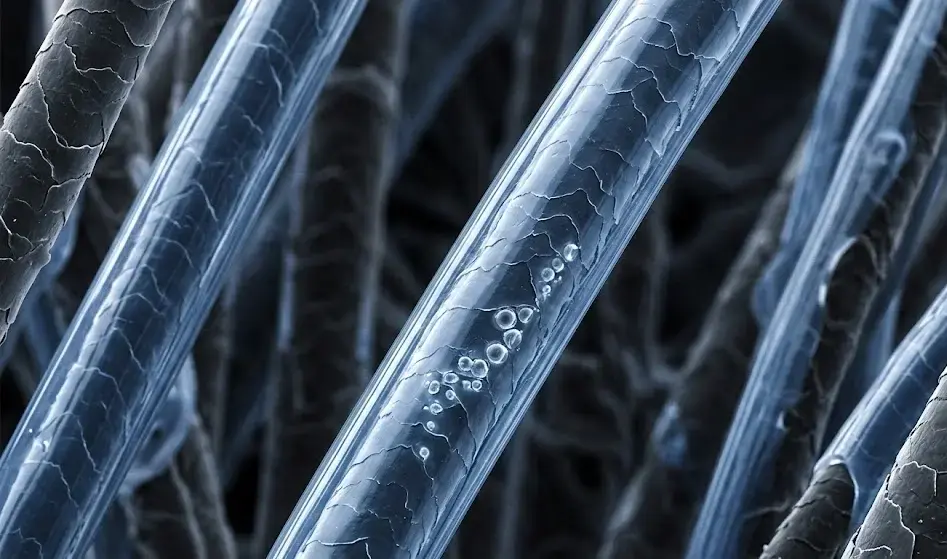
Derived from silica, silicones in haircare act as synthetic sealants that envelop hair fibers, reducing frizz while maintaining moisture and reflective shine. But how do they work, and are all silicones beneficial for every hair type?
Key Takeaways
- Silicones enhance shine, smoothness, and heat protection.
- Water-soluble silicones are ideal for buildup-free care.
- Ingredient labels reveal silicone presence through suffixes like “-cone.”
- Proper cleansing ensures balance between protection and buildup prevention.
- All silicones aren’t bad; their performance depends largely on your hair type and how the product is formulated.
What Are the Main Types of Silicones in Hair Products?
Silicones used in haircare fall into three main categories based on solubility and buildup potential:
| Type | Example Compounds | Water Solubility | Characteristics |
| Water-Soluble | Dimethicone copolyol, Lauryl methicone copolyol | Yes | Lightweight, easy to rinse |
| Non-Water-Soluble | Dimethicone, Cyclopentasiloxane | No | High shine, prone to buildup |
| Volatile | Cyclomethicone | Partial | Evaporates, adds temporary smoothness |
These distinctions determine how a silicone interacts with hair and cleansing products.
How to Identify Silicones in Hair Products?
To identify silicones, examine product ingredient labels for terms ending in “-cone,” “-conol,” or “-siloxane.”
Common examples include:
- Dimethicone
- Cyclopentasiloxane
- Amodimethicone
- Trimethylsiloxyamodimethicone
Silicone-free products often highlight this feature on their packaging for consumer clarity.
Are Silicones Safe to Use in Hair Products?
Most silicones approved for cosmetic use, such as Dimethicone, comply with international cosmetic safety standards like U.S. Food and Drug Administration and European Commission on Cosmetic Regulation.
Key safety notes:
- Non-toxic and non-irritating when used as directed
- May cause buildup on low-porosity or fine hair
- Do not penetrate the scalp or bloodstream

What Are Water-Soluble Silicones in Hair Products?
Water-soluble silicones are modified to rinse easily without harsh shampoos. Examples include:
- Dimethicone copolyol
- Lauryl methicone copolyol
- Hydrolyzed silicone polymers
These are suitable for co-washing or sulfate-free haircare systems, providing smoothness without buildup.
Consumers often compare these to natural oils like argan or jojoba for lighter moisture retention.
How Should You Use Silicones in Hair Products Effectively?
To maximize benefits and minimize buildup:
- Use a deep-cleansing clarifying shampoo from time to time to strip away accumulated silicones and restore hair vitality.
- Alternate silicone-based products with lightweight conditioners or leave-ins.
- Apply sparingly—focus on mid-lengths and ends.
- Pick water-soluble silicone products for low-poo or no-poo routines to ensure effortless removal and cleaner hair.
A hair product containing silicones is often discussed alongside natural conditioning agents, proteins, and thermal protectants used in styling formulations.
What Silicones Should Be Avoided in Hair Products?
Heavier, non-water-soluble silicones may weigh hair down or cause dullness over time. Avoid:
• Dimethicone copolyol → Modified silicone providing lightweight conditioning and easy rinsing.
• Lauryl methicone copolyol → Gentle, water-dispersible silicone offering smoothness without buildup.
• Hydrolyzed silicone polymers → Enhanced silicone compounds that improve strength, manageability, and shine.
Opt for lighter or modified silicones that offer similar benefits with better rinseability.
Conclusion
Silicones in hair products remain valuable for protection, manageability, and shine when used correctly. Selecting the right type—especially water-soluble silicones—ensures effective care without buildup or damage. For a deeper understanding of silicone behavior, explore how silicones in hair interact with various hair textures and product formulations.
FAQ
How to identify silicones in hair products?
Check for ingredients ending in “-cone,” “-conol,” or “-siloxane” on the label.
Are silicone products bad for hair
Generally safe; difficulties only appear when non-water-soluble silicones aren’t properly removed through regular washing.
Do I want silicone free hair products?
If you have fine, low-porosity, or curly hair, silicone-free or water-soluble options may perform better.
What silicones should I avoid in hair products?
Skip products with heavy silicones such as dimethicone or cetearyl methicone if your hair is prone to feeling coated.
Sources
https://olaplex.com/blogs/news/silicones-in-hair-products#:~:text=Silicones%20can%20protect%20the%20hair,on%20your%20unique%20hair%20needs.
https://www.reddit.com/r/HaircareScience/comments/1woutk/all_about_silicones/
https://odelebeauty.com/blogs/the-rinse/are-silicones-bad-for-hair?srsltid=AfmBOoqmXVKXMCRYCz2lvzKgYKi3QiH_cesDHXDCTJG7HAX2ddghVxvF
https://pubmed.ncbi.nlm.nih.gov/40641805/
https://prose.com/blog/silicones?srsltid=AfmBOopMeY2BT32VCcqXNpYspFCJPjXsMKDYZvg3cX6jHpYAxIJ70eZl
https://www.beautycon.com/article/top-10-products-with-cones
https://www.vogue.in/beauty/content/how-bad-are-silicones-for-your-hair-really-we-investigate