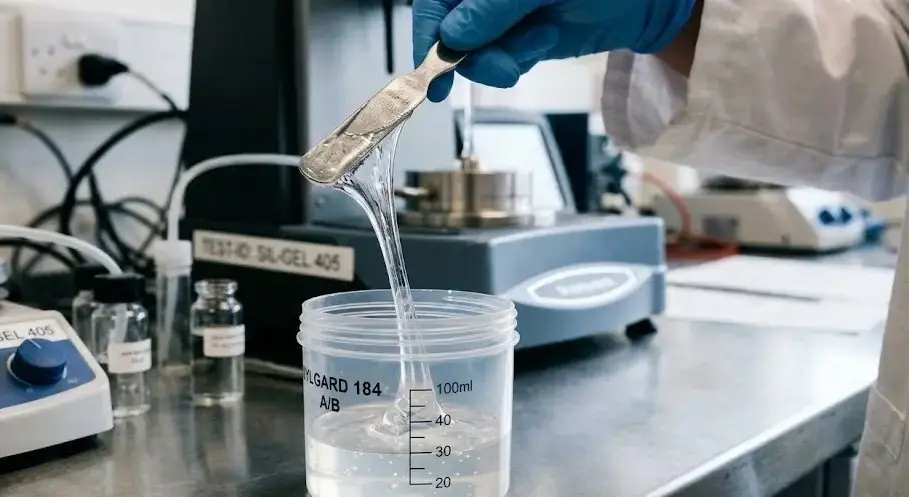
Silicones in primary forms are organosilicon polymers supplied as raw materials before they are processed into finished silicone products. These compounds feature continuous silicon–oxygen chains paired with organic groups such as methyl or phenyl. They are widely traded chemical intermediates used to produce sealants, lubricants, coatings, and elastomers. Why are these primary forms important for manufacturing industries worldwide?
Key Takeaways
- Silicones in primary forms are unprocessed silicone polymers used as industrial raw materials.
- These materials are classified internationally under HS Code 3910.
- The siloxane (Si–O–Si) backbone gives silicones their stability and flexibility.
- Primary forms include fluids, elastomer bases, and resins.
- They serve as essential inputs for manufacturing sealants, lubricants, coatings, and rubber products.
What Are Silicones in Primary Forms?
Silicones in primary forms refer to unprocessed silicone polymers supplied as industrial raw materials. For international commerce, these materials fall under the classification HS Code 3910.
Common primary forms include:
- Silicone fluids – liquid polymers used in lubrication and cosmetics
- Silicone resins – solid or semi-solid materials used in coatings
- Silicone elastomer bases – polymer compounds used to create rubber products
These primary forms serve as the foundation for a wide range of industrial silicone products.
| Form | Physical State | Typical Application |
| Fluids | Liquid | Lubricants, hydraulic fluids |
| Elastomers | Semi-solid | Sealants, gaskets |
| Resins | Solid | Protective coatings |
What Is the Chemical Structure of Silicones in Primary Forms?
Silicones in primary forms are built around a siloxane framework where silicon and oxygen atoms alternate.
Basic structural characteristics include:
- Repeating Si–O–Si bonds
- Organic side groups such as methyl (–CH₃) or phenyl (–C₆H₅)
- Flexible polymer chains
This structure provides several important properties:
- High thermal stability
- Resistance to oxidation
- Low surface tension
- Chemical inertness
The siloxane bond is stronger and more flexible than many carbon-based polymer chains.
How Are Silicones in Primary Forms Manufactured?
Silicones in primary forms are produced through a multi-step industrial process that converts silica into organosilicon polymers.
Main production steps:
- Silicon production
- Silica (SiO₂) is reduced with carbon to produce elemental silicon.
- Organosilicon compound formation
- Silicon reacts with methyl chloride to form chlorosilanes.
- Hydrolysis and polymerization
- Chlorosilanes react with water to produce silanols that polymerize into silicone polymers.
- Purification and formulation
- The resulting polymers are refined into fluids, resins, or elastomer bases.
These base materials are then sold as primary industrial silicone products
What Are the Key Properties of Silicones in Primary Forms?
These silicones in primary forms offer properties that are beneficial for various engineering and production uses.
Important characteristics include:
- Thermal stability (–50°C to above 200°C)
- Hydrophobic behavior
- Electrical insulation
- Chemical resistance
- Flexibility over wide temperature ranges
Because of these properties, silicone-based materials outperform many conventional polymers in demanding environments
How Are Silicones in Primary Forms Classified?
Silicones in primary forms are grouped according to their structural composition and usage.
Primary classifications:
- Silicone Fluids
- Linear polysiloxane chains
- Used in lubricants and hydraulic systems
- Silicone Elastomers
- Cross-linked polymers
- Used for sealants, rubber components, and medical devices
- Silicone Resins
- Highly cross-linked structures
- Used in coatings, paints, and electrical insulation
People exploring this topic often also review related concepts such as structure of silicones, properties of silicones, preparation of silicones, and types of silicones.
Why Are Silicones in Primary Forms Important in Global Trade?
Silicones in primary forms are traded internationally as chemical intermediates for manufacturing industries.
Key trade facts:
- Classified under HS Code 3910
- Used by industries such as:
- Automotive
- Electronics
- Construction
- Healthcare
- Personal care manufacturing
Many countries import these materials as raw inputs for producing silicone-based finished goods.
Conclusion
Silicones in primary forms represent the foundational stage of silicone materials used across modern manufacturing industries. Their siloxane structure, stability, and versatile classifications make them essential chemical intermediates. Understanding these base materials also helps explain the broader industrial applications and uses of silicones in products ranging from electronics to construction materials.
FAQ
What are silicones in primary forms?
Silicones in primary forms are raw organosilicon polymers supplied before processing into finished silicone materials such as elastomers, resins, or fluids.
What is the HS code for silicones in primary forms?
Silicones in primary forms are generally classified under HS Code 3910 in international trade systems.
What industries use silicones in primary forms?
Silicone base materials support the production of specialized goods across industries like automotive, electronics, construction, healthcare, and cosmetics.
What properties make silicones valuable?
Silicones are valued for thermal stability, flexibility, electrical insulation, water resistance, and chemical durability.
How are silicones produced?
Silicones are produced by reacting silicon with methyl chloride to form chlorosilanes, followed by hydrolysis and polymerization into siloxane polymers
Sources
https://allen.in/jee/chemistry/silicones
https://en.wikipedia.org/wiki/Silicone
https://byjus.com/jee/silicones/
https://www.cybex.in/hs-codes/silicones-in-primary-forms-heading-3910
https://www.credlix.com/hsn-code/39100090
https://oec.world/en/profile/hs/silicones-primary-forms
https://www.hubco.in/gst/hsn/3910-gst-tax-rate-on-silicones-in-primary-forms?srsltid=AfmBOooZoSNlZJU-v-hUQ12g8k3EdKl2BrQbp3OxO887ecO9mSoi3G2f
https://www.seair.co.in/hs-codes/heading-3910-silicones-primary-forms.aspx
https://www.britannica.com/science/silicone