What are silicones made from? These polymers, known as silicones, consist mainly of silicon, oxygen, carbon, and hydrogen arranged in a repeating polysiloxane network.
These materials originate from silica, a compound commonly found in sand, which undergoes chemical processing to create silicon-based intermediates. These resulting polymers offer advantages such as stability under high temperatures, flexibility, and protection against chemical reactions, making them useful in many modern technologies.
Key Takeaways
- Silicones are synthetic polymers composed of silicon, oxygen, carbon, and hydrogen.
- They originate from silica found in sand, which is chemically converted into silicon.
- The repeating Si–O–Si polysiloxane structure gives silicones unique stability.
- Silicone is different from both silicon (element) and plastic (carbon polymers).
- Industrial manufacturing involves reduction, hydrolysis, and polymerization processes.
- Many industries, including electronics, healthcare, cosmetics, and construction, rely on silicones for various applications.
What Are Silicones Made From in Basic Chemical Terms?
When examining what silicones are made from, the core chemical composition consists of several fundamental elements.
Primary elements in silicone materials
| Component | Role in Silicone |
| Silicon | Forms the backbone of silicone polymers |
| Oxygen | Links silicon atoms together |
| Carbon | Creates organic side groups |
| Hydrogen | Stabilizes molecular bonds |
These elements form polysiloxane chains, which are repeating units of Si–O–Si bonds. This structural design enables silicone to withstand temperature fluctuations while retaining flexibility and chemical stability.
What Raw Materials Are Used to Produce Silicones?
Understanding what silicones are made from requires examining the raw materials used in manufacturing.
Key raw materials include:
- Silica (SiO₂) – derived from sand or quartz
- Carbon – used in the reduction process
- Methyl chloride – provides organic groups
- Water and catalysts – used in hydrolysis reactions
The production process generally involves these steps:
- Silica is reduced with carbon to produce metallurgical-grade silicon.
- Silicon reacts with methyl chloride to form organosilicon compounds.
- Hydrolysis converts these compounds into siloxane polymers.
- Polymerization produces silicone oils, resins, or elastomers.
This chemical transformation explains why silicone is often associated with sand but is not simply sand itself.
What Is the Molecular Structure of Silicones?
To understand what silicones are made from, it is essential to examine their molecular structure.
The structure of silicones consists of repeating polysiloxane units:
Each silicon atom can attach to organic groups such as:
- Methyl (–CH₃)
- Phenyl (–C₆H₅)
- Vinyl groups
This structure provides several important properties:
- High thermal resistance
- Flexibility at low temperatures
- Water repellence
- Chemical stability
The unique Si–O backbone distinguishes silicone materials from traditional carbon-based plastics.
Is Silicone Made From Plastic or Sand?
A common question related to what silicones are made from is whether silicone is plastic or derived from sand.
Key distinctions
| Material | Composition | Classification |
| Silicon | Chemical element | Semiconductor material |
| Silicone | Silicon-oxygen polymer | Synthetic elastomer |
| Plastic | Carbon-based polymer | Synthetic polymer |
Silicone begins with silica found in sand, but after chemical processing it becomes a synthetic polymer distinct from plastic.
For context, discussions about silicones often appear alongside topics such as silicone vs silicon, uses of silicones, and whether silicone is biodegradable.
How Are Silicones Manufactured Industrially?
Industrial production explains practically what silicones are made from and how they are created.
Typical manufacturing process
- Silica reduction
- Quartz sand + carbon heated in electric furnaces
- Produces pure silicon
- Direct process
- Silicon reacts with methyl chloride
- Creates methylchlorosilanes
- Hydrolysis
- Chlorosilanes react with water
- Forms silanols and siloxanes
- Polymerization
- Siloxanes link into long polymer chains
- Compounding
- Additives produce specific materials:
- Silicone rubber
- Silicone oil
- Silicone resin
- Additives produce specific materials:
This controlled synthesis allows manufacturers to tailor silicone properties for specialized industrial uses.
Why Are Silicones Used Across Many Industries?
Understanding what silicones are made from also explains their widespread applications.
Common uses of silicones
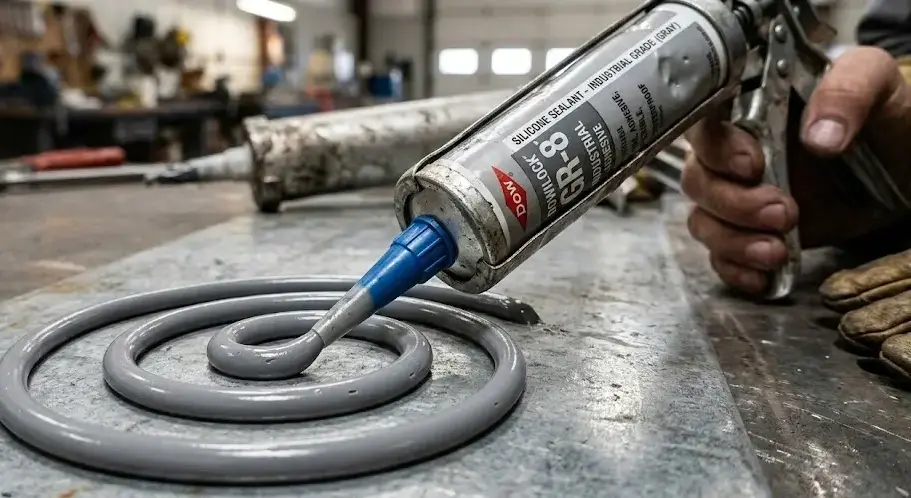
- Electronics insulation and sealants
- Medical implants and tubing
- Cosmetic formulations and skin products
- Construction sealants and adhesives
- Automotive gaskets and lubricants
Their chemical stability, resistance to UV radiation, and ability to withstand extreme temperatures make silicones particularly valuable in high-performance environments.
Conclusion
Silicones are engineered polymers created primarily from silicon, oxygen, carbon, and hydrogen through controlled chemical reactions starting with silica derived from sand. Their polysiloxane structure provides exceptional durability, flexibility, and temperature resistance.
Understanding their composition helps clarify how these materials differ from plastics and why they play a vital role in modern manufacturing. For deeper foundational context, readers may also explore what is silicones, which explains the classification and properties of these versatile polymers.
FAQ
What is 100% silicone made of?
Fully pure silicone is built mainly from polysiloxane polymers consisting of silicon, oxygen, carbon, and hydrogen atoms connected through repeating Si–O chains.
Is silicone unhealthy like plastic?
Silicone is generally considered chemically stable and inert, making it less likely to leach harmful substances compared with many conventional plastics.
What is the main ingredient in silicone?
The main ingredient in silicone is silicon, derived from silica found in sand and chemically combined with oxygen to form the polymer backbone.
Are silicones unhealthy?
Most silicones used in consumer products are considered safe and non-toxic because they are chemically stable and resistant to degradation.
Is silicone biodegradable?
Silicone is not readily biodegradable, but it is highly durable and resistant to environmental breakdown due to its strong silicon-oxygen bonds.
Sources
https://en.wikipedia.org/wiki/Silicone
https://www.vedantu.com/question-answer/what-is-silicone-made-of-class-11-chemistry-cbse-60cb38b185f4b97ae2f17514
https://askfilo.com/user-question-answers-smart-solutions/what-are-silicones-how-are-they-obtained-discuss-the-3334353236363134
https://www.shaalaa.com/question-bank-solutions/what-are-silicones_173850
https://www.simtec-silicone.com/blogs/how-is-silicone-produced/
https://byjus.com/jee/silicones/
https://www.shinetsusilicone-global.com/info/begin1.shtml
https://magazine.elkem.com/faq/how-is-silicone-made/
https://www.silicones.eu/science/production/chemistry-grinding/