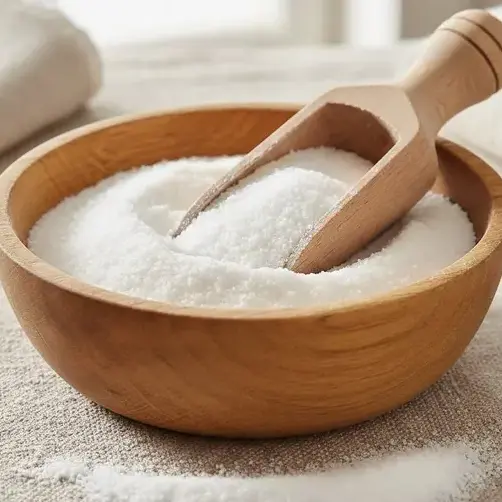
A textile starching chemical is a substance applied to yarns and fabrics to increase stiffness, strength, and smoothness before weaving or finishing. It forms a thin film on fiber surfaces to reduce breakage and friction during mechanical operations. Why are these chemicals indispensable in modern textile manufacturing?
Key Takeaways
- Textile starching chemicals improve stiffness and weaving efficiency.
- Natural, modified, and synthetic variants offer flexibility by application.
- Bio-based and nano starches represent the future of sustainable sizing.
- Proper formulation prevents breakage and ensures high loom performance.
- India offers cost-effective, customizable starching chemical solutions.
What is a textile starching chemical and how does it function?
Textile starching chemicals act as film-forming agents that coat the yarn surface to improve handle and mechanical strength. Their key roles include:
- Reducing hairiness and friction during weaving
- Enhancing yarn tensile strength and abrasion resistance
- Improving fabric stiffness and appearance
Common chemical bases include:
| Type | Example | Function |
| Natural starch | Maize, tapioca, potato | Biodegradable stiffener |
| Modified starch | Oxidized or esterified starch | Improved adhesion |
| Synthetic polymer | Polyvinyl alcohol (PVA), acrylics | High-performance sizing |
What are the types and formulations of textile starching chemicals?
Formulations vary by fiber type, process, and end-use. The general textile starching chemical formula includes:
- Base starch or polymer: 60–80%
- Plasticizer (e.g., glycerol): 5–10%
- Binder (e.g., acrylic copolymer): 5–15%
- Softener or lubricant: 1–5%
- Preservative and water: balance
A sizing chemical recipe for cotton may combine oxidized starch, PVA, and carboxymethyl cellulose (CMC) for balanced adhesion and flexibility.
What are the industrial applications of textile starching chemicals?
These chemicals are used in several key textile processes:
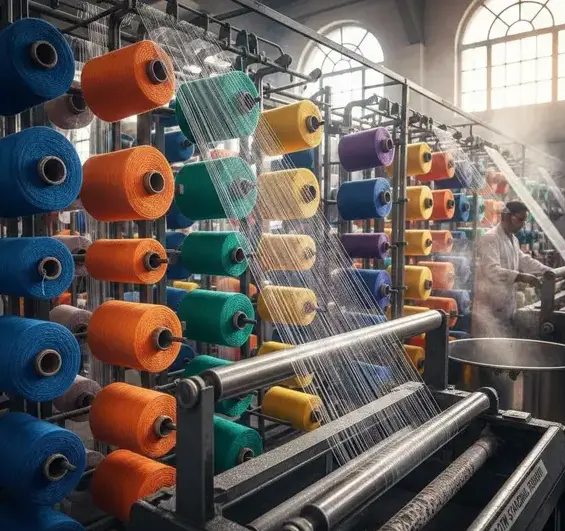
- Warp sizing: Strengthening yarns before weaving
- Finishing: Imparting stiffness and surface polish
- Printing preparation: Creating smooth, absorbent surfaces
- Blended fiber treatments: Improving compatibility between synthetic and natural fibers
A textile chemical liquid is often discussed alongside sizing agents, binders, and finishing auxiliaries used for smooth fabric performance.
How do textile starching chemicals impact weaving efficiency?
Proper starching improves loom performance by:
- Minimizing yarn breakage and downtime
- Enhancing speed and consistency of weaving
- Reducing shedding and dust formation
Modern mills use automated starching systems that optimize pickup ratio and uniformity, ensuring consistent results across fabric batches.
What are the advantages and limitations of textile starching chemicals?
Advantages:
- Cost-effective mechanical improvement
- Biodegradable options available
- Compatible with multiple fiber types
Limitations:
- Natural starch may cause microbial growth
- Residual buildup requires desizing before dyeing
- Synthetic variants can be less eco-friendly
Sustainable solutions include enzymatically modified starch and water-reducing formulations.
What is the textile starching chemical price and availability in India?
In India, textile starching chemicals are widely available across major textile hubs like Surat, Tirupur, and Ahmedabad.
- Price range: ₹55–₹180 per kg (depending on grade and formulation)
- Common brands: Grodex PR-101, Alpenol, and SPAC modified starch
Manufacturers provide custom blends suitable for cotton, viscose, and polyester yarns.
How are starching chemicals evolving with new technologies?
Innovation in textile starching focuses on:
- Bio-based polymers for sustainable sizing
- Nano starch hybrids for enhanced bonding and wash durability
- Smart starching systems integrated with sensor-based dosing
These advancements align with global standards for low-emission, biodegradable textile chemicals.
Conclusion
Textile starching chemicals remain vital for improving yarn strength and weaving quality across cotton and synthetic fabrics. The shift toward eco-friendly formulations reflects the industry’s commitment to sustainable efficiency. For further reading on advanced fabric enhancement methods, explore related innovations such as conductive chemicals for textile industry that support next-generation smart fabrics.
FAQ
Which chemical is used for starch?
Common chemicals include native starch, modified starch, and polyvinyl alcohol (PVA).
What starch is used in the textile industry?
Corn, potato, and tapioca starches are widely used for warp sizing and finishing.
How to starch fabric to make it stiff?
Dissolve the starching chemical in hot water, apply evenly on fabric, and dry under controlled heat.
What chemicals are in starch?
Natural starch contains amylose and amylopectin; modified versions may include oxidizing or esterifying agents.
Sources
https://dir.indiamart.com/impcat/sizing-chemicals.html
https://www.sekisui-sc.com/blog/polyvinyl-alcohol-vs-starch-as-warp-sizing-chemical-in-textiles/
https://www.modifiedstarchproducts.com/modified-starch.html
https://www.alpenol.in/post/what-is-the-best-sizing-chemical-in-textiles
https://www.gromotech.in/grodex-pr-101-for-processing.php
https://spacgroup.com/how-starch-acts-as-a-binding-agent-in-tablets-and-pharmaceuticals-2/
https://patents.google.com/patent/WO2005098121A1/en
https://textilevaluechain.in/innovations-in-textile-sizing-chemicals-from-starch-to-smart-solutions
https://www.tradeindia.com/products/textile-sizing-chemical-2512397.html