Silicones are among the most versatile materials used across modern industries. Known for their excellent durability, flexibility, and resistance to heat and moisture, It play a vital role in manufacturing products that require long-lasting performance. From construction and automotive components to electronics, healthcare products, and industrial machinery, silicones help improve product quality, efficiency, and reliability.
Key Takeaways
- Silicones are high-performance synthetic polymers with exceptional durability.
- They offer superior resistance to heat, moisture, UV exposure, and chemicals.
- Common forms include silicone fluids, emulsions, sealants, elastomers, resins, and gels.
- Silicones are widely used in construction, automotive, electronics, textiles, healthcare, and industrial manufacturing.
- Their long service life and versatility make them an essential material for modern industries.
Unlike many conventional polymers, silicones maintain their physical properties even under extreme temperatures and harsh environmental conditions. This unique combination of performance and stability makes them a preferred choice for manufacturers worldwide.
Also Read:Silicone Temperature Resistance: 7 Critical Facts Explained
What Are Silicones?
They are high-performance synthetic polymers composed mainly of silicon, oxygen, carbon, and hydrogen. They are valued for their flexibility, durability, and resistance to heat, moisture, and chemicals.Their unique molecular structure gives them exceptional flexibility, chemical stability, and resistance to weathering. Depending on the application, silicones are available as fluids, emulsions, elastomers, gels, sealants, and resins.
This materials are designed to perform consistently in demanding environments where traditional materials may degrade or lose effectiveness.
Chemical Bond of Silicon
Silicon (Si) has four valence electrons, allowing it to form four strong covalent bonds. In silicone materials, silicon bonds with oxygen to create the Si–O–Si (siloxane) backbone, which provides excellent heat resistance, flexibility, weather resistance, and durability. These properties make silicones widely used in construction, electronics, automotive, and healthcare industries.
History of Silicon
Silicon is the second most abundant element in the Earth’s crust and was first isolated by Swedish chemist Jöns Jacob Berzelius in 1824. Over time, silicon became essential in semiconductor technology and silicone manufacturing. Today, silicon-based materials are widely used in electronics, construction, medical devices, and industrial applications due to their outstanding performance and reliability.
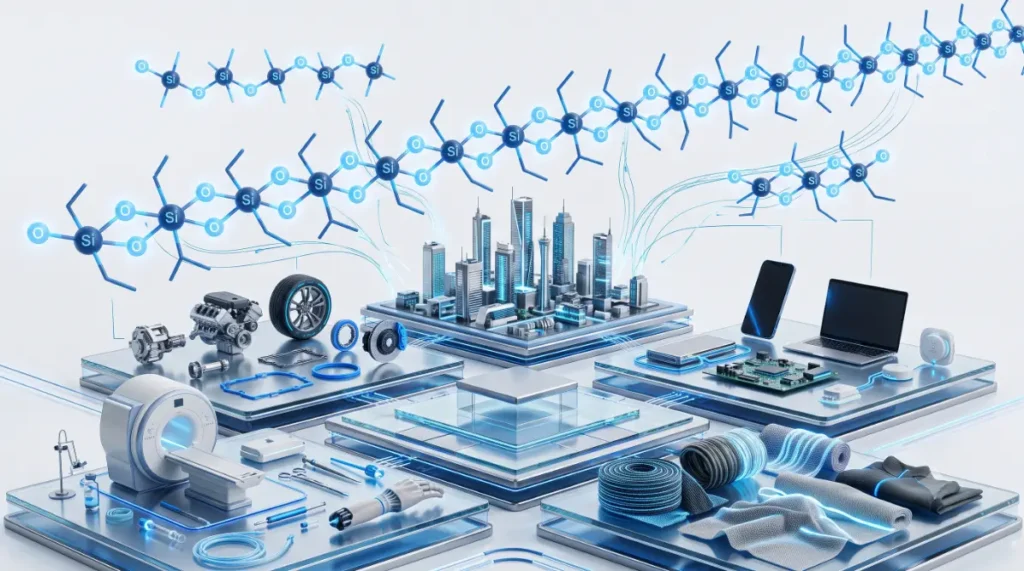
Key Properties of Silicones
They are valued for several outstanding characteristics:
- Excellent heat and cold resistance
- Superior water repellency
- UV and weather resistance
- High flexibility and elasticity
- Chemical and oxidation resistance
- Electrical insulation properties
- Low toxicity and long service life
These properties make silicones suitable for both industrial and consumer applications.
Common Types of Silicones
| Type | Primary Purpose | Typical Applications |
| Silicone Fluids | Lubrication and surface treatment | Industrial processing, textiles, cosmetics |
| Silicone Emulsions | Water-based finishing | Textile softeners, mould release agents |
| Silicone Sealants | Sealing and bonding | Construction, glazing, bathrooms, windows |
| Silicone Elastomers | Flexible rubber components | Automotive parts, medical devices |
| Silicone Resins | Heat-resistant coatings | Electrical insulation, protective coatings |
| Silicone Gels | Cushioning and insulation | Electronics, healthcare products |
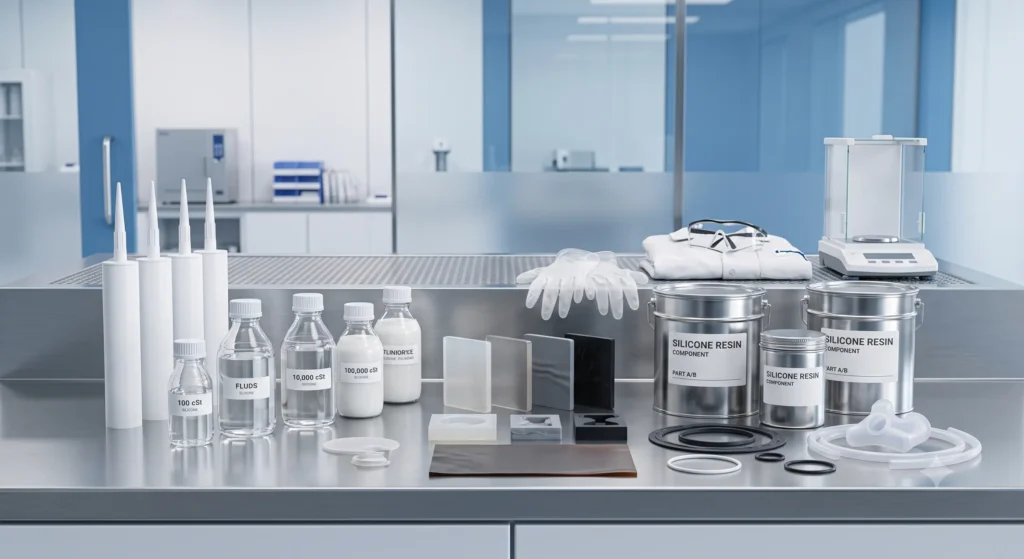
Applications of Silicones
They are used in a wide range of industries because of their versatility and performance.
Construction
In the construction sector, it is widely used for:
- Weatherproof sealants
- Expansion joint sealing
- Glass glazing
- Waterproof coatings
- Concrete mould release agents
These applications help improve structural durability and protect buildings from moisture and environmental damage.
Automotive
They contribute to vehicle performance by providing:
- Heat-resistant gaskets
- Engine sealants
- Cable insulation
- Interior coatings
- Vibration-resistant components
Electronics
The electronics industry relies on it for:
- Circuit board protection
- Electrical insulation
- Thermal management
- Moisture-resistant coatings
Textile Industry
Silicone-based formulations enhance textile performance by:
- Improving fabric softness
- Increasing wrinkle resistance
- Enhancing water repellency
- Providing a smooth finish
Healthcare
Medical-grade silicones are commonly used in:
- Medical tubing
- Catheters
- Prosthetics
- Wound care products
- Healthcare equipment
Benefits of Using Silicones in the Textile Industry
Silicones play a crucial role in textile processing by improving fabric quality, durability, and overall performance. They are widely used in fabric finishing to enhance the feel, appearance, and functionality of textiles.
Key Benefits
- Superior Softness: Provides a smooth, soft, and luxurious feel to fabrics.
- Enhanced Water Repellency: Improves resistance to moisture without affecting fabric breathability.
- Wrinkle Resistance: Helps fabrics retain their shape and reduces creasing.
- Improved Durability: Increases resistance to repeated washing, abrasion, and wear.
- Better Elasticity: Enhances fabric flexibility and recovery, making garments more comfortable.
- Color Protection: Helps maintain fabric brightness and reduces fading after multiple washes.
- Low Friction: Reduces fiber-to-fiber friction, minimizing damage during processing.
- Easy Care Performance: Improves drape, reduces ironing requirements, and enhances overall garment appearance.
- Eco-Friendly Processing: Many modern silicone finishes are water-based and support more sustainable textile manufacturing.
Silicone-based textile finishes are commonly used in cotton, polyester, denim, wool, silk, and blended fabrics, making them an essential component in modern textile manufacturing.
Conclusion
They have become indispensable across multiple industries due to their exceptional durability, flexibility, and resistance to heat, moisture, and chemicals. Whether used in construction, automotive, electronics, healthcare, textiles, or industrial manufacturing, It provide reliable performance that helps improve product quality and operational efficiency.
Choosing the right silicone formulation for a specific application can enhance durability, reduce maintenance costs, and deliver long-lasting results, making silicones one of the most valuable specialty materials in today’s industrial landscape.
Frequently Asked Questions
1. What are silicones?
They are synthetic polymers made primarily from silicon and oxygen, known for their flexibility, durability, and resistance to heat and moisture.
2. Where are silicones commonly used?
They are used in construction, automotive, electronics, textiles, healthcare, cosmetics, and industrial manufacturing.
3. What are the advantages of silicones?
They provide excellent thermal stability, water resistance, UV protection, chemical resistance, flexibility, and long-lasting performance.
4. Are silicones suitable for outdoor applications?
Yes. They offer excellent weather and UV resistance, making them ideal for outdoor sealing, coatings, and construction applications.
5. Why are They important in manufacturing?
These improve product durability, manufacturing efficiency, surface quality, and overall performance while reducing maintenance requirements.
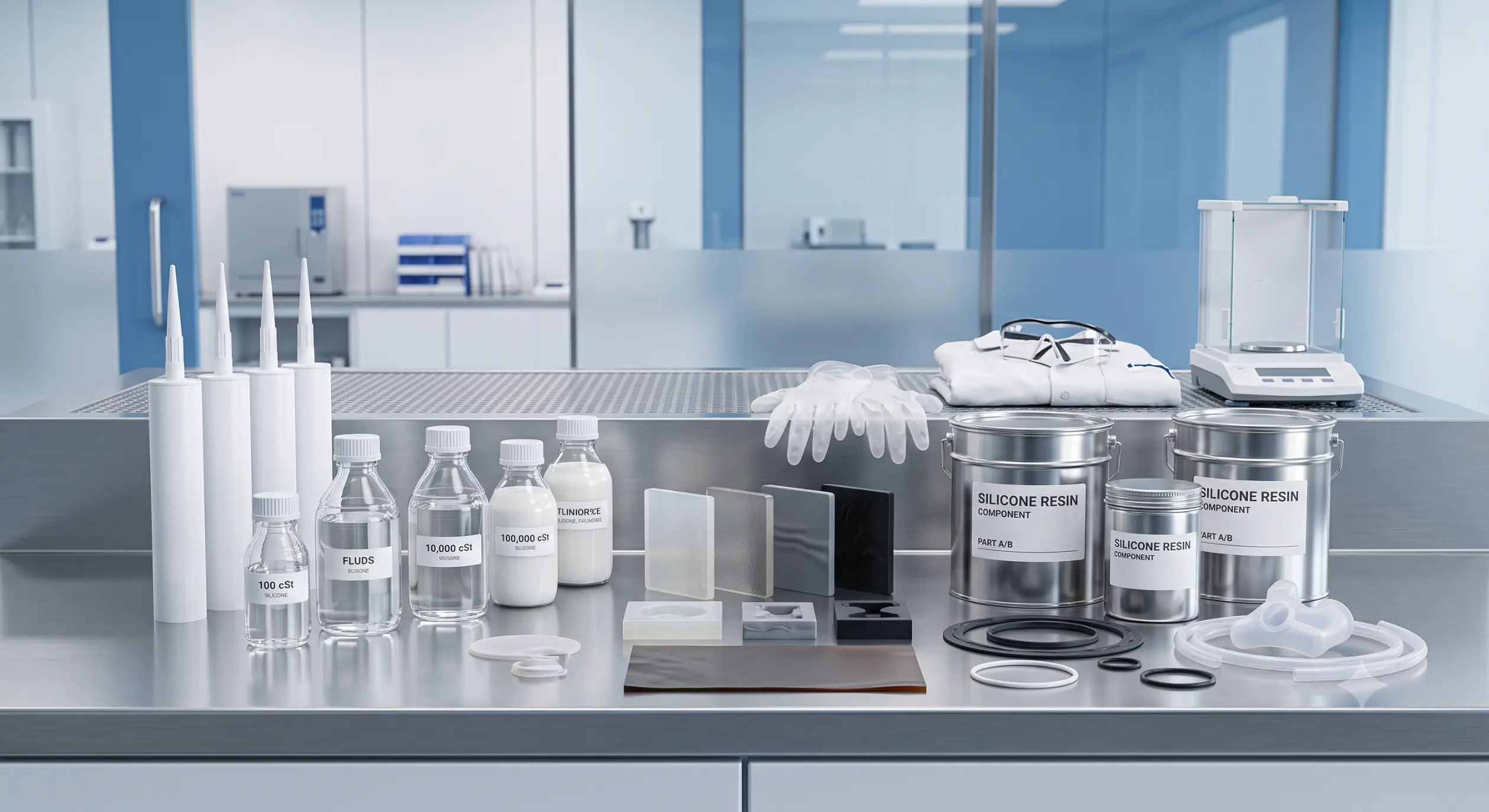
Also Read:Premium silicone products in modern laboratory setting – Silicones 3