Silicone spatulas have revolutionized modern cooking, serving as an indispensable tool for home cooks and professional chefs alike. Engineered from high-performance food-grade silicone, these utensils outperform traditional wood and plastic alternatives in heat resistance, hygiene, and durability. Understanding the material science behind silicone spatulas helps explain why making the switch elevates food safety, protects delicate cookware, and makes kitchen preparation seamless.
Key Takeaways
1. Non-Stick Safe: Soft yet durable construction glides over non-stick coatings, preventing scratches and extending cookware lifespan.
2. Exceptional Heat Resistance: Withstands extreme cooking temperatures without melting, warping, or leaching harmful chemicals into food.
3. Hygienic & Non-Porous: Resists bacterial growth, staining, and odor retention compared to porous wooden utensils.
Table of Contents
The Science Behind High-Performance Silicone Spatulas
Unlike petroleum-based plastics, silicone is derived from silica (sand), resulting in a non-reactive, stable polymer that excels in culinary environments. High-quality silicone utensils deliver distinct scientific advantages:
- Thermal Stability: Maintains structural integrity under temperatures ranging from sub-zero freezing to over 450°F (230°C).
- Inert Chemical Structure: Does not react with acidic or oily foods, ensuring no chemical off-gassing or flavor transfer occurs during cooking.
- Flexible Tensile Strength: Combines flexibility for scraping bowl contours with rigid internal steel cores for structural support.
Key Features of Quality Silicone Spatulas
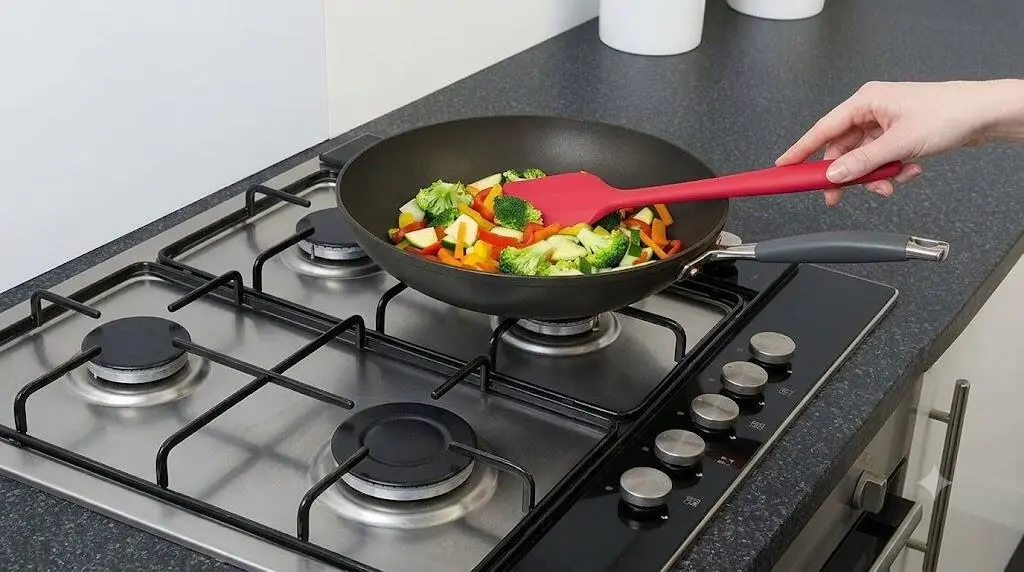
Upgrading to high-temperature silicone spatulas prevents plastic melt residue from contaminating your favorite home-cooked meals.
The following table details the six essential qualities to look for when selecting durable, food-grade silicone spatulas for your kitchen:
| Feature Name | Material Quality | Primary Culinary Benefit | Recommended Usage |
| Seamless One-Piece Design | 100% Food-Grade Silicone | Prevents food trap areas and bacterial accumulation between head and handle. | Daily mixing, scraping, and washing |
| High Heat Resistance | BPA-Free Silicone Polymer | Eliminates melting risks during high-heat stovetop sauteing and stirring. | High-temp stovetop cooking |
| Internal Stainless Steel Core | Reinforced Metal Skeleton | Provides structural rigidity for handling heavy doughs without bending or snapping. | Heavy batters and dough mixing |
| Non-Porous Surface | Inert Polymer Matrix | Repels strong odors, oil residue, and stubborn food stains like tomato or turmeric. | Acidic and heavily spiced dishes |
| Flexible Beveled Edges | Ergonomic Molded Edge | Scrapes bowls and pans clean, minimizing ingredient waste during food prep. | Baking batter and sauce transfer |
| Scratch-Proof Flexibility | Non-Abrasive Material | Protects delicate Teflon, ceramic, and cast iron coatings from surface scratches. | Non-stick cookware maintenance |
Usage and Maintenance Instructions
Using non-abrasive silicone spatulas helps preserve delicate non-stick coatings on expensive frying pans. Cleaning high-quality silicone spatulas is effortlessly simple because the non-porous surface naturally resists stubborn oil stains.
- Seamless One-Piece Design: Wash thoroughly in hot, soapy water or place on the top rack of your dishwasher to ensure a completely sanitized surface.
- High Heat Resistance: Rest your utensil directly inside hot pans or sauces while cooking without worrying about melted edges or structural deformation.
- Internal Stainless Steel Core: Apply firm, downward pressure when folding heavy bread doughs or thick cake batters to leverage the sturdy inner handle.
- Non-Porous Surface: Rinse immediately after mixing brightly colored sauces like marinara or curry to maintain a pristine, stain-free appearance.
- Flexible Beveled Edges: Angle the flexible edge flush against the interior walls of mixing bowls to wipe every last drop of batter clean.
- Scratch-Proof Flexibility: Glide the flat edge smoothly under delicate eggs or crepes to flip without scratching delicate non-stick pan coatings.
Health Risks Prevented by Silicone Spatulas
Choosing seamless silicone spatulas eliminates hidden crevices where harmful kitchen bacteria typically thrive.
- Cross-Contamination Risks: Prevents bacterial buildup commonly found in cracked wooden utensils or seam-filled two-piece plastic spatulas.
- Cookware Degradation: Prevents micro-scratches on expensive non-stick coatings, stopping toxic non-stick flake ingestion before it starts.
- Chemical Leaching Concerns: Eliminates phthalate and BPA exposure during high-temperature stovetop cooking and frying.
- Food Waste Mitigation: Maximizes ingredient transfer from bowl to pan through precision-fit flexible scraping edges.
Precautions
Professional chefs rely on silicone spatulas to scrape every drop of sauce from stainless steel mixing bowls cleanly.
- Avoid Direct Flame Contact: Keep your spatula away from open gas flames or direct heating coils, which exceed standard thermal limits.
- Check for Fillers: Test silicone quality using the pinch test—if white shows through when twisted, cheap plastic fillers have been added.
- Avoid Sharp Blades: Do not use silicone spatulas directly against sharp blender blades or serrated knife edges to prevent deep cuts.
- Use Food-Grade Materials: Ensure product labeling explicitly confirms 100% FDA-approved or LFGB-certified food-grade silicone.
Wrapping Up
Investing in premium silicone spatulas transforms daily cooking into a safer, cleaner, and more efficient experience. By combining extreme heat resistance with non-porous hygiene and non-stick safety, silicone outperforms legacy kitchen materials in every category. Making the switch to high-grade silicone utensils protects your cookware investment while ensuring healthier food preparation for years to come.
Partner with Biopol Chemicals for premium, high-purity silicone raw materials engineered to meet the highest food-grade manufacturing standards.
Frequently Asked Questions (FAQs)
1. Are silicone spatulas safer than regular plastic spatulas?
Yes, food-grade silicone spatulas do not melt at standard cooking temperatures and do not leach harmful chemicals like BPA, phthalates, or microplastics into warm food.
2. Can silicone spatulas go into the dishwasher?
Absolutely. High-grade silicone spatulas are dishwasher-safe and can withstand both high-temperature washing and heated drying cycles without warping.
3. How do I know if my silicone spatula contains cheap plastic fillers?
Pinch and twist a flat section of the silicone. If the stretched area turns white, it contains plastic fillers; pure food-grade silicone retains its color throughout.
4. Why do my silicone spatulas retain a soap taste or food smell?
Silicone can absorb oil-based fragrances over time. To strip odors, bake the clean spatula in an oven at 250°F (120°C) for 20 minutes or soak it in a warm water and baking soda slurry.
Also Read