Silicone based lubricants quietly solve a lot of everyday annoyances: a squeaky hinge, a sticky window seal, a drawer that drags, a gadget that jams. The same chemistry also turns up in a very different place, the personal care aisle, where it follows its own set of rules. Because the word “silicone” covers so many products, it pays to know what you are buying before you spray or squeeze anything.
This guide explains how these products work, which forms to pick, where they perform best, and the few situations where they cause real trouble.
Key Takeaways
Silicone based lubricants use silicone oils as the main ingredient, which gives a slick, water-repellent film that holds up across a wide temperature range.
They suit light-duty jobs on rubber, plastic, and many metals, such as hinges, seals, weatherstripping, O-rings, and sliding parts.
They are not the best choice for heavy metal-on-metal loads unless the product contains load-bearing additives.
Silicone spray is not the same as classic WD-40. One lubricates for the long term, the other mainly displaces water and loosens rust.
Petroleum greases can swell some rubber seals, so silicone is often the safer match for rubber.
Aerosol silicone sprays are extremely flammable, so ventilate the area and keep them away from heat and flames.
Keep them away from anything you plan to paint, because tiny traces can cause craters in fresh paint.
Silicone based lubricants for personal use work with latex and other condoms, but they can damage silicone toys.
Household and automotive sprays are never a substitute for a lubricant made for the body.
Always check the label for temperature rating, material compatibility, and food-contact approval.
What Are Silicone Based Lubricants?
Silicone lubricants are products built around silicone oils, also called silicone fluids. The oil is the slippery part. Depending on the product, it may be sold as a spray, a thin liquid, a thick grease, or a gel.
Two traits explain their popularity. First, silicone repels water, so the film keeps protecting parts in damp places. Second, it stays stable across a wide temperature range. Some consumer products list roughly -100°F to 500°F (about -73°C to 260°C), though the number on your own product’s label is the one to follow. For a closer look at heat limits, see our guide to the silicone melting point.
Silicone is also chemically unreactive. That is why the film generally leaves rubber, plastic, and metal alone.
How Silicone Based Lubricants Actually Work
A lubricant works by placing a slippery layer between two surfaces. Silicone fluids do this well because their molecules attract each other only weakly, so they glide easily.
That same trait is also a limit. Technical guidance from silicone manufacturers notes that plain silicone fluids are not strong lubricants under heavy loads, so they are usually paired with additives when the load is high. For light, sliding, or fast-moving contact, they shine. For a gear under serious pressure, they may not be enough.
Main Types of Silicone Based Lubricants
The form you choose changes how the product behaves. Here is a quick comparison.
| Form | Best for | Watch out for |
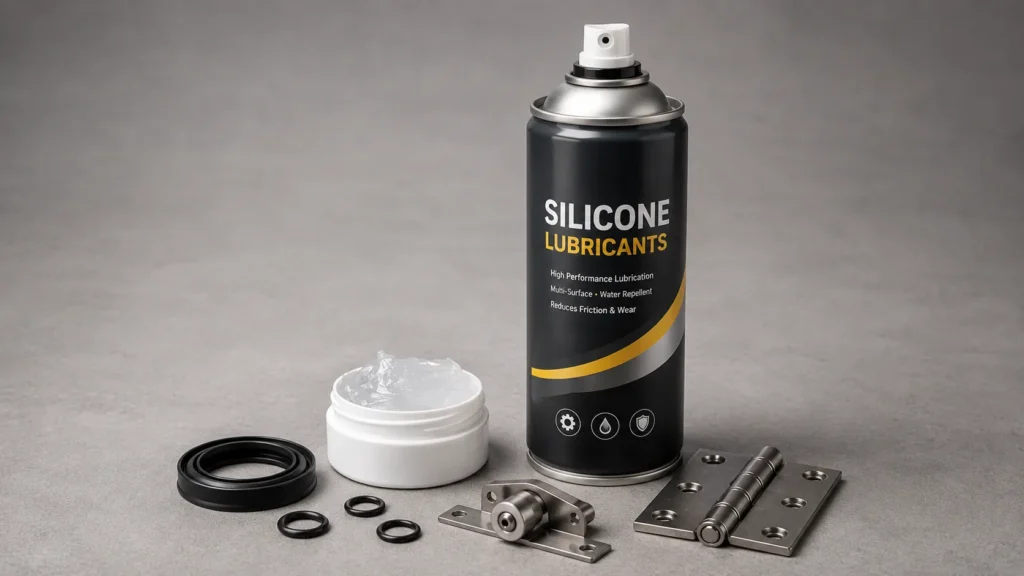
| Spray | Hinges, tracks, cables, weatherstripping | Overspray on surfaces that will be painted |
| Grease | O-rings, seals, valves, plumbing fittings | Material compatibility and food-contact rating |
| Dielectric grease | Sealing electrical connectors | A thick layer between contacts that must touch |
| Liquid fluid | Light moving parts, precision mechanisms | Thin film that may need reapplying |
| Personal lube | Intimate use | Not for use with silicone toys |
Specialty chemistries exist too. Phenyl silicone fluids handle higher temperatures and compress less, so they suit delicate low-load devices such as timers and assemblies that mix rubber, plastic, and aluminum. Fluorosilicones cover an extremely wide temperature range and resist chemicals, which is why they appear in aerospace parts, precision timing devices, and electrical contacts.
Where Silicone Based Lubricants Work Best
- Household and workshop: hinges, drawer slides, door and window tracks, steel cables, pulleys, and guide rails.
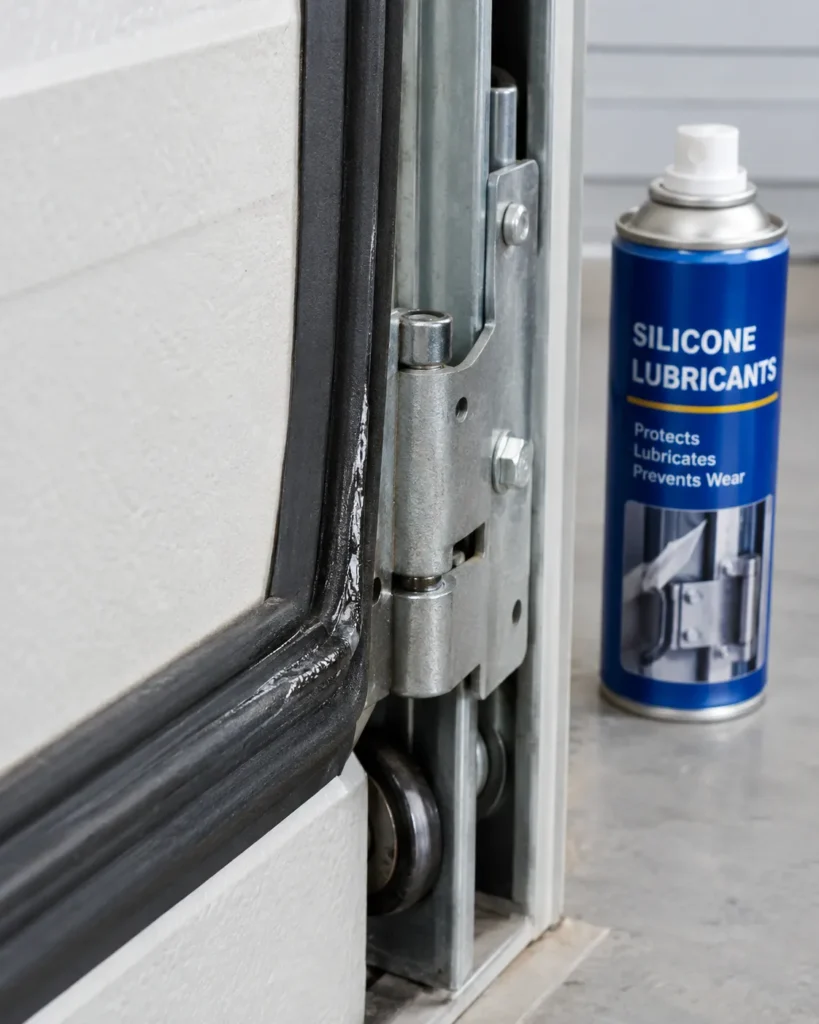
- Rubber seals and weatherstripping: it helps keep them supple and helps prevent drying and cracking, which is why it is popular on car door seals and garage door hinges.
- Plastic sliding parts: silicone can be a good fit where oil-based products are not suitable.
- O-rings and plumbing: silicone grease is widely used on O-rings, pump seals, and fittings.
- Food equipment: only products labeled H1 are registered for incidental food contact. An ordinary silicone spray is not automatically food-safe.
- Treadmill belts: many manufacturers call for a silicone lubricant made for treadmills, applied under the belt. Follow your manual, because some belts are pre-lubricated or wax-treated, and too much lubricant can make a belt slip.
Everyday Jobs People Search For, and When to Skip Silicone
Silicone lubricants turn up in a lot of small household fixes. Here is where they help and where another product fits better.
- Zippers and sewing machines: use a tiny amount and wipe off the excess so it does not mark fabric. Follow your sewing machine manual, since many makers prefer a specific oil.
- Squeaky furniture, beds and sliding windows: a light spray into the joint or track usually quiets them. Protect nearby upholstery and floors first.
- 3D printer rails: a thin film on smooth rods can help, but check your printer maker’s advice first.
- Bicycle chains: skip silicone based lubricants here. A dedicated chain lube is generally the better fit.
- Car brakes: silicone-based brake grease is used on caliper slide pins and boots. Never put any lubricant on brake pads, rotors, or other friction surfaces.
Silicone Dielectric Grease: What It Does and Does Not Do
Among silicone lubricants, dielectric grease is one of the most misunderstood. It is a non-conductive grease that seals electrical connectors against moisture and corrosion. It protects a connection. It does not improve conductivity.
Apply a thin coat around seals, boots, and the edges of a connection, not a thick layer between metal contacts that need to touch. Avoid it on contacts that can spark or arc, because arcing can change the grease and wear the contacts down. And grease alone does not replace real insulation such as rubber or heat-shrink tubing.
Silicone Spray vs WD-40 and Other Lubricants
People often ask whether silicone spray and WD-40 are the same thing. They are not. Classic multi-use WD-40 is mainly a water displacer and rust penetrant. It helps free stuck metal parts, but it is not designed as a long-lasting lubricant. The company sells a separate silicone product for lasting lubrication.
Among silicone based lubricants, silicone spray works differently. It leaves a dry, slick coating, which suits quiet, long-term jobs such as cupboard hinges, drawer slides, sliding doors, and rubber seals. It will not loosen rust.
A simple rule: use a penetrant to free something stuck, let the solvents evaporate, then finish with silicone for lasting glide. For heavy loads, choose a grease or oil made for that load.
How Silicone Based Lubricants Compare With Petroleum, Lithium and PTFE Options
WD-40 is not the only comparison people make. Here is how the main lubricant types differ, so you can match the product to the part.
| Type | Strengths | Watch out for |
| Silicone | Safe on most rubber and plastic, water-repellent, wide temperature range | Weak under heavy loads, and it ruins paint finishes |
| Petroleum oils and greases | Inexpensive and effective on metal parts | Can swell some rubbers, such as EPDM seals |
| Lithium grease | Thick and clingy, popular on metal hinges and bearings | Heavier than silicone and collects dust; most are petroleum-based, so check rubber compatibility |
| PTFE (Teflon) spray | Dry, low-friction film that stays cleaner than oil | The film can wear away under load, so check the label for compatibility |
| Graphite | Dry powder often used in locks | Messy, stains surfaces, and conducts electricity |
Brake-service guidance warns that petroleum-based grease can make some seal materials swell and leak, which is why silicone-based brake grease is used on caliper parts.
As a simple rule, choose silicone when the part is rubber or plastic, and choose a grease rated for the load when metal parts carry heavy pressure.
Where Silicone Based Lubricants Fall Short
Heavy loads are the first weak spot. A thin silicone film is a poor match for high-pressure metal-on-metal contact, so pick a product designed for that job.
Paint is the second, and it surprises people. Silicone is a well-known cause of fisheyes, small craters in wet paint where the coating pulls away from contaminated spots. Paint makers advise keeping silicone products away from surfaces and workshops where painting happens. If a part may ever be repainted, choose a different lubricant.
If silicone does land on a surface, wipe it with a clean cloth and a wax and grease remover, using each cloth only once. Washing with soap and water before sanding keeps residue from being ground into the surface.
More is not better, either. Too much silicone lubricant attracts dust and debris, which adds friction and wear. Finally, parts made of silicone itself deserve extra care. Manufacturer guidance says most non-silicone parts tolerate these products, while silicone parts typically may not.
Are Silicone Based Lubricants Safe to Use?
With silicone based lubricants, most of the real hazards come from the can, not the silicone film. Safety data sheets for silicone aerosols classify them as extremely flammable, warn that the pressurized container may burst if heated, and note that breathing the vapors can cause drowsiness and dizziness.
- Spray in a well-ventilated area, and keep cans away from flames, sparks, and hot surfaces.
- Wear safety glasses, and avoid breathing the mist.
- Wipe up spills right away, because silicone makes floors and steps slippery.
- Never coat anything you stand or step on.
- Store cans upright in a cool place, away from children and pets.
- Never puncture or burn empty aerosol cans, and dispose of them following local rules.
For any unfamiliar product, the safety data sheet is the most reliable guide. Products made for use on the body are a separate category, so follow their label and stop using one if it irritates your skin.
Household and automotive silicone based lubricants are not made for skin or intimate use. Their solvents, propellants and additives are not meant for the body, so reach for a product made and labeled for personal use instead.
Silicone Based Lubricants for Personal Use
Personal silicone lube is the same family of chemistry with different rules. It feels thicker and silkier than water-based products and lasts longer, because it does not soak into the skin as quickly. It is also water-resistant, so it stays put in the shower, although that means cleanup takes a little more effort. Soap and water usually does the job.
Public health guidance says silicone-based lubes are safe with latex, non-latex, and polyurethane condoms. The type to avoid with latex is oil-based lube, because oil weakens latex and makes breakage more likely.
The big catch is toys. It can break down the surface of silicone sex toys over time, so water-based lube is the safer choice for those. Glass, metal, and hard plastic toys are generally fine with either type. Hybrid lubes blend silicone and water, so check the label if you own silicone toys.
Here is a quick comparison of silicone based lubricants and the other main types of personal lubricant.
| Type | With condoms | With silicone toys | Good to know |
| Water-based | Safe with all condoms | Safe | Can dry out, so it may need reapplying |
| Silicone-based | Safe with latex, non-latex and polyurethane | Not recommended | Lasts longer, but washes off with more effort |
| Oil-based | Not safe with latex | Usually not recommended | Can stain fabric; check the label |
| Hybrid | Check the label | Check the label | A blend of silicone and water |
If you are trying to conceive, the evidence is mixed. Laboratory studies show that many lubricants, including silicone-based ones, can reduce sperm movement after prolonged contact. One prospective study of couples, however, found no statistically significant link between lubricant use and how quickly they conceived. A fertility clinician can advise on your situation.
If your skin is sensitive or easily irritated, a short, fragrance-free ingredient list is a sensible place to start. A doctor or pharmacist can help if irritation keeps coming back.
How to Apply Silicone Based Lubricants Properly
- Clean the part first so dust and old residue do not get trapped under the new film.
- Shake spray cans for about ten seconds so the mixture is even.
- Apply a light coat, then move the part a few times so the lubricant spreads.
- Wipe away the excess, especially on parts that attract dirt.
- Watch for stiffness, noise, or visible wear, which signal that it is time to reapply.
- Ventilate the area and wear gloves when spraying.
How to Read the Label on Silicone Based Lubricants
Two cans that both say silicone can behave very differently. A few label details tell you which one you are holding.
- “100% silicone” versus “contains silicone”: pure silicone behaves differently from blends, and sprays also contain propellants and carrier solvents that evaporate after use.
- Viscosity: thinner fluids suit light, fast-moving parts, while thicker greases suit seals and fittings.
- Compatibility list: look for the materials the maker approves, such as rubber, plastic and metal.
- Special approvals: H1 for incidental food contact, and “silicone-free” if you plan to paint.
How to Choose the Right Silicone Based Lubricant
- Match the form to the job: spray for open surfaces, grease for seals and fittings, fluid for light precision parts.
- Compare the temperature rating on the label with your real operating conditions.
- Confirm material compatibility, especially for silicone parts and silicone toys.
- Look for H1 registration if the product may touch food.
- Skip silicone entirely near anything that will be painted.
Faqs
What are silicone based lubricants used for?
They reduce friction and protect surfaces on hinges, tracks, cables, rubber seals, weatherstripping, O-rings, and plastic sliding parts. Special formulas also serve food equipment, electrical connectors, treadmills, and personal care.
Are silicone based lubricants toxic?
The bigger risks are practical ones. Aerosol sprays are extremely flammable, and breathing the vapors can cause drowsiness and dizziness, so use them with good ventilation and away from flames. Spills are slippery. Check the safety data sheet for details. Household and automotive sprays are not made for skin or intimate use, so choose a product labeled for personal use instead.
Can you use silicone lubricant on silicone rubber or silicone toys?
Often not. Manufacturer guidance says silicone parts typically are not compatible. For toys, public health advice is to use water-based lube, because silicone lube can break down the surface over time.
Does silicone lubricant ruin paint?
It can ruin a paint job. Even tiny traces of silicone can cause craters called fisheyes in fresh paint. Keep it away from surfaces you plan to paint, and clean them thoroughly with a wax and grease remover before painting.
Are silicone based lubricants safe with condoms?
Personal lubes of this type are listed as safe with latex, non-latex, and polyurethane condoms. Oil-based lube is the one to avoid with latex. Silicone lube is not recommended with silicone toys.
Bottom Line
Silicone based lubricants earn their reputation on light, sliding, and sealing jobs, where a slick, water-repellent, temperature-tolerant film makes things move quietly and last longer. They are not a cure-all. Heavy loads, painted finishes, silicone parts, and silicone toys are the places where a different product usually works better.
Pick the form that fits the job, read the label, apply a thin coat, and wipe off the excess. That simple routine is how to get the most from any silicone lube or spray.